In today’s evolving economic and labour environment, businesses are increasingly focused on long-term workforce sustainability alongside operational efficiency and cost management.
As organizations prepare for changing workforce demographics, talent shortages, and evolving employee expectations, retirement planning is becoming an increasingly important part of broader workforce and risk management strategies.
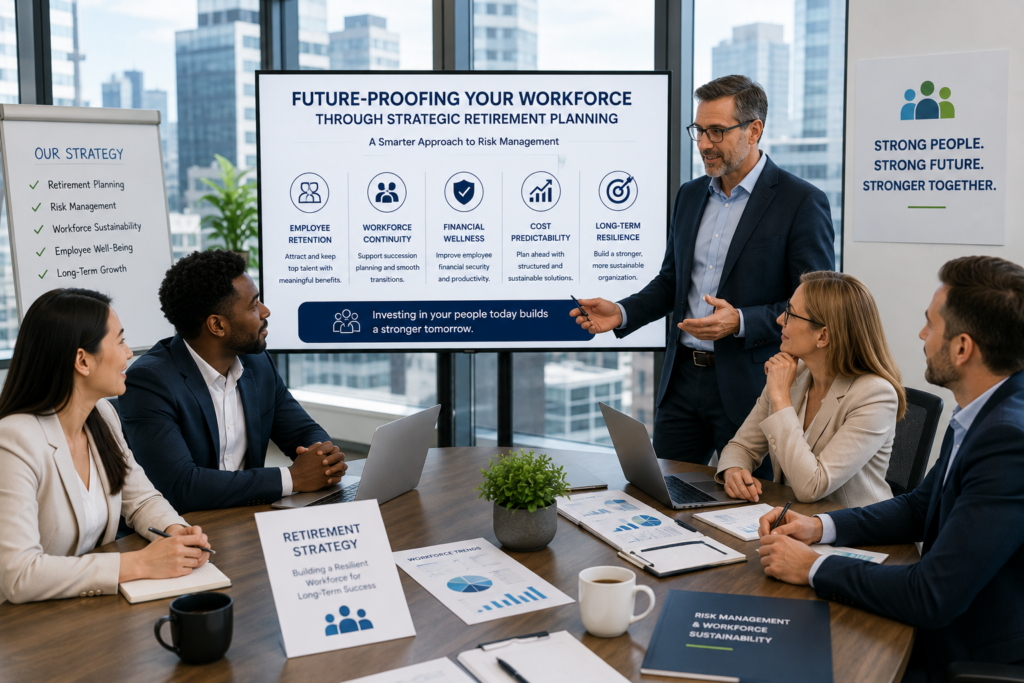
Rather than functioning solely as an employee benefit, retirement planning may help businesses support workforce continuity, employee financial wellness, succession planning, and long-term organizational stability.
Why Workforce Future-Proofing Matters
Organizations today face a range of workforce-related challenges, including:
- Talent retention
- Recruitment competition
- Workforce transitions
- Employee financial stress
- Succession planning needs
- Long-term workforce sustainability
To address these challenges, many businesses are exploring long-term strategies that support both employee well-being and organizational resilience.
Retirement planning is increasingly being viewed as one component of a broader workforce risk management framework.
1. Supporting Employee Retention
One important workforce consideration is employee retention.
Benefits that support long-term financial well-being may influence employees’ decisions to remain with an organization. Strong retirement programs can help businesses manage costs associated with recruitment, onboarding, and employee turnover.
Retaining experienced employees may also support:
- Operational continuity
- Knowledge retention
- Team stability
- Long-term workforce engagement
Businesses Often Measure:
- Employee turnover rates
- Retention trends
- Average employee tenure
- Recruitment and training costs
2. Strengthening Workforce Continuity and Succession Planning
Retirement planning may also support workforce continuity and succession planning efforts.
Structured retirement programs can help organizations better prepare for workforce transitions and reduce the risk of unexpected talent gaps.
By integrating retirement planning into long-term workforce strategies, businesses may improve:
- Leadership transition planning
- Organizational continuity
- Long-term workforce participation
- Retirement readiness among employees
Succession planning is becoming increasingly important as many industries navigate shifting workforce demographics and evolving labour markets.
3. Supporting Employee Financial Wellness and Productivity
Employee financial wellness is another important consideration for many organizations.
Research suggests that financial stress may affect workplace engagement, productivity, and employee confidence. Programs that support long-term financial planning may help employees feel more secure and focused in their professional roles.
Organizations may support financial wellness through:
- Workplace retirement programs
- Financial education initiatives
- Retirement planning resources
- Employee financial wellness strategies
Improved financial confidence may also contribute to stronger workplace engagement and morale.
4. Improving Cost Predictability and Organizational Planning
From an organizational perspective, retirement plans may also support long-term financial planning and cost predictability.
Defined contribution retirement structures, for example, may help organizations better anticipate future benefit-related expenses while supporting workforce planning objectives.
Businesses often evaluate:
- Long-term benefits forecasting
- Workforce planning stability
- Retirement program participation trends
- Organizational financial planning strategies
A structured approach to retirement planning may contribute to stronger long-term operational planning and workforce sustainability.
5. Integrating Retirement Planning Into a Broader Risk Management Strategy
Retirement planning is often most effective when integrated into a broader workforce and organizational risk management framework rather than treated as a standalone benefit.
Organizations may align retirement planning with:
- Workforce sustainability goals
- Employee engagement initiatives
- Talent retention strategies
- Succession planning frameworks
- Long-term business objectives
Because workforce demographics and organizational priorities vary, many businesses take a customized and data-informed approach when designing retirement strategies.
Supporting Long-Term Workforce Sustainability Through Strategic Retirement Planning
For example,Open Access Limited works with employers across Ontario and Canada to help design retirement program structures focused on employee financial well-being, workforce planning, and long-term organizational sustainability.
For more insights, explore our guide on employee retirement solutions and workforce planning strategies.

Final Thoughts
As businesses continue to navigate evolving workforce challenges, retirement planning is becoming an increasingly valuable component of long-term workforce and risk management strategies.
By integrating retirement planning into broader organizational objectives, businesses may strengthen workforce continuity, support employee financial wellness, improve retention, and enhance long-term operational resilience.
References:
Mercer (2024).
Global Talent Trends Report.
https://www.mercer.com
OECD (2023).
Pensions and Workforce Sustainability Analysis.
https://www.oecd.org
Gallup (2024).
State of the Global Workplace Report.
https://www.gallup.com
PwC (2024).
Workforce Risk and Future of Work Insights.
https://www.pwc.com
Benefits Canada (2025).
Retirement and Workforce Risk Insights.
https://www.benefitscanada.com