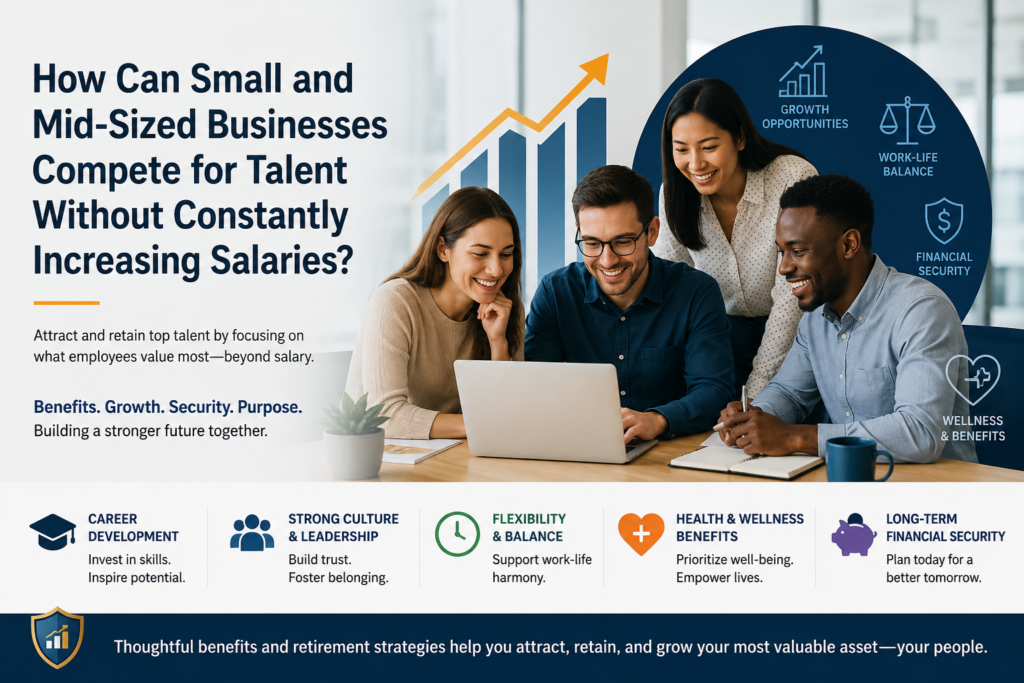
Employee retirement plans are often viewed as an important part of a company’s compensation strategy. However, many organizations today also recognize these programs as long-term workforce investments that may influence employee retention, engagement, financial wellness, and overall organizational stability.
As businesses continue to compete for skilled talent in evolving labour markets, understanding the return on investment (ROI) of employee retirement plans has become increasingly important.
Rather than relying on a single financial metric, organizations typically evaluate retirement plan ROI through a combination of workforce performance indicators, employee feedback, and long-term business outcomes.Effective employee retirement plans help businesses improve retention, measure long-term value, and create stronger financial wellness strategies.
Why Measuring Retirement Plan ROI Matters
Businesses invest significant resources into employee benefits programs. Measuring the effectiveness of retirement plans may help organizations better understand how these programs contribute to:
- Employee retention
- Recruitment competitiveness
- Workforce engagement
- Financial wellness initiatives
- Long-term workforce planning
- Organizational stability
For many employers, retirement plans are not only employee benefits — they may also support broader business objectives and workforce strategies.
1. Employee Retention and Reduced Turnover Costs
One of the most commonly evaluated indicators of retirement plan ROI is employee retention.
Research suggests that benefits tied to long-term financial well-being may influence employees’ decisions to remain with an organization. Strong retirement offerings can contribute to reduced turnover, helping businesses lower recruitment, onboarding, and training costs.
Retaining experienced employees may also help preserve institutional knowledge and support operational continuity.
Businesses Often Measure:
- Employee turnover rates
- Average employee tenure
- Recruitment and training costs
- Retention trends over time
2. Employee Engagement and Workplace Productivity
Organizations may also assess how retirement plans influence employee engagement and productivity.
Employees who feel supported in their financial future may experience lower financial stress, which can positively impact workplace morale, focus, and participation.
Financial wellness initiatives are increasingly being integrated into broader employee engagement strategies across many organizations.
Common Indicators Include:
Absenteeism rates
Employee satisfaction surveys
Workplace engagement scores
Participation in financial wellness programs
Productivity trends
3. Talent Attraction and Employer Competitiveness
In competitive labour markets, retirement benefits may play a role in attracting skilled employees.
Candidates often compare workplace benefits when evaluating job opportunities. A structured retirement program can become part of an employer’s overall value proposition and help strengthen employer branding.
Organizations May Evaluate:
- Offer acceptance rates
- Time-to-fill positions
- Candidate feedback
- Recruitment performance metrics
- Employer brand perception
4. Workforce Stability and Long-Term Planning
Some organizations also evaluate empoyee retirement plans as part of broader workforce planning and risk management strategies.
Structured retirement programs may support:
- Long-term workforce participation
- Leadership succession planning
- Organizational continuity
- Employee retirement preparedness
Businesses may monitor participation rates and retirement readiness to better understand long-term workforce trends.
5. Combining Quantitative and Qualitative Metrics
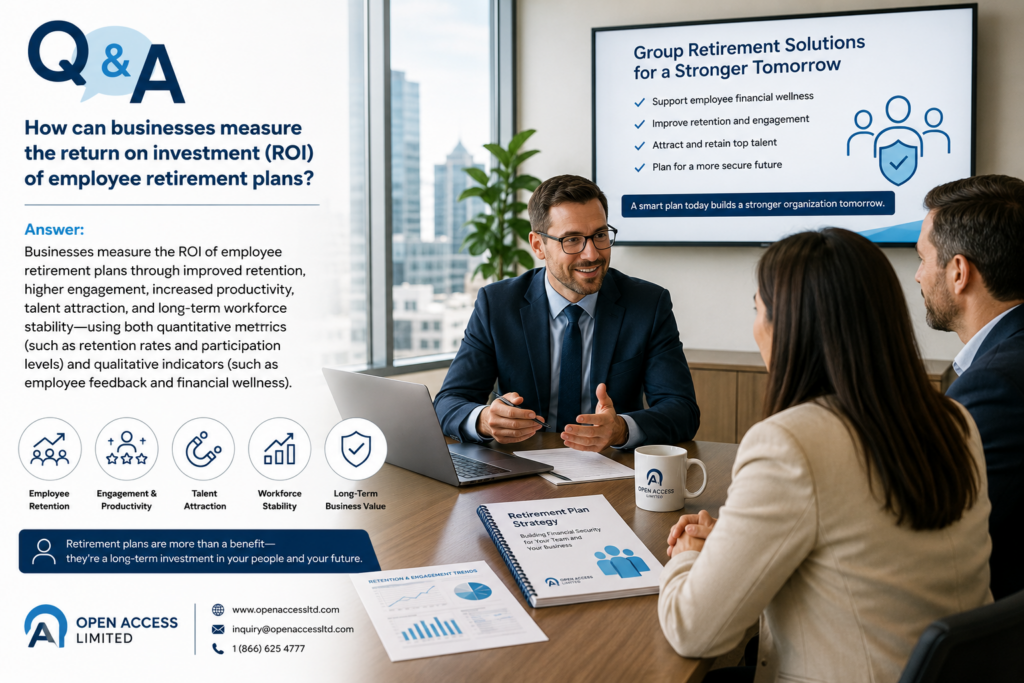
Measuring the ROI of employee retirement plans often requires a balanced approach using both quantitative and qualitative indicators.
Quantitative Metrics
Businesses may review:
- Retention rates
- Participation levels
- Contribution rates
- Recruitment costs
- Workforce turnover data
Qualitative Indicators
Organizations may also consider:
- Employee feedback
- Workplace satisfaction
- Financial wellness perceptions
- Employee confidence in retirement readiness
Because every organization is different, outcomes may vary depending on workforce demographics, plan structure, and overall business strategy.
Supporting Long-Term Business Goals Through Retirement Planning
Many businesses work with experienced retirement advisory firms to help design retirement strategies aligned with workforce and organizational objectives.
For example, Open Access Limited works with employers across Ontario and Canada to help develop retirement program structures focused on employee financial well-being and long-term organizational planning.
Final Thoughts
Employee retirement plans are often viewed as more than standard workplace benefits. For many organizations, they represent long-term investments in workforce stability, employee well-being, and business continuity.
By evaluating factors such as retention, engagement, talent attraction, and workforce planning, businesses can gain a broader understanding of the value retirement programs may provide over time.
References
Benefits Canada (2025) — Employee Benefits and Retention Insights
Gallup (2024) — State of the Global Workplace Report
Mercer (2024) — Global Talent Trends Report
OECD (2023) — Pensions and Workforce Participation Analysis
Willis Towers Watson (WTW) (2023) — Global Benefits Attitudes Surve