Tag: employer retirement plans

  • How Can Businesses Use Data and Analytics to Continuously Optimize Their Retirement Plans and Improve Workforce Outcomes?

    Introduction

    Retirement plan analytics helps businesses use data insights to continuously optimize retirement programs, improve employee engagement, and create stronger long-term workforce strategies.

    In today’s data-driven business environment, organizations are increasingly evaluating retirement plans as part of a broader workforce strategy rather than viewing them as static employee benefits. Using workforce analytics allows employers to better understand employee needs, identify opportunities for improvement, and make more informed decisions.

    Why Are Data and Analytics Important for Retirement Plan Optimization?

    Data and analytics provide organizations with valuable insights into how employees interact with retirement programs. Instead of creating a retirement plan once and leaving it unchanged, employers can continuously review performance, participation, and employee engagement trends.

    This ongoing evaluation may help businesses improve plan effectiveness, support workforce satisfaction, and align retirement strategies with long-term organizational goals.

    Analyzing Employee Participation and Contribution Trends

    One important area of retirement plan analytics is reviewing employee participation and contribution patterns.

    By evaluating participation rates, contribution levels, and engagement trends, organizations may better understand whether employees are fully utilizing available retirement benefits.

    These insights can help employers identify potential gaps and improve communication strategies to encourage better financial awareness among employees.

    Using Workforce Segmentation to Improve Retirement Strategies

    Every workforce includes employees with different financial needs, career stages, and retirement goals.

    Through workforce segmentation, organizations can analyze factors such as:

    • Employee age groups
    • Income levels
    • Career stages
    • Length of employment
    • Financial profiles

    This information may help employers design retirement strategies that better align with the needs of different employee groups.

    How Predictive Analytics Supports Workforce Planning

    Predictive analytics is becoming an important tool for long-term workforce planning.

    Organizations may use data insights related to retirement timing, financial readiness, and workforce transitions to better prepare for future changes.

    Understanding these trends can help reduce unexpected talent gaps and support smoother workforce planning decisions.

    Connecting Retirement Data With HR Performance Metrics

    Retirement plan analytics becomes even more valuable when combined with broader workforce information.

    Employers may review connections between retirement programs and areas such as:

    • Employee retention
    • Workplace engagement
    • Employee feedback
    • Workforce stability

    This broader view helps organizations understand how retirement benefits contribute to overall workforce outcomes.

    Continuous Improvement Through Data-Driven Retirement Strategies

    Successful retirement strategies often require ongoing review and improvement.

    By monitoring results, collecting feedback, and analyzing workforce changes, organizations can adjust their approach over time.

    Data-driven decision-making helps businesses create retirement programs that remain relevant as employee needs and market conditions evolve.

    Working With Experienced Retirement Plan Advisors

    While data provides valuable insights, interpreting information and turning it into practical strategies requires experience.

    Organizations may choose to work with advisory firms that understand retirement planning, employee engagement, and workforce strategy.

    Open Access Limited, based in Ontario, works with employers to analyze workforce needs, improve retirement plan communication, and support data-informed retirement strategies.

    Through customized solutions and ongoing education, Open Access Limited helps organizations better align retirement programs with long-term business and employee objectives.

    Learn more:
    Open Access Limited
    302 Bay Street, Suite 503-01
    Toronto, ON M5H 0B6
    www.OpenAccessLtd.com
    Toll-Free: 1-866-625-4777
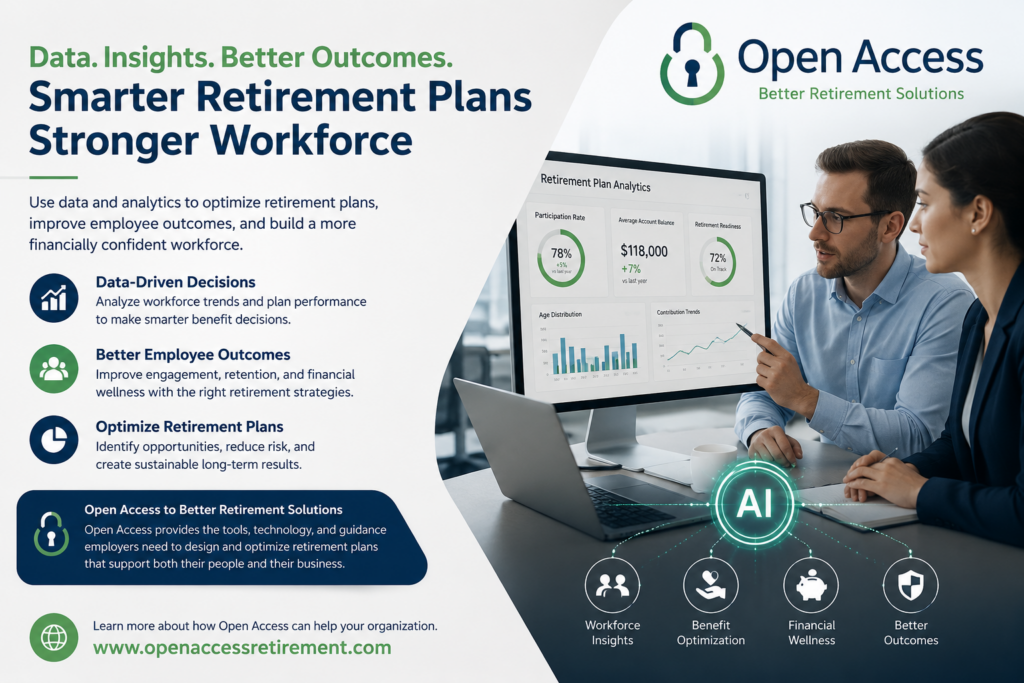
    Business leaders using retirement plan analytics and workforce data strategies with Open Access Limited in Toronto.

    References

    Gartner (2024) – HR and Workforce Analytics Research
    McKinsey & Company (2024) – People Analytics and Workforce Strategy
    MIT Sloan Management Review (2023) – Workforce Analytics and Data-Driven Decision Making
    CIPD (2023) – People Analytics and HR Insights
    IBM (2024) – Workforce Analytics and AI Applications

  • How to Design Retirement Plans That Improve Employee Engagement and Retention

    Employee expectations around workplace benefits continue to evolve. Today, retirement plans are no longer viewed solely as long-term financial tools — they are increasingly seen as part of the overall employee experience.

    When thoughtfully structured and clearly communicated, workplace retirement programs may help businesses strengthen employee engagement, improve financial confidence, and support long-term workforce stability.


    Why Retirement Plans Matter Beyond Retention

    Traditionally, organizations focused on retirement plans primarily as a retention strategy. However, research suggests these programs can also influence how employees feel about their employer on a day-to-day basis.

    Employees who understand their benefits and see ongoing employer support may feel more connected, valued, and financially supported within the organization.

    According to reports from organizations such as Mercer and Gallup, employee engagement is often influenced by financial wellness, transparency, and trust in the workplace.

    Key Features of an Employee-Focused Retirement Plan

    Businesses looking to improve employee engagement through retirement benefits often focus on several important plan design elements.

    Clear Employer Contributions

    Transparent employer matching or contribution structures can help employees better understand the value of their retirement benefits.

    When employees clearly see how their employer supports their long-term financial goals, it may contribute to stronger trust and appreciation.

    Flexible Savings Options

    Employees have different financial priorities depending on their life stage, income level, and personal goals.

    Offering flexible and accessible savings options may help improve participation by allowing employees to engage with the program in a way that fits their individual financial situation.

    Education plays an important role in employee participation and engagement.

    Research indicates employees are more likely to engage with workplace benefits when they feel informed and supported in their financial decision-making.

    Organizations may support this through:

    Financial wellness initiatives

    Educational workshops

    Retirement planning resources

    Employee onboarding sessions

    Regular benefits communication


    Common Challenges Businesses Face

    Even well-funded retirement plans may experience low participation if employees find them difficult to understand or disconnected from their needs.

    Plans that are overly complex, poorly communicated, or lacking personalization may limit employee engagement despite competitive financial structures.

    Workforce demographics, financial literacy levels, and company culture can all influence how employees interact with retirement benefits.

    For this reason, many organizations now take a more integrated approach by aligning retirement planning with broader employee experience and financial wellness strategies.


    The Role of Customized Retirement Strategies

    Some businesses choose to work with experienced advisory firms to help structure retirement programs that align with both organizational goals and employee needs.

    For example, Open Access Limited works with employers across Ontario to help design retirement solutions that support employee financial well-being while also considering workforce engagement and long-term business objectives.


    Final Thoughts

    Employee engagement is influenced by many factors, including workplace culture, leadership, communication, and financial wellness support.

    A thoughtfully designed retirement plan may help businesses create a stronger employee experience by improving financial confidence, increasing transparency, and reinforcing long-term employer support.

    As workforce expectations continue to evolve, organizations increasingly view retirement benefits not only as financial tools, but also as part of a broader employee engagement strategy.Effective retirement plans can support long-term employee satisfaction by creating stronger financial confidence and workplace stability. Businesses that regularly review their retirement plans can better adapt to changing workforce needs, improve employee retention, and build a more sustainable benefits strategy for future growth.

    Retirement Plans for Employee Engagement and Retention

    References:

    Mercer (2024).
    Global Talent Trends Report.
    https://www.mercer.com

    Willis Towers Watson (WTW) (2023).
    Global Benefits Attitudes Survey.
    https://www.wtwco.com

    Gallup (2024).
    State of the Global Workplace Report.
    https://www.gallup.com

    Benefits Canada (2025).
    Employee Engagement and Financial Wellness Insights.
    https://www.benefitscanada.com

    OECD (2023).
    Pensions and Financial Literacy Research.
    https://www.oecd.org