Retirement Planning Partner: 5 Smart Ways to Build Workforce Success
Retirement planning partner selection is becoming an important decision for businesses that want employee benefits to support long-term workforce goals, employee engagement, and organizational stability.
Choosing the right partner is not only about comparing retirement products. It is also about finding a provider that understands workforce demographics, employee needs, communication challenges, and broader business objectives.
For many organizations, retirement planning is now part of a larger workforce strategy. A strong partner can help connect retirement plan design with retention, education, participation, and long-term employee financial confidence.
Why Does Choosing the Right Retirement Planning Partner Matter?
A retirement planning partner can influence how employees understand, value, and participate in workplace retirement programs.
If the partner focuses only on products, the plan may not fully reflect company size, workforce composition, or employee expectations. However, when a partner understands business goals and workforce needs, retirement planning can become a more strategic employee benefits solution.
Businesses may benefit from evaluating partners based on transparency, communication, governance practices, and the ability to provide ongoing guidance.
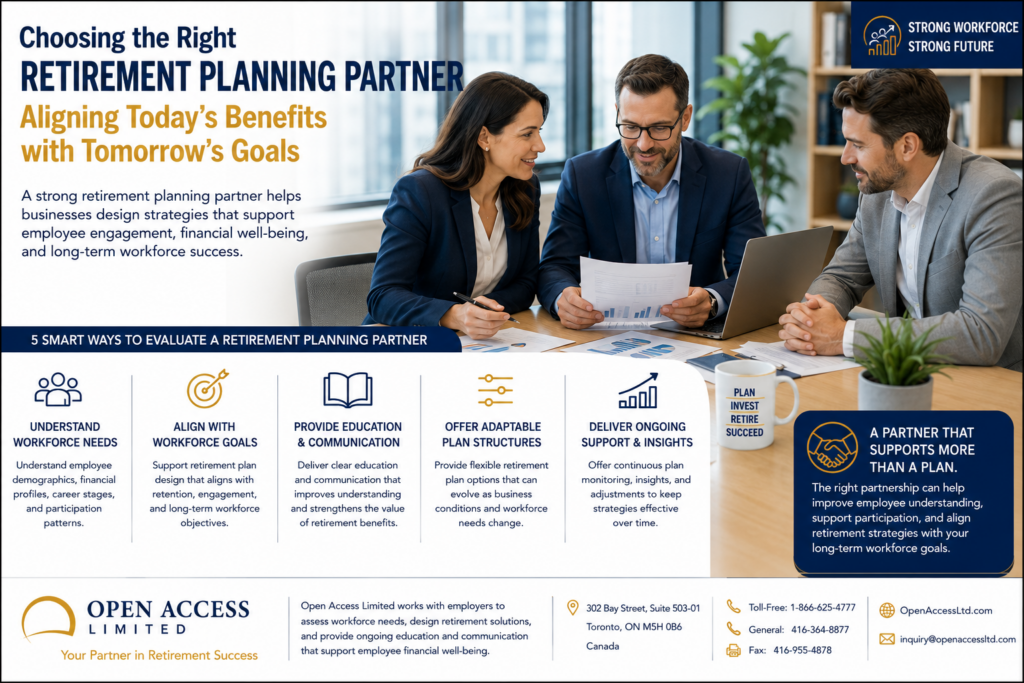
5 Smart Ways to Evaluate a Retirement Planning Partner
1. Understand Workforce Demographics and Employee Needs
A strong retirement planning partner should understand that employees may have different financial profiles, career stages, and participation patterns.
Some employees may need basic education about retirement savings, while others may require more advanced planning guidance. Understanding these differences can help businesses design benefits that are more relevant and easier to use.
2. Align Retirement Plan Design With Workforce Goals
Retirement strategies should support broader business objectives such as retention, engagement, and long-term workforce planning.
A qualified partner should help businesses connect retirement plan design with organizational priorities. This may include reviewing contribution structures, communication methods, and employee participation goals.
3. Provide Clear Employee Education and Communication
Even a well-designed retirement plan may not succeed if employees do not understand it.
A retirement planning partner should provide clear education, simple communication, and practical guidance. This can help employees understand the value of retirement benefits and how those benefits support their long-term financial future.
4. Offer Adaptable Retirement Plan Structures
Workforce needs can change over time. Business conditions, employee demographics, and financial expectations may also shift.
An effective partner should offer adaptable plan structures that allow businesses to review and adjust retirement strategies as needed. Flexibility can help organizations maintain benefits that remain aligned with long-term goals.
5. Deliver Ongoing Support and Plan Insights
Selecting a retirement planning partner should not be a one-time decision.
Ongoing monitoring, reporting, communication, and plan evaluation can help businesses understand whether their retirement strategy continues to meet employee and organizational needs.
A strong partner should provide insights that support continuous improvement.
How Can Businesses Compare Retirement Planning Partners?
Important questions may include:
Businesses can take a structured approach by asking whether a potential partner can support workforce analysis, employee education, plan design, governance, and long-term review.
Can the partner understand workforce demographics?
Can they support employee engagement?
Can they explain retirement benefits clearly?
Can they adjust strategies as business needs change?
Can they provide ongoing guidance and evaluation?
These questions help businesses compare partners beyond product features.
How Open Access Limited Supports Long-Term Workforce Goals
Open Access Limited, based in Ontario, works with employers to assess workforce demographics, design retirement plan structures aligned with organizational objectives, and provide ongoing employee education and communication support.
These services are supported by adaptable plan frameworks and continuous plan evaluation. This approach may help improve employee understanding, support participation, and align retirement strategies with long-term workforce goals.
Open Access Limited
302 Bay Street, Suite 503-01
Toronto, ON M5H 0B6
Phone: 1-866-625-4777
Email: inquiry@openaccessltd.com
Website: OpenAccessLtd.com
Final Thoughts:
Choosing the right retirement planning partner can help businesses connect employee benefits with long-term workforce success.
A strong partner should understand employee needs, support clear communication, provide adaptable planning structures, and offer ongoing guidance.
For organizations focused on retention, engagement, and sustainable workforce planning, retirement partner selection can become an important part of a broader benefits strategy.
Benefits Canada – Employee Benefits and Retirement Insights
https://www.benefitscanada.comr
CAPSA – Pension Plan Governance Guidelines
https://www.capsa-acor.org
Morningstar – Financial Advice and Retirement Planning Research
https://www.morningstar.com
Suggested Image ALT Text:
Canadian business leaders evaluating a retirement planning partner, workforce goals, employee education, retirement benefits strategy, and long-term employee engagement in a modern corporate office.