Business owners use retirement planning strategies to support succession planning, protect long-term goals, and create smoother ownership transitions.
Succession planning is one of the most important long-term decisions a companies will make. Whether preparing for retirement, selling a business, transferring ownership to family members, or transitioning leadership to a management team, maintaining workforce stability throughout the process is critical.
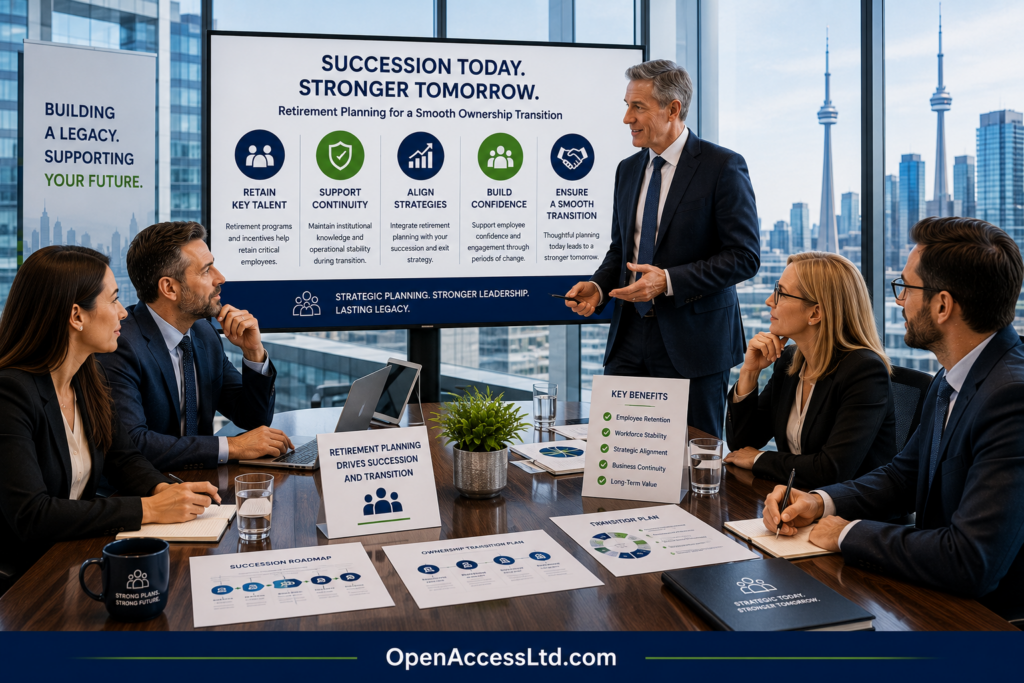
When integrated into broader business transition strategies, retirement programs may help retain key employees, preserve institutional knowledge, support workforce continuity, and create a smoother ownership transition.
Why Retirement Planning Matters During Business Transitions
Common concerns during succession periods may include:
- Leadership changes
- Employee retention
- Workforce stability
- Knowledge transfer
- Organizational continuity
- Long-term business sustainability
Retirement strategies may help address these concerns by providing employees with long-term financial support and reinforcing confidence in the organization’s future direction.
1. Retaining Key Employees During Transition Periods
One of the greatest risks during ownership transitions is the loss of experienced employees.
Key personnel often hold valuable institutional knowledge, client relationships, and operational expertise that can be difficult to replace.
Structured retirement programs may help encourage long-term employee commitment by supporting financial well-being and providing incentives for continued participation during transition periods.
Potential Benefits Include:
- Improved employee retention
- Reduced turnover risk
- Preservation of institutional knowledge
- Greater operational stability
- Stronger workforce confidence
2. Supporting Workforce Continuity and Succession Readiness
Retirement long-term financial strategies can also support broader workforce continuity objectives.
Businesses that align retirement benefits with long-term workforce planning may be better positioned to prepare for leadership transitions and future talent needs.
Retirement Planning May Support:
- Leadership succession preparation
- Talent pipeline development
- Knowledge transfer initiatives
- Long-term workforce participation
- Organizational resilience
By planning ahead, organizations may reduce disruption and improve readiness for future leadership changes.
3. Aligning Retirement Planning With employers Transition Strategies
Many business owners incorporate retirement planning into their overall ownership transition framework.
Whether the goal is selling the business, transferring ownership internally, or preparing the next generation of leadership, retirement programs may help support employee engagement throughout the process.
- Greater workforce confidence
- Improved engagement
- Reduced uncertainty
- Stronger organizational trust
- More stable transition periods
This alignment may contribute to a smoother and more predictable ownership transition.
4. Maintaining Employee Confidence During Change
Communication is often a critical component of successful succession planning.
Periods of organizational change can create uncertainty, particularly when employees are unsure how leadership transitions may affect their future.
Effective Communication Strategies Include:
- Retirement education sessions
- Ongoing employee updates
- Financial wellness resources
- Leadership transition communication plans
- Long-term workforce planning discussions
5. Integrating Retirement Planning Into Long-Term Business Strategy
The most effective succession plans often integrate retirement planning into broader organizational objectives.
Retirement programs may support:
- Business continuity planning
- Leadership development
- Workforce sustainability
- Employee retention
- Long-term organizational growth
Rather than functioning solely as an employee benefit, retirement planning can become a strategic tool that helps business owners prepare for future transitions while supporting workforce stability.
Supporting Successful Ownership Transitions Through Strategic Retirement Planning
For example, Open Access Limited works with business owners across Ontario and Canada to help structure retirement programs that support employee retention, align benefit design with succession timelines, and provide ongoing communication and education throughout ownership transition periods.
Final Thoughts
Successful succession planning involves more than legal agreements and financial transactions. It also requires a thoughtful approach to workforce continuity and employee engagement.
By integrating Business Owners retirement planning into succession strategies, business owners may strengthen employee retention, support leadership transitions, preserve institutional knowledge, and create a smoother ownership transition for all stakeholders.
References:
Mercer (2024).
Workforce and Retirement Strategy Insights.
https://www.mercer.com
OECD (2023).
Pensions Outlook and Workforce Transition Analysis.
https://www.oecd.org
CFIB (Canadian Federation of Independent Business).
Business Succession and Transition Insights.
https://www.cfib-fcei.ca
Vanguard Institutional.
Retirement and Long-Term Workforce Planning Research.
https://institutional.vanguard.com
Fidelity Workplace.
Retirement and Employer Strategy Trends.
https://www.fidelity.com