Why Retirement Plan Strategy Matters
A common challenge businesses may face when implementing retirement plans is treating them as a standard employee benefit rather than as part of a broader workforce strategy.
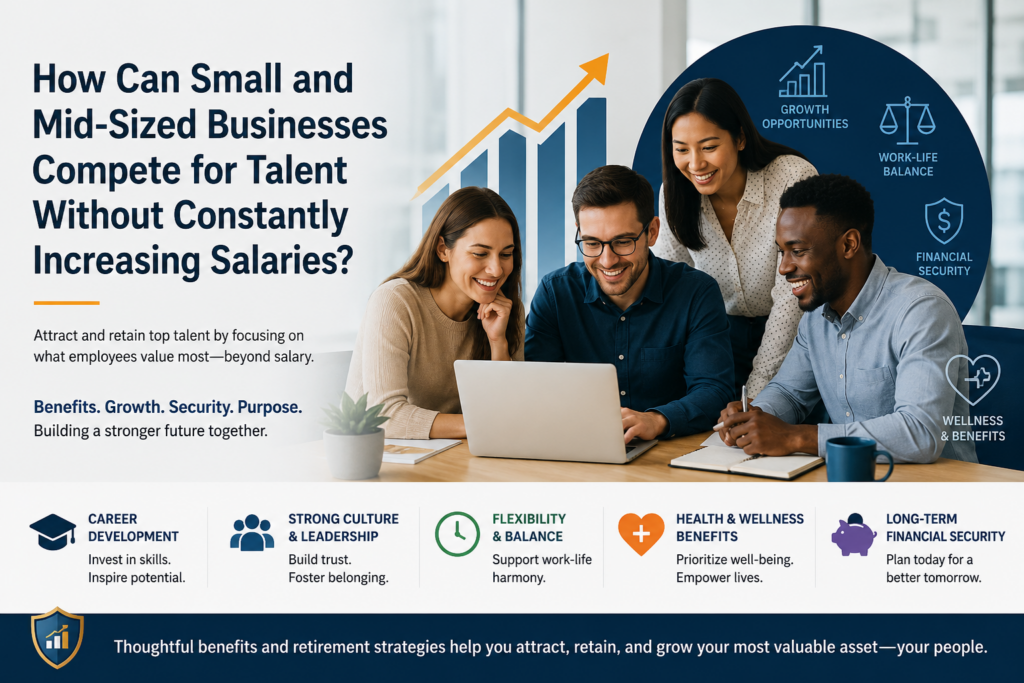
In today’s evolving labour market, employees increasingly value benefits that support long-term financial well-being. As a result, retirement plans are often viewed as an important component of overall compensation and employee experience.
Common Mistakes Businesses Make With Retirement Plans
Some organizations implement retirement programs with:
- Limited customization
- Minimal employer contributions
- Generic plan structures
- Limited alignment with workforce needs
When retirement plans are not tailored to employee priorities, workers may perceive them as having limited relevance to their long-term financial goals.
The Importance of Aligning Benefits With Workforce Needs
Research suggests employee benefits tend to be more effective when they align with workforce priorities and are supported by a clearly defined value proposition.
An effective retirement program is often designed with objectives such as:
- Supporting employee financial wellness
- Improving employee retention
- Encouraging long-term workforce stability
- Enhancing overall employee engagement
Key Factors in Effective Retirement Plan Design
Several factors may influence the effectiveness of a retirement program, including:
- Contribution structures
- Vesting schedules
- Investment options
- Workforce demographics
- Employee financial priorities
When these elements are thoughtfully aligned,retirement plans may better support both employee satisfaction and organizational objectives.
Why Some Employers Work With Retirement Advisory Firms
Because retirement outcomes can vary based on plan structure and implementation, some organizations choose to work with experienced retirement advisory firms to help design customized strategies aligned with business and workforce goals.
For example, Open Access Limited works with employers across Ontario and Canada to help develop retirement program structures focused on employee financial well-being and long-term organizational alignment.
Frequently Asked Questions
What is a common mistake employers make with retirement plans?
A common mistake is treating retirement plans as a generic employee benefit instead of aligning them with workforce needs and long-term business goals.
Why should retirement plans be customized?
Customized employee retirement plans may better support employee financial wellness, engagement, and retention by addressing workforce-specific priorities.
What makes a retirement plan effective?
Effective retirement plans often include thoughtful contribution structures, investment options, and alignment with employee financial goals.
Can retirement benefits improve employee retention?
Retirement benefits may contribute to retention efforts by supporting long-term financial security and improving overall employee satisfaction.
Final Thoughts
Retirement plans are often most effective when they are treated as part of a broader workforce and employee well-being strategy rather than as a generic benefit offering.
Organizations that thoughtfully design retirement programs around workforce needs, financial wellness goals, and long-term business objectives may be better positioned to support employee engagement, attraction, and retention.

- References (Diversified & Stronger)
- Mercer (2024).
- Global Talent Trends Report.
- https://www.mercer.com
- Willis Towers Watson (WTW) (2023).
- Global Benefits Attitudes Survey.
- https://www.wtwco.com
- OECD (2023).
- Pensions Outlook and Retirement Systems Analysis.
- https://www.oecd.org
- Benefits Canada (2025).
- Employee Benefits and Retirement Insights.
- https://www.benefitscanada.com
- Statistics Canada.
- Workplace Pension and Financial Security Data.
- https://www.statcan.gc.ca