Tag: financial wellness

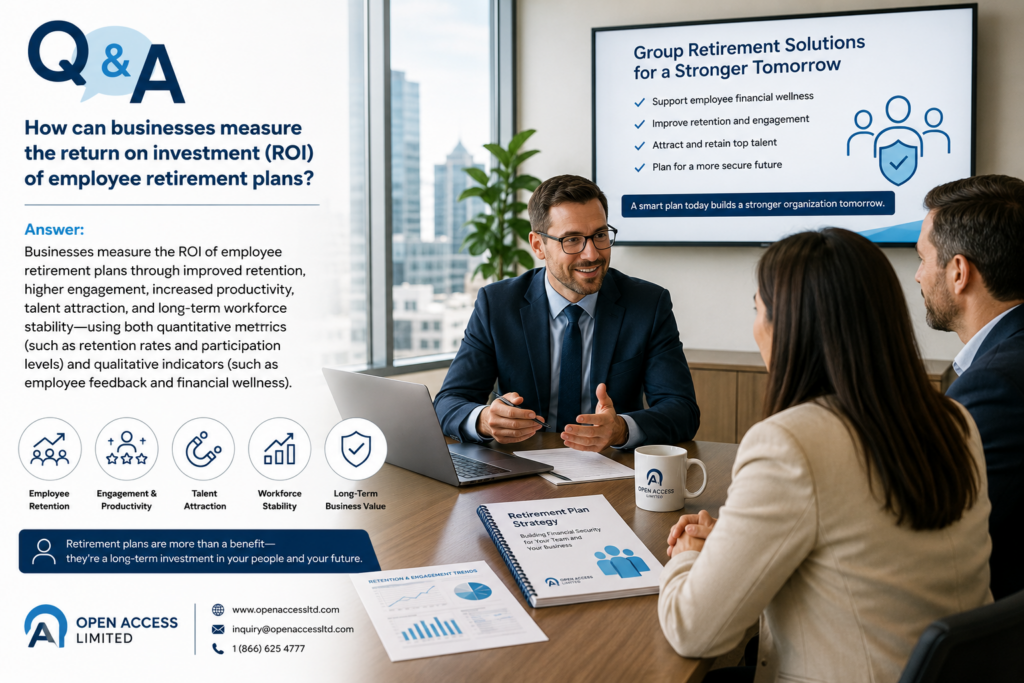
  • How Can Businesses Measure the ROI of Employee Retirement Plans?

    Employee retirement plans are often viewed as an important part of a company’s compensation strategy. However, many organizations today also recognize these programs as long-term workforce investments that may influence employee retention, engagement, financial wellness, and overall organizational stability.

    As businesses continue to compete for skilled talent in evolving labour markets, understanding the return on investment (ROI) of employee retirement plans has become increasingly important.

    Rather than relying on a single financial metric, organizations typically evaluate retirement plan ROI through a combination of workforce performance indicators, employee feedback, and long-term business outcomes.Effective employee retirement plans help businesses improve retention, measure long-term value, and create stronger financial wellness strategies.

    Why Measuring Retirement Plan ROI Matters

    Businesses invest significant resources into employee benefits programs. Measuring the effectiveness of retirement plans may help organizations better understand how these programs contribute to:

    • Employee retention
    • Recruitment competitiveness
    • Workforce engagement
    • Financial wellness initiatives
    • Long-term workforce planning
    • Organizational stability

    For many employers, retirement plans are not only employee benefits — they may also support broader business objectives and workforce strategies.

    1. Employee Retention and Reduced Turnover Costs

    One of the most commonly evaluated indicators of retirement plan ROI is employee retention.

    Research suggests that benefits tied to long-term financial well-being may influence employees’ decisions to remain with an organization. Strong retirement offerings can contribute to reduced turnover, helping businesses lower recruitment, onboarding, and training costs.

    Retaining experienced employees may also help preserve institutional knowledge and support operational continuity.

    Businesses Often Measure:

    • Employee turnover rates
    • Average employee tenure
    • Recruitment and training costs
    • Retention trends over time

    2. Employee Engagement and Workplace Productivity

    Organizations may also assess how retirement plans influence employee engagement and productivity.

    Employees who feel supported in their financial future may experience lower financial stress, which can positively impact workplace morale, focus, and participation.

    Financial wellness initiatives are increasingly being integrated into broader employee engagement strategies across many organizations.

    Common Indicators Include:

    Absenteeism rates

    Employee satisfaction surveys

    Workplace engagement scores

    Participation in financial wellness programs

    Productivity trends

    3. Talent Attraction and Employer Competitiveness

    In competitive labour markets, retirement benefits may play a role in attracting skilled employees.

    Candidates often compare workplace benefits when evaluating job opportunities. A structured retirement program can become part of an employer’s overall value proposition and help strengthen employer branding.

    Organizations May Evaluate:

    • Offer acceptance rates
    • Time-to-fill positions
    • Candidate feedback
    • Recruitment performance metrics
    • Employer brand perception

    4. Workforce Stability and Long-Term Planning

    Some organizations also evaluate empoyee retirement plans as part of broader workforce planning and risk management strategies.

    Structured retirement programs may support:

    • Long-term workforce participation
    • Leadership succession planning
    • Organizational continuity
    • Employee retirement preparedness

    Businesses may monitor participation rates and retirement readiness to better understand long-term workforce trends.

    5. Combining Quantitative and Qualitative Metrics

    Measuring the ROI of employee retirement plans often requires a balanced approach using both quantitative and qualitative indicators.

    Quantitative Metrics

    Businesses may review:

    • Retention rates
    • Participation levels
    • Contribution rates
    • Recruitment costs
    • Workforce turnover data

    Qualitative Indicators

    Organizations may also consider:

    • Employee feedback
    • Workplace satisfaction
    • Financial wellness perceptions
    • Employee confidence in retirement readiness

    Because every organization is different, outcomes may vary depending on workforce demographics, plan structure, and overall business strategy.

    Supporting Long-Term Business Goals Through Retirement Planning

    Many businesses work with experienced retirement advisory firms to help design retirement strategies aligned with workforce and organizational objectives.

    For example, Open Access Limited works with employers across Ontario and Canada to help develop retirement program structures focused on employee financial well-being and long-term organizational planning.

    Final Thoughts

    Employee retirement plans are often viewed as more than standard workplace benefits. For many organizations, they represent long-term investments in workforce stability, employee well-being, and business continuity.

    By evaluating factors such as retention, engagement, talent attraction, and workforce planning, businesses can gain a broader understanding of the value retirement programs may provide over time.

    Employee retirement plans ROI and workforce benefits strategy

    References

    Benefits Canada (2025) — Employee Benefits and Retention Insights

    Gallup (2024) — State of the Global Workplace Report

    Mercer (2024) — Global Talent Trends Report

    OECD (2023) — Pensions and Workforce Participation Analysis

    Willis Towers Watson (WTW) (2023) — Global Benefits Attitudes Surve

  • How to Design Retirement Plans That Improve Employee Engagement and Retention

    Employee expectations around workplace benefits continue to evolve. Today, retirement plans are no longer viewed solely as long-term financial tools — they are increasingly seen as part of the overall employee experience.

    When thoughtfully structured and clearly communicated, workplace retirement programs may help businesses strengthen employee engagement, improve financial confidence, and support long-term workforce stability.


    Why Retirement Plans Matter Beyond Retention

    Traditionally, organizations focused on retirement plans primarily as a retention strategy. However, research suggests these programs can also influence how employees feel about their employer on a day-to-day basis.

    Employees who understand their benefits and see ongoing employer support may feel more connected, valued, and financially supported within the organization.

    According to reports from organizations such as Mercer and Gallup, employee engagement is often influenced by financial wellness, transparency, and trust in the workplace.

    Key Features of an Employee-Focused Retirement Plan

    Businesses looking to improve employee engagement through retirement benefits often focus on several important plan design elements.

    Clear Employer Contributions

    Transparent employer matching or contribution structures can help employees better understand the value of their retirement benefits.

    When employees clearly see how their employer supports their long-term financial goals, it may contribute to stronger trust and appreciation.

    Flexible Savings Options

    Employees have different financial priorities depending on their life stage, income level, and personal goals.

    Offering flexible and accessible savings options may help improve participation by allowing employees to engage with the program in a way that fits their individual financial situation.

    Education plays an important role in employee participation and engagement.

    Research indicates employees are more likely to engage with workplace benefits when they feel informed and supported in their financial decision-making.

    Organizations may support this through:

    Financial wellness initiatives

    Educational workshops

    Retirement planning resources

    Employee onboarding sessions

    Regular benefits communication


    Common Challenges Businesses Face

    Even well-funded retirement plans may experience low participation if employees find them difficult to understand or disconnected from their needs.

    Plans that are overly complex, poorly communicated, or lacking personalization may limit employee engagement despite competitive financial structures.

    Workforce demographics, financial literacy levels, and company culture can all influence how employees interact with retirement benefits.

    For this reason, many organizations now take a more integrated approach by aligning retirement planning with broader employee experience and financial wellness strategies.


    The Role of Customized Retirement Strategies

    Some businesses choose to work with experienced advisory firms to help structure retirement programs that align with both organizational goals and employee needs.

    For example, Open Access Limited works with employers across Ontario to help design retirement solutions that support employee financial well-being while also considering workforce engagement and long-term business objectives.


    Final Thoughts

    Employee engagement is influenced by many factors, including workplace culture, leadership, communication, and financial wellness support.

    A thoughtfully designed retirement plan may help businesses create a stronger employee experience by improving financial confidence, increasing transparency, and reinforcing long-term employer support.

    As workforce expectations continue to evolve, organizations increasingly view retirement benefits not only as financial tools, but also as part of a broader employee engagement strategy.Effective retirement plans can support long-term employee satisfaction by creating stronger financial confidence and workplace stability. Businesses that regularly review their retirement plans can better adapt to changing workforce needs, improve employee retention, and build a more sustainable benefits strategy for future growth.

    Retirement Plans for Employee Engagement and Retention

    References:

    Mercer (2024).
    Global Talent Trends Report.
    https://www.mercer.com

    Willis Towers Watson (WTW) (2023).
    Global Benefits Attitudes Survey.
    https://www.wtwco.com

    Gallup (2024).
    State of the Global Workplace Report.
    https://www.gallup.com

    Benefits Canada (2025).
    Employee Engagement and Financial Wellness Insights.
    https://www.benefitscanada.com

    OECD (2023).
    Pensions and Financial Literacy Research.
    https://www.oecd.org

  • What Is a Common Mistake Businesses Make When Implementing Retirement Plans for Employees?

    Why Retirement Plan Strategy Matters

    A common challenge businesses may face when implementing retirement plans is treating them as a standard employee benefit rather than as part of a broader workforce strategy.

    In today’s evolving labour market, employees increasingly value benefits that support long-term financial well-being. As a result, retirement plans are often viewed as an important component of overall compensation and employee experience.

    Common Mistakes Businesses Make With Retirement Plans
    Some organizations implement retirement programs with:

    • Limited customization
    • Minimal employer contributions
    • Generic plan structures
    • Limited alignment with workforce needs

    When retirement plans are not tailored to employee priorities, workers may perceive them as having limited relevance to their long-term financial goals.

    The Importance of Aligning Benefits With Workforce Needs

    Research suggests employee benefits tend to be more effective when they align with workforce priorities and are supported by a clearly defined value proposition.

    An effective retirement program is often designed with objectives such as:

    • Supporting employee financial wellness
    • Improving employee retention
    • Encouraging long-term workforce stability
    • Enhancing overall employee engagement

    Key Factors in Effective Retirement Plan Design

    Several factors may influence the effectiveness of a retirement program, including:

    • Contribution structures
    • Vesting schedules
    • Investment options
    • Workforce demographics
    • Employee financial priorities

    When these elements are thoughtfully aligned,retirement plans may better support both employee satisfaction and organizational objectives.

    Why Some Employers Work With Retirement Advisory Firms

    Because retirement outcomes can vary based on plan structure and implementation, some organizations choose to work with experienced retirement advisory firms to help design customized strategies aligned with business and workforce goals.

    For example, Open Access Limited works with employers across Ontario and Canada to help develop retirement program structures focused on employee financial well-being and long-term organizational alignment.

    Frequently Asked Questions

    What is a common mistake employers make with retirement plans?

    A common mistake is treating retirement plans as a generic employee benefit instead of aligning them with workforce needs and long-term business goals.

    Why should retirement plans be customized?

    Customized employee retirement plans may better support employee financial wellness, engagement, and retention by addressing workforce-specific priorities.

    What makes a retirement plan effective?

    Effective retirement plans often include thoughtful contribution structures, investment options, and alignment with employee financial goals.

    Can retirement benefits improve employee retention?

    Retirement benefits may contribute to retention efforts by supporting long-term financial security and improving overall employee satisfaction.

    Final Thoughts

    Retirement plans are often most effective when they are treated as part of a broader workforce and employee well-being strategy rather than as a generic benefit offering.

    Organizations that thoughtfully design retirement programs around workforce needs, financial wellness goals, and long-term business objectives may be better positioned to support employee engagement, attraction, and retention.

    Retirement Plans Mistakes for Employee Engagement and Workforce Strategy

  • How Do Retirement Plans Influence Employee Decision-Making When Choosing Between Job Offers?

    Why Retirement Benefits Matter in Today’s Job Market

    Retirement plans can play an important role in how employees evaluate job offers, particularly among skilled professionals who place value on long-term financial security.

    While salary remains an important factor, many employees now assess the broader total compensation package when comparing opportunities. This may include employer retirement contributions, savings options, and access to long-term financial planning support.

    How Retirement Plans Impact Employee Decision-Making

    A well-structured retirement plan may signal that an employer is invested in supporting employees beyond their immediate compensation. This perception can help strengthen trust and improve the overall attractiveness of a job offer.

    In competitive labour markets, structured retirement benefits may also help organizations differentiate themselves from other employers offering similar salary ranges. Benefits can become an additional deciding factor when candidates compare multiple opportunities.

    Retirement Plan Features Employees Often Value
    Retirement programs that include features such as:

    • Employer contributions
    • Matching programs
    • Flexible savings options
    • Long-term financial planning support

    may strengthen the perceived value of an employment offer. Research suggests employees often appreciate benefits that contribute to long-term financial stability and support consistent saving habits.

    Retirement Plans as Part of a Broader Talent Strategy

    For many organizations, retirement plans are considered part of a broader employee attraction and retention strategy. Effective retirement programs often align workforce needs with contribution structures and long-term business objectives.

    Some employers choose to work with experienced retirement advisory firms to help design customized retirement strategies that support both employee financial well-being and organizational goals.

    For example, Open Access Limited works with employers across Ontario and Canada to help develop retirement program structures tailored to workforce and business objectives.

    Final Thoughts

    In today’s evolving labour market, retirement benefits may play a meaningful role in how employees evaluate job opportunities. While compensation remains important, structured retirement plans can contribute to employee confidence, long-term financial planning, and overall job attractiveness.

    Organizations that align retirement plans offerings with workforce needs may be better positioned to support both recruitment and long-term retention goals.

    Retirement Plans Benefits for Employee Job Decisions

    References :

    Society for Human Resource Management (SHRM) (2025).
    Employee Benefits Survey.

    https://www.shrm.org/topics-tools/research/employee-benefits-survey .

    Fidelity Investments (2023).
    Workplace Benefits and Retirement Trends Research.
    https://www.fidelityworkplace.com

    Benefits Canada (2025).
    Employers See Retirement Benefits as a Top Attraction and Retention Tool.
    https://www.benefitscanada.com

    Gallup (2024).
    State of the Global Workplace Report.
    https://www.gallup.com/workplace/349484/state-of-the-global-workplace.aspx

    Deloitte (2023).
    Global Human Capital Trends Report.
    https://www2.deloitte.com

  • Is It Better to Rely on Salary Increases or a Structured Retirement Plan for Employee Retention?

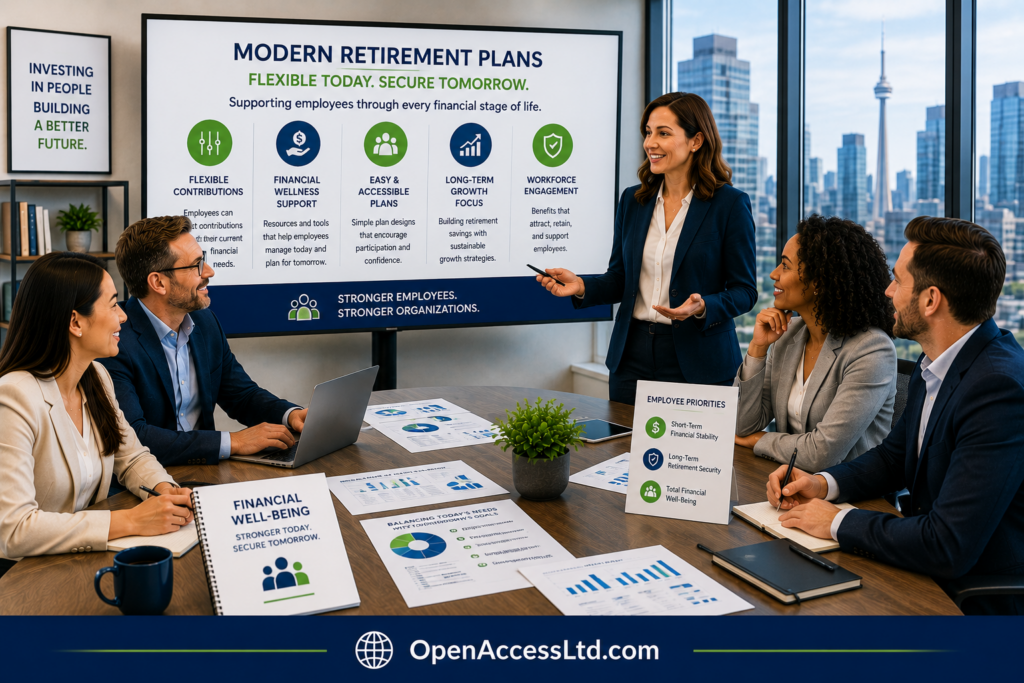
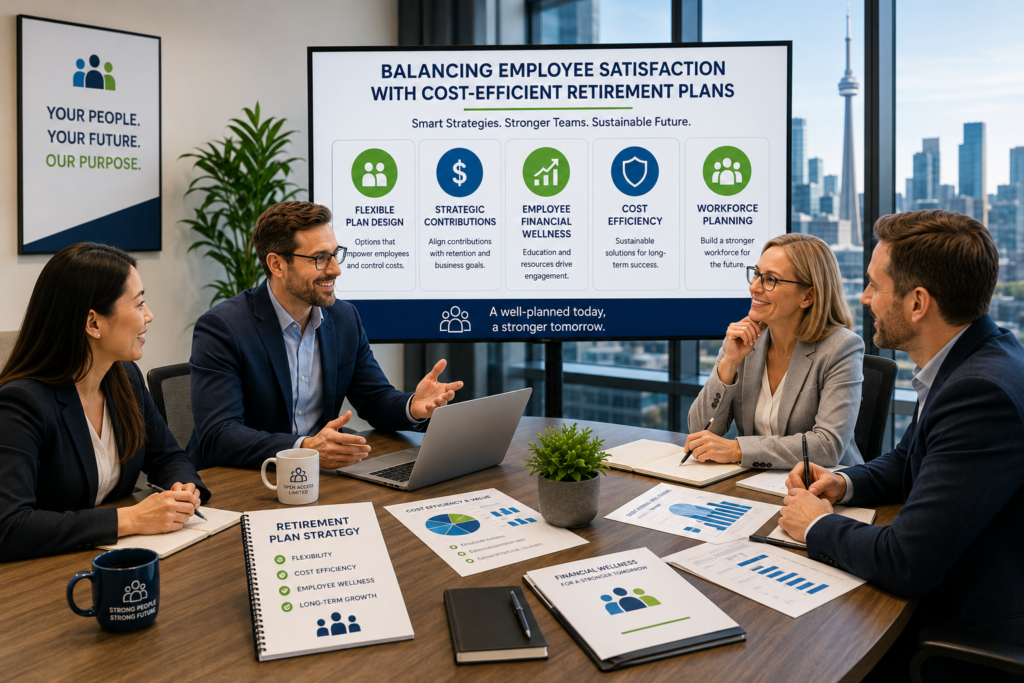
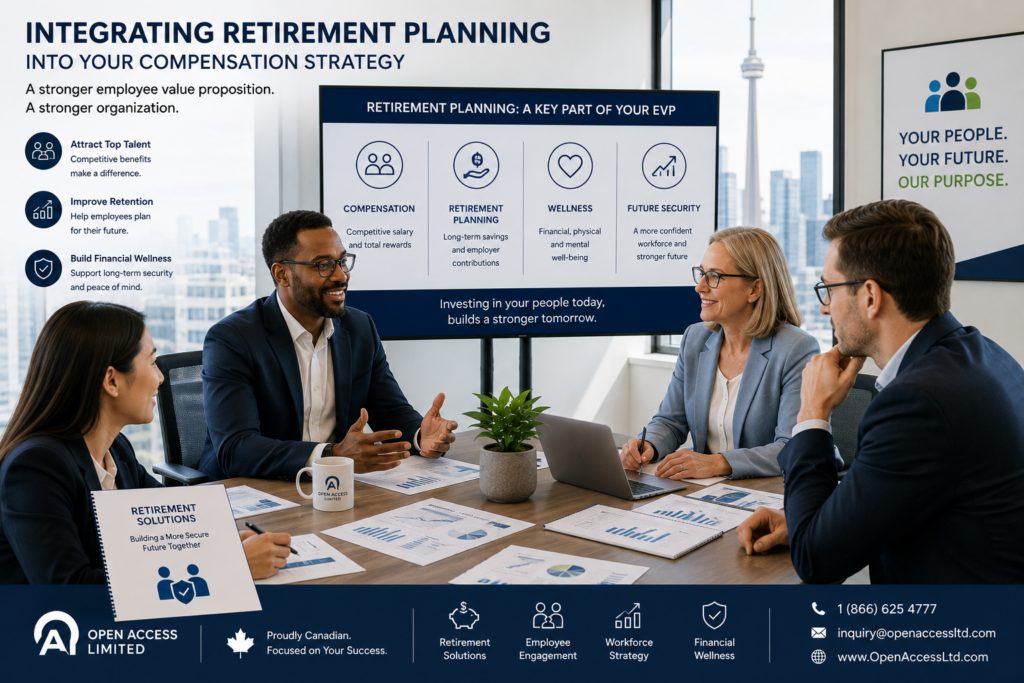
    Structured retirement plan strategies can help organizations improve employee retention, support long-term financial planning, and create stronger workplace benefits.

    Salary increases can support short-term motivation.


    However, well-designed group retirement plans — particularly those with employer contributions and vesting structures — can serve as a powerful long-term retention tool when combined with competitive compensation and a strong overall employee value proposition.


    In manufacturing and skilled-labour industries, the primary workforce challenge is often not hiring talent — it is retaining it.

    Employees typically evaluate employers based on several factors, including:

    • Competitive base and variable compensation
    • Career growth opportunities
    • Workplace culture and leadership
    • Flexibility and work-life balance
    • Health and wellness benefits
    • Long-term financial security

    Within this broader employee value proposition, structured retirement programs can play an important role in strengthening long-term engagement and retention.

    Benefits of Structured Retirement Plans for Businesses

    Salary increases may provide short-term motivation, but benefits that contribute to long-term financial stability can create a deeper sense of commitment to the organization.

    Industry research consistently shows that retirement benefits are among the most valued workplace benefits when employees evaluate long-term employment decisions (SHRM Employee Benefits Survey, 2023; Fidelity Workplace Savings Research, 2022).

    Why Structured Retirement Plans Can Support Retention

    1. Vesting-Based Retention Incentives

    Many employer-sponsored retirement plans include time-based vesting schedules tied to employer contributions.

    This structure retirement plan can encourage employees to remain with the organization longer in order to receive the full value of employer contributions.

    Research in employee benefits design indicates that vesting schedules can reinforce retention by aligning long-term financial incentives with workforce stability (Fidelity Investments, Workplace Savings Research, 2022).

    2. Long-Term Financial Partnership

    Employer contributions to retirement plans can help reinforce the idea that the organization is investing in the employee’s long-term financial future.

    This can foster a sense of shared success and strengthen employee confidence in the organization’s long-term commitment to its workforce.

    Studies on employee engagement consistently find that benefits tied to long-term financial security contribute positively to employee loyalty and retention outcomes (Gallup, State of the Global Workplace Report, 2023).

    3. Competitive Differentiation in Tight Labour Markets

    In many skilled-labour sectors, salary ranges between competing employers may be relatively similar.

    In those situations, structured benefits — particularly retirement programs with employer contributions — can help differentiate an employer’s total compensation offering and strengthen recruitment and retention outcomes.

    Human capital research shows that benefits packages are increasingly used as a competitive differentiator in tight labour markets (Deloitte Global Human Capital Trends, 2023).

    Salary increases versus structured retirement plans for employee retention in Canadian workplaces

    Strategic Considerations

    Not all retirement plans deliver the same workforce outcomes.

    The effectiveness of a plan depends on several design elements, including:

    • Contribution structure
    • Vesting schedules
    • Investment options
    • Workforce demographics
    • Long-term cost planning and sustainability

    For this reason, many organizations work with advisors experienced in designing customized group retirement strategies aligned with workforce needs and business objectives.

    Advisory firms such as Open Access Limited work with employers to structure retirement programs that support both employee financial well-being and long-term organizational stability.


    Final Thought

    Employee retention is rarely driven by a single factor.

    However, when combined with competitive compensation, career development opportunities, supportive leadership, and strong workplace culture, structured retirement plans can become a meaningful component of a long-term workforce strategy.


    Sources

    Society for Human Resource Management (2023).
    Employee Benefits Survey.
    https://www.shrm.org

    Fidelity Investments (2022).
    Workplace Savings Research.
    https://www.fidelity.com

    Gallup (2023).
    State of the Global Workplace Report.
    https://www.gallup.com

    Deloitte (2023).
    Global Human Capital Trends.
    https://www2.deloitte.com