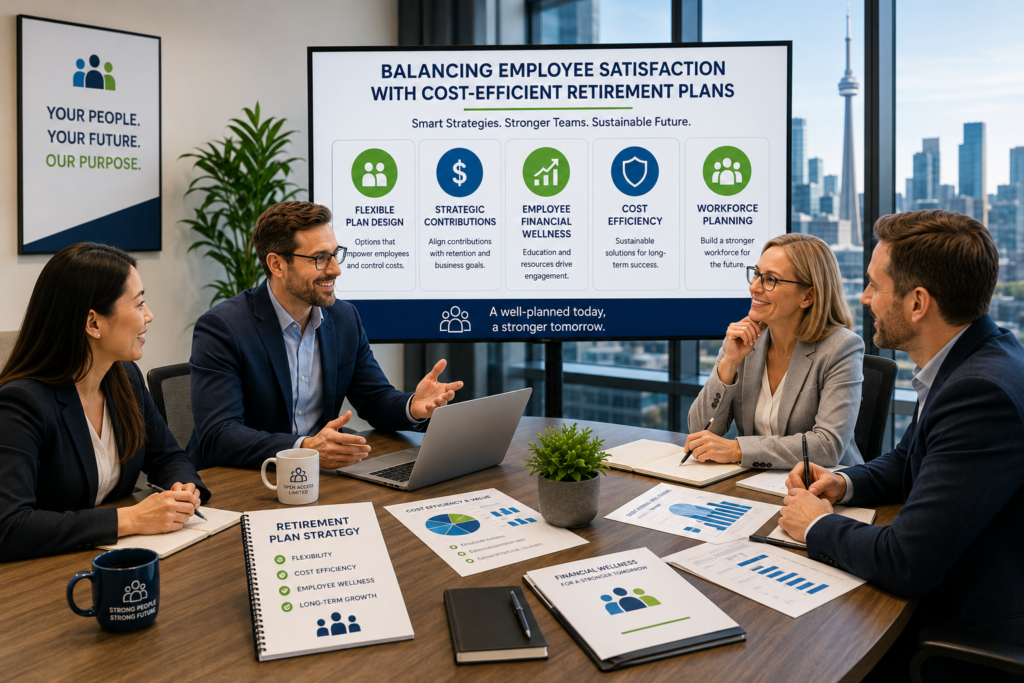
Balancing employee satisfaction with financial sustainability is an important consideration for businesses when designing retirement plans.
Organizations today are increasingly focused on creating retirement programs that support employee financial wellness while also maintaining long-term cost efficiency and operational flexibility.
Rather than viewing retirement benefits solely as an expense, many businesses consider retirement planning part of a broader workforce and compensation strategy designed to improve employee engagement, retention, and organizational stability.
A well-structured retirement plan may help businesses strengthen employee value while managing financial commitments responsibly.
Why Balancing Cost Efficiency and Employee Satisfaction Matters
Retirement plans often play an important role in:
- Employee retention
- Workforce engagement
- Financial wellness initiatives
- Employer competitiveness
- Long-term workforce planning
At the same time, businesses must also consider:
- Budget management
- Cash flow stability
- Workforce growth
- Long-term financial sustainability
Because every organization has different operational needs and workforce demographics, retirement strategies are often most effective when designed with flexibility and scalability in mind.
Effective Retirement Plans help businesses create stronger employee financial strategies
1. Incorporate Flexibility Into Plan Design
One approach to balancing employee satisfaction with cost efficiency is building flexibility into the retirement plan structure.
Flexible contribution models may allow employees to participate according to their financial goals while helping employers maintain greater control over fixed costs.
Flexible Features May Include:
- Optional contribution structures
- Tiered participation levels
- Adjustable employer contribution models
- Scalable retirement options
- Flexible savings strategies
This type of structure may help businesses support diverse workforce needs while maintaining financial sustainability.
2. Align Employer Contributions With Workforce Objectives
Some organizations structure employer contributions strategically rather than applying uniform contribution levels across the workforce.
For example, contribution models may be aligned with:
- Employee tenure
- Retention objectives
- Workforce planning goals
- Organizational growth priorities
This approach may help businesses direct financial resources more effectively while supporting employee loyalty and long-term workforce stability.
3. Improve Employee Engagement Through Clear Communication
Communication and perceived value are important factors in retirement plan participation and employee satisfaction.
Research suggests that employees may engage more actively with retirement programs when they clearly understand:
- How the plan works
- Long-term financial benefits
- Contribution opportunities
- Retirement planning strategies
Clear communication and financial education initiatives may help improve participation and employee confidence without necessarily increasing overall program costs.
Modern Retirement Plans can improve employee engagement and workforce planning
Organizations May Provide:
- Retirement education resources
- Financial wellness workshops
- Simplified plan communication
- Personalized retirement guidance
- Employee support materials
4. Build Scalable Retirement Structures
As businesses grow, workforce needs and financial capacity often evolve.
Scalable retirement structures may allow organizations to adjust:
- Contribution levels
- Plan features
- Participation options
- Workforce support strategies
This flexibility may help businesses maintain alignment between retirement planning and broader organizational priorities over time.Well-designed Retirement Plans support long-term workforce stability and business growth.
A scalable approach can also support:
- Business growth
- Workforce expansion
- Long-term financial planning
- Cost predictability
5. Integrate Retirement Planning Into a Broader Compensation Strategy
Many organizations integrate retirement planning into a broader compensation and employee value proposition (EVP) strategy.
Coordinating retirement benefits alongside salary, wellness initiatives, and other workplace benefits may help businesses create a more balanced and sustainable compensation framework.Effective Retirement Plans help businesses support employees and improve long-term financial stability.
This integrated approach may support:
- Employee satisfaction
- Employer competitiveness
- Workforce engagement
- Financial sustainability
- Long-term organizational planning
Supporting Sustainable Retirement Strategies Through Experienced Guidance
Because workforce demographics, financial conditions, and organizational goals vary, some businesses choose to work with experienced retirement advisory firms when developing retirement strategies.
For example, Open Access Limited works with employers across Ontario and Canada to help design retirement program structures that support employee financial well-being while aligning with long-term financial sustainability and workforce planning objectives
Explore more retirement planning strategies for building stronger employee benefit solutions.
Final Thoughts
Balancing employee satisfaction with cost efficiency requires a thoughtful and flexible approach to retirement planning.
By incorporating scalable structures, strategic contribution models, financial education, and workforce-aligned planning strategies, businesses may create retirement programs that support both employee well-being and long-term organizational sustainability.Strong Retirement Plans and effective retirement planning help businesses support employees,improve financial confidence, and prepare for long-term success.
References:
Mercer (2024).
Global Talent Trends Report.
https://www.mercer.com
Willis Towers Watson (WTW) (2023).
Global Benefits Attitudes Survey.
https://www.wtwco.com
PwC (2024).
Workforce Cost Optimization and Strategy Insights.
https://www.pwc.com
Benefits Canada (2025).
Retirement and Workforce Planning Insights.
https://www.benefitscanada.com
OECD (2023).
Pension Systems and Cost Sustainability Analysis.
https://www.oecd.org
Leave a Reply