Retirement Benefits Retention: 5 Powerful Ways to Attract Talent
Retirement Benefits Retention: 5 Powerful Ways to Attract Talent
Retirement benefits retention strategies are becoming increasingly important as businesses compete to attract skilled employees and maintain a strong workforce.
In today’s competitive labour market, employees often evaluate more than salary when considering career opportunities. Workplace culture, professional growth, flexibility, and financial benefits can all influence how employees view an organization.
A thoughtful retirement benefits strategy may support long-term employee confidence and strengthen the overall employee value proposition.
Why Do Retirement Benefits Matter for Talent Attraction?
Retirement benefits retention strategies help organizations demonstrate a commitment to employees’ long-term financial well-being.
For many employees, workplace benefits represent an important part of the total compensation experience.
When retirement programs are clearly designed and communicated, employees may better understand the value their employer provides beyond regular income.
Strong retirement benefits can help businesses create a more complete and competitive employment offering.
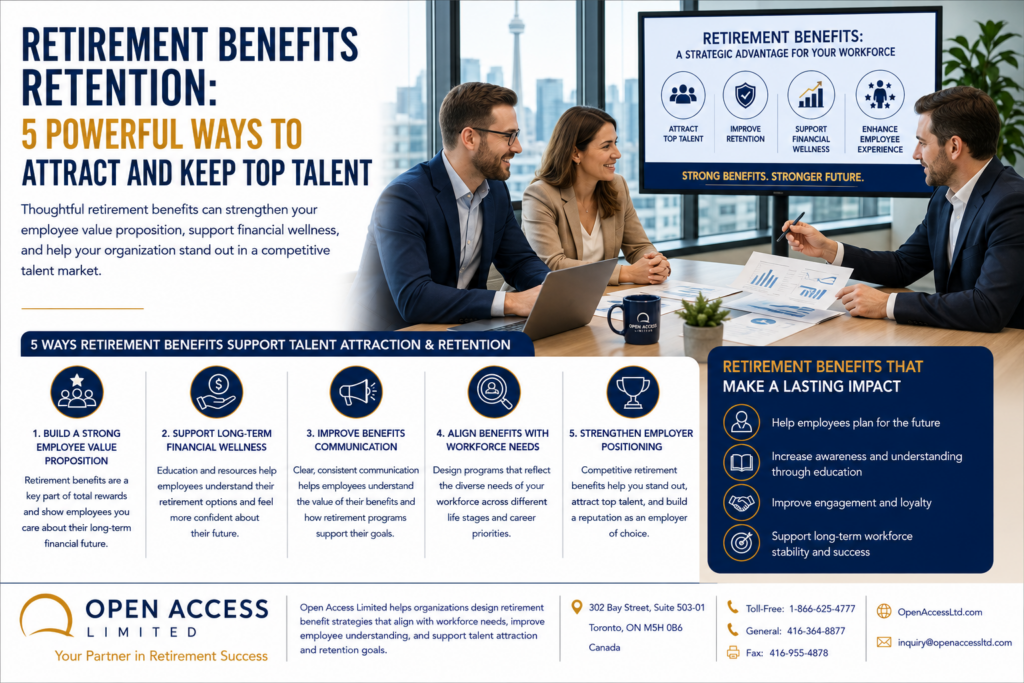
5 Powerful Ways Retirement Benefits Support Employee Retention
1. Building a Strong Employee Value Proposition
A successful employee value proposition includes more than compensation.
Retirement benefits, financial wellness resources, workplace support, and career opportunities work together to shape the employee experience.
Organizations that align retirement programs with employee expectations may create stronger connections with their workforce.
2. Supporting Long-Term Financial Wellness
Employees at different career stages often have different financial priorities.
Retirement benefits retention strategies can include education, accessible resources, and communication that help employees understand long-term planning options.
Improving financial awareness may help employees feel more informed when making decisions about their future.
3. Improving Benefits Communication
A retirement program only creates value when employees understand it.
Clear communication helps employees recognize available resources and how retirement programs fit within their broader financial goals.
Businesses can improve engagement by providing ongoing education instead of only introducing benefits during onboarding.
4. Aligning Benefits With Workforce Needs
Different generations and employee groups may have different expectations.
Organizations can review workforce demographics, employee feedback, and participation trends to better align retirement benefits with changing needs.
Flexible approaches may help businesses create programs that remain relevant over time.
5. Strengthening Employer Positioning
There is no single retirement approach that guarantees improved attraction or retention results.
Organizations should consider workforce characteristics, employee needs, communication methods, and business objectives.
A balanced and data-informed approach helps employers design benefits that support both employees and organizational goals.
Creating Stronger Employee Confidence
Retirement programs strategies can also support employee confidence by helping workers better understand available financial resources. When organizations provide ongoing education and clear retirement communication, employees may feel more connected to workplace benefits and long-term planning opportunities.
How Open Access Limited Supports Retirement Benefits Strategies
Open Access Limited, based in Ontario, works with employers to design retirement programs aligned with workforce expectations and organizational objectives.
Through tailored communication strategies, employee education initiatives, and flexible plan structures, Open Access Limited helps organizations improve employee understanding of retirement benefits and strengthen the overall employee value proposition.
Open Access Limited
302 Bay Street, Suite 503-01
Toronto, ON M5H 0B6
Phone: 1-866-625-4777
Email: inquiry@openaccessltd.com
Website: OpenAccessLtd.com
Final Thoughts
Retirement benefits retention strategies can play an important role in supporting talent attraction and long-term workforce engagement.
By focusing on financial wellness, communication, education, and employee experience, businesses can create retirement programs that provide meaningful workplace value.
A thoughtful retirement benefits approach can help organizations strengthen their workforce strategy and prepare for future talent expectations.
References
LinkedIn (2024) – Workplace Learning and Talent Trends
https://www.linkedin.com
Randstad (2024) – Employer Brand and Talent Insights Research
https://www.randstad.com
ManpowerGroup – Global Talent Shortage Report
https://www.manpowergroup.com
Korn Ferry – Future of Work and Talent Strategy Research
https://www.kornferry.com
Great Place to Work Institute – Workplace Culture and Employee Experience Research
https://www.greatplacetowork.com
Workhuman – Employee Experience and Engagement Research
https://www.workhuman.com
Leave a Reply