Tag: Talent Attraction

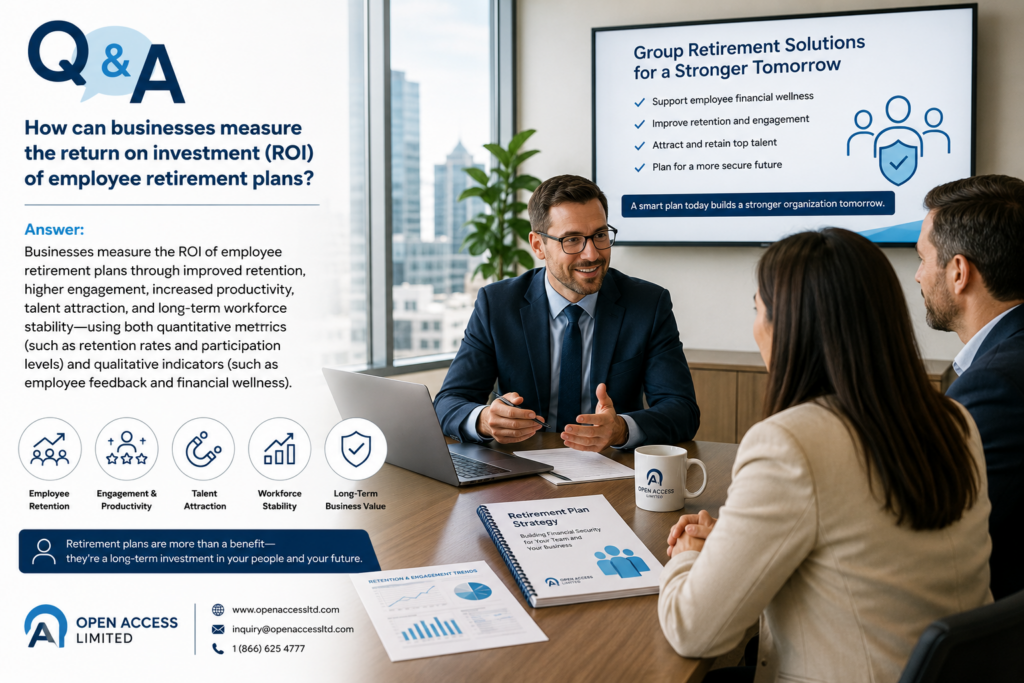
  • How Can Businesses Measure the ROI of Employee Retirement Plans?

    Employee retirement plans are often viewed as an important part of a company’s compensation strategy. However, many organizations today also recognize these programs as long-term workforce investments that may influence employee retention, engagement, financial wellness, and overall organizational stability.

    As businesses continue to compete for skilled talent in evolving labour markets, understanding the return on investment (ROI) of employee retirement plans has become increasingly important.

    Rather than relying on a single financial metric, organizations typically evaluate retirement plan ROI through a combination of workforce performance indicators, employee feedback, and long-term business outcomes.Effective employee retirement plans help businesses improve retention, measure long-term value, and create stronger financial wellness strategies.

    Why Measuring Retirement Plan ROI Matters

    Businesses invest significant resources into employee benefits programs. Measuring the effectiveness of retirement plans may help organizations better understand how these programs contribute to:

    • Employee retention
    • Recruitment competitiveness
    • Workforce engagement
    • Financial wellness initiatives
    • Long-term workforce planning
    • Organizational stability

    For many employers, retirement plans are not only employee benefits — they may also support broader business objectives and workforce strategies.

    1. Employee Retention and Reduced Turnover Costs

    One of the most commonly evaluated indicators of retirement plan ROI is employee retention.

    Research suggests that benefits tied to long-term financial well-being may influence employees’ decisions to remain with an organization. Strong retirement offerings can contribute to reduced turnover, helping businesses lower recruitment, onboarding, and training costs.

    Retaining experienced employees may also help preserve institutional knowledge and support operational continuity.

    Businesses Often Measure:

    • Employee turnover rates
    • Average employee tenure
    • Recruitment and training costs
    • Retention trends over time

    2. Employee Engagement and Workplace Productivity

    Organizations may also assess how retirement plans influence employee engagement and productivity.

    Employees who feel supported in their financial future may experience lower financial stress, which can positively impact workplace morale, focus, and participation.

    Financial wellness initiatives are increasingly being integrated into broader employee engagement strategies across many organizations.

    Common Indicators Include:

    Absenteeism rates

    Employee satisfaction surveys

    Workplace engagement scores

    Participation in financial wellness programs

    Productivity trends

    3. Talent Attraction and Employer Competitiveness

    In competitive labour markets, retirement benefits may play a role in attracting skilled employees.

    Candidates often compare workplace benefits when evaluating job opportunities. A structured retirement program can become part of an employer’s overall value proposition and help strengthen employer branding.

    Organizations May Evaluate:

    • Offer acceptance rates
    • Time-to-fill positions
    • Candidate feedback
    • Recruitment performance metrics
    • Employer brand perception

    4. Workforce Stability and Long-Term Planning

    Some organizations also evaluate empoyee retirement plans as part of broader workforce planning and risk management strategies.

    Structured retirement programs may support:

    • Long-term workforce participation
    • Leadership succession planning
    • Organizational continuity
    • Employee retirement preparedness

    Businesses may monitor participation rates and retirement readiness to better understand long-term workforce trends.

    5. Combining Quantitative and Qualitative Metrics

    Measuring the ROI of employee retirement plans often requires a balanced approach using both quantitative and qualitative indicators.

    Quantitative Metrics

    Businesses may review:

    • Retention rates
    • Participation levels
    • Contribution rates
    • Recruitment costs
    • Workforce turnover data

    Qualitative Indicators

    Organizations may also consider:

    • Employee feedback
    • Workplace satisfaction
    • Financial wellness perceptions
    • Employee confidence in retirement readiness

    Because every organization is different, outcomes may vary depending on workforce demographics, plan structure, and overall business strategy.

    Supporting Long-Term Business Goals Through Retirement Planning

    Many businesses work with experienced retirement advisory firms to help design retirement strategies aligned with workforce and organizational objectives.

    For example, Open Access Limited works with employers across Ontario and Canada to help develop retirement program structures focused on employee financial well-being and long-term organizational planning.

    Final Thoughts

    Employee retirement plans are often viewed as more than standard workplace benefits. For many organizations, they represent long-term investments in workforce stability, employee well-being, and business continuity.

    By evaluating factors such as retention, engagement, talent attraction, and workforce planning, businesses can gain a broader understanding of the value retirement programs may provide over time.

    Employee retirement plans ROI and workforce benefits strategy

    References

    Benefits Canada (2025) — Employee Benefits and Retention Insights

    Gallup (2024) — State of the Global Workplace Report

    Mercer (2024) — Global Talent Trends Report

    OECD (2023) — Pensions and Workforce Participation Analysis

    Willis Towers Watson (WTW) (2023) — Global Benefits Attitudes Surve

  • How Do Retirement Plans Influence Employee Decision-Making When Choosing Between Job Offers?

    Why Retirement Benefits Matter in Today’s Job Market

    Retirement plans can play an important role in how employees evaluate job offers, particularly among skilled professionals who place value on long-term financial security.

    While salary remains an important factor, many employees now assess the broader total compensation package when comparing opportunities. This may include employer retirement contributions, savings options, and access to long-term financial planning support.

    How Retirement Plans Impact Employee Decision-Making

    A well-structured retirement plan may signal that an employer is invested in supporting employees beyond their immediate compensation. This perception can help strengthen trust and improve the overall attractiveness of a job offer.

    In competitive labour markets, structured retirement benefits may also help organizations differentiate themselves from other employers offering similar salary ranges. Benefits can become an additional deciding factor when candidates compare multiple opportunities.

    Retirement Plan Features Employees Often Value
    Retirement programs that include features such as:

    • Employer contributions
    • Matching programs
    • Flexible savings options
    • Long-term financial planning support

    may strengthen the perceived value of an employment offer. Research suggests employees often appreciate benefits that contribute to long-term financial stability and support consistent saving habits.

    Retirement Plans as Part of a Broader Talent Strategy

    For many organizations, retirement plans are considered part of a broader employee attraction and retention strategy. Effective retirement programs often align workforce needs with contribution structures and long-term business objectives.

    Some employers choose to work with experienced retirement advisory firms to help design customized retirement strategies that support both employee financial well-being and organizational goals.

    For example, Open Access Limited works with employers across Ontario and Canada to help develop retirement program structures tailored to workforce and business objectives.

    Final Thoughts

    In today’s evolving labour market, retirement benefits may play a meaningful role in how employees evaluate job opportunities. While compensation remains important, structured retirement plans can contribute to employee confidence, long-term financial planning, and overall job attractiveness.

    Organizations that align retirement plans offerings with workforce needs may be better positioned to support both recruitment and long-term retention goals.

    Retirement Plans Benefits for Employee Job Decisions

    References :

    Society for Human Resource Management (SHRM) (2025).
    Employee Benefits Survey.

    https://www.shrm.org/topics-tools/research/employee-benefits-survey .

    Fidelity Investments (2023).
    Workplace Benefits and Retirement Trends Research.
    https://www.fidelityworkplace.com

    Benefits Canada (2025).
    Employers See Retirement Benefits as a Top Attraction and Retention Tool.
    https://www.benefitscanada.com

    Gallup (2024).
    State of the Global Workplace Report.
    https://www.gallup.com/workplace/349484/state-of-the-global-workplace.aspx

    Deloitte (2023).
    Global Human Capital Trends Report.
    https://www2.deloitte.com

  • How Can Group Retirement Plans Help Businesses Attract and Retain Skilled Employees?

    In today’s competitive labour market, businesses are increasingly exploring ways to attract and retain skilled employees beyond offering competitive salaries. While compensation remains an important factor, research suggests that workplace benefits — particularly those related to long-term financial well-being — play a meaningful role in employee decision-making (SHRM, 2025; Gallup, 2024).

    How Retirement Plans Help Attract and Retain Employees

    Group retirement plans are one approach organizations may use to support both attraction and retention objectives.

    These programs allow employees to contribute regularly toward long-term savings, often with the addition of employer contributions. When employees perceive that their employer is supporting their future financial security, it can help strengthen trust and reinforce a sense of long-term commitment (Fidelity Investments, 2023).

    Effective retirement plans can improve employee engagement and support long-term workforce goals.

    From a retention perspective, certain plan features — such as employer matching contributions and vesting schedules — may encourage employees to remain with an organization longer in order to realize the full value of those benefits. Research in workplace benefits design indicates that these types of structures can contribute to workforce stability and help reduce turnover-related costs (Benefits Canada, 2025).

    Well-designed retirement plans help businesses build stronger employee benefit strategies.

    Group retirement programs may also support employer branding. Organizations that offer structured financial benefits are often viewed as more forward-looking and supportive of employee well-being, which can enhance their ability to compete for skilled talent in tight labour markets (SHRM, 2025).

    It is important to note that outcomes can vary depending on how a retirement program is designed. Factors such as contribution structure, vesting timelines, investment options, workforce demographics, and long-term cost sustainability all influence the effectiveness of these plans.

    Building Long-Term Value With Retirement Plans

    For this reason, many organizations choose to work with advisory firms experienced in designing customized group retirement strategies aligned with workforce needs and business objectives.

    For example, firms such as Open Access Limited, based in Ontario, work with employers to develop group retirement plans structures that aim to support employee financial well-being while aligning with long-term organizational goals.

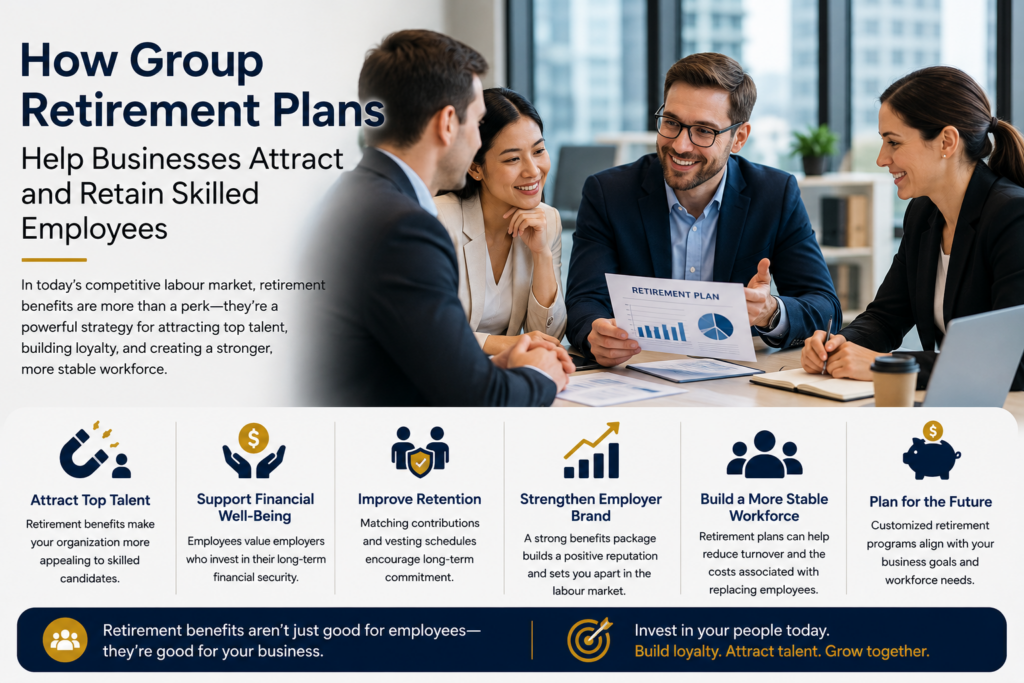
    Business professionals discussing group retirement plans and employee retention strategies in a modern workplace, highlighting how retirement benefits can attract skilled employees, improve financial wellness, and support long-term workforce stability.

    References Society for Human Resource Management (SHRM) (2025).

    Employee Benefits Survey.
    https://www.shrm.org/topics-tools/research/employee-benefits-survey

    Society for Human Resource Management (SHRM) (2025).
    Employee Benefits Survey – Executive Summary.
    https://www.shrm.org

    Fidelity Investments (2023).
    Workplace Benefits and Retirement Trends Research.
    https://www.fidelityworkplace.com

    Benefits Canada (2025).
    Employers See Retirement Benefits as a Top Attraction and Retention Tool.
    https://www.benefitscanada.com

    Maytree Foundation.
    Retirement Plans and Workforce Attractiveness Research.
    https://maytree.com

    Gallup (2024).
    State of the Global Workplace Report.
    https://www.gallup.com

  • What Retirement Benefits Do Employees Value Most in Today’s Labour Market?

    In today’s labour market, employees are placing increasing importance on retirement benefits that support long-term financial security, flexibility, and meaningful employer participation.

    While competitive salaries remain an important component of total compensation, recent research indicates that workplace benefits — particularly those tied to long-term financial well-being — continue to play a significant role in how employees evaluate employers. For example, 81% of organizations report that retirement savings and planning benefits are “very” or “extremely” important as part of their overall benefits strategy (SHRM, 2025).

    Employees often view retirement benefits programs as an indicator of an employer’s commitment to supporting their long-term financial future.

    One of the most valued elements is employer contributions, such as matching programs or direct employer deposits into retirement savings plans. These contributions may help employees build retirement savings more effectively while reinforcing a sense of long-term partnership between the employer and its workforce (Fidelity Investments, 2022).

    Employees also tend to value access to tax-efficient retirement savings programs, including group plans that enable payroll deductions and streamlined investment access. These structures can support consistent saving behaviours and improve accessibility to long-term financial planning tools. Another important consideration is investment flexibility and access to guidance. Employees increasingly appreciate retirement programs that offer diversified investment options along with educational resources or advisory support, which may help improve confidence in financial decision-making (Deloitte, 2023).

    How Retirement Benefits Improve Employee Satisfaction

    Retirement benefits can help organizations create stronger workplace relationships by supporting employees’ long-term financial goals. Effective retirement benefits may improve employee confidence, loyalty, and overall satisfaction while helping businesses build a more stable workforce.

    In addition, retirement plans that include vesting structures tied to employer contributions can support retention by aligning long-term financial incentives with continued employment.

    Recent Canadian data also highlights the growing importance of financial well-being programs, with personal finances continuing to be a leading source of stress for employees. This has increased the relevance of employer-supported retirement and savings programs as part of a broader workforce strategy (Benefits Canada, 2025).

    It is important to note that employee preferences may vary based on factors such as age, income level, and financial literacy. As a result, the effectiveness of any retirement program often depends on how well it is designed to meet the needs of a specific workforce.

    For this reason, many organizations choose to work with advisory firms experienced in designing customized group retirement strategies aligned with workforce needs and business objectives. For example, firms such as Open Access Limited, based in Ontario, work with employers to develop retirement program structures that aim to support employee financial well-being while aligning with long-term organizational goals.

    Professional employees reviewing retirement benefits and financial planning options in a modern Canadian workplace discussing group retirement plans and employee financial wellness.

    References

    Society for Human Resource Management (SHRM) (2025).
    Employee Benefits Survey – Executive Summary.
    https://www.shrm.org

    Fidelity Investments (2022).
    Workplace Savings Research.
    https://www.fidelity.com

    Deloitte (2023).
    Global Human Capital Trends Report.
    https://www2.deloitte.com

    Benefits Canada (2025).
    Employee Benefits and Financial Wellness Insights.
    https://www.benefitscanada.com

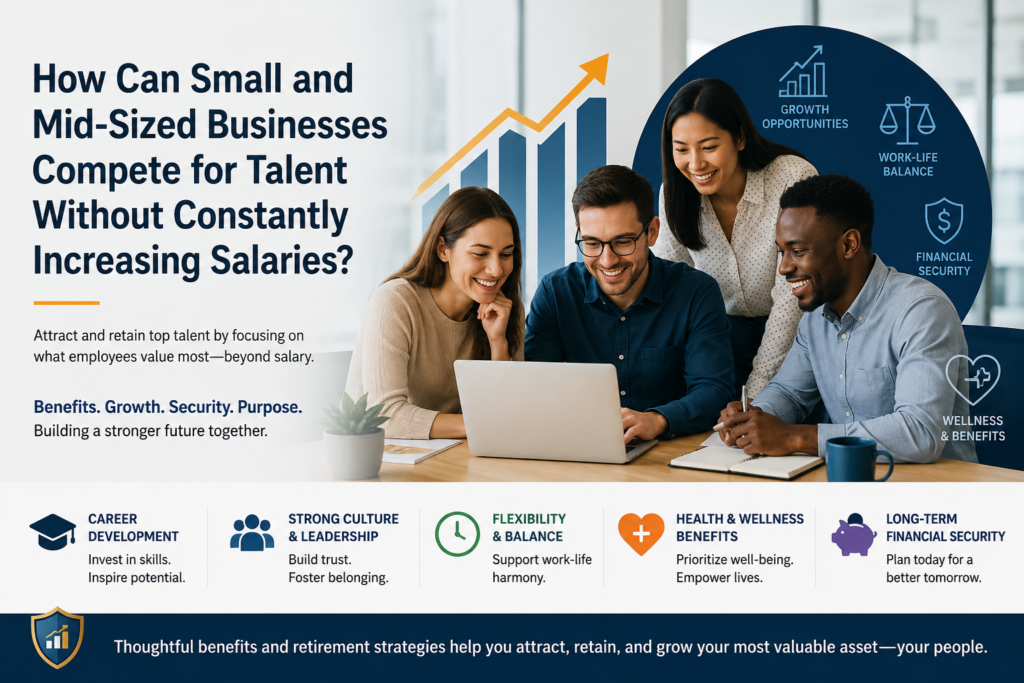
  • How Can Small and Mid-Sized Businesses Compete for Talent Without Constantly Increasing Salaries?

    Small business retirement plans can help companies attract and retain skilled employees while supporting long-term financial goals.

    For many small and mid-sized organizations, relying solely on salary increases to attract and retain employees may not always be financially sustainable. Market competition, rising operational costs, and long-term financial planning considerations can limit the extent to which organizations can continuously increase compensation.

    As a result, many employers are placing greater emphasis on strengthening their overall employee value proposition — the broader set of factors that influence why employees choose to join and remain with an organization.

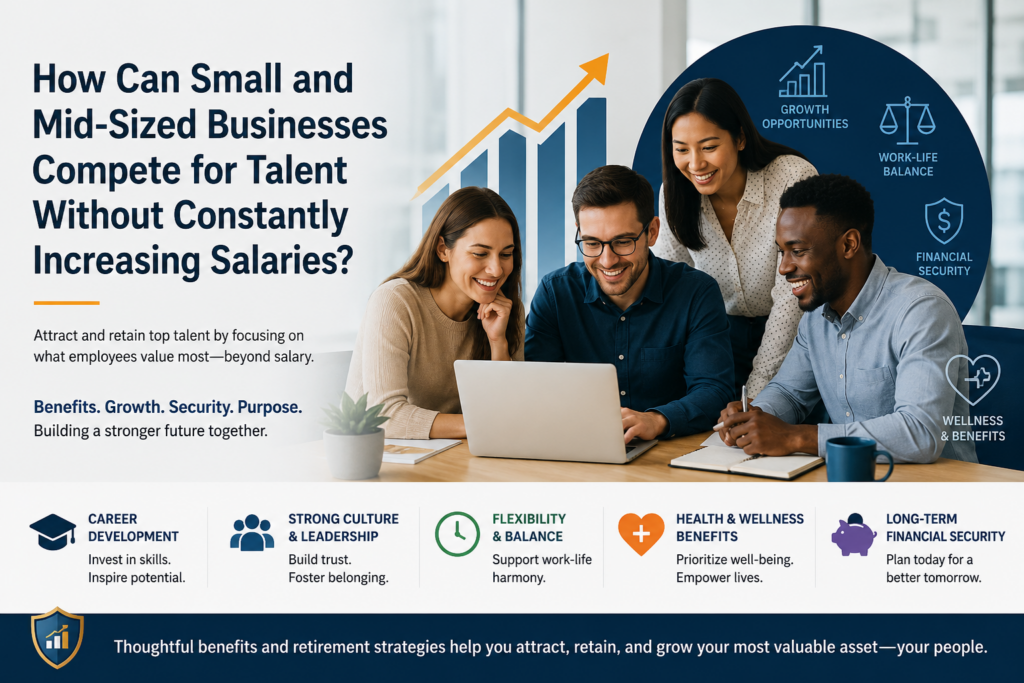
    While competitive salaries remain an important component, research suggests that employees evaluate employers based on several additional factors, including:

    • Career development opportunities
    • Workplace culture and leadership
    • Work-life balance and flexibility
    • Health and wellness benefits
    • Long-term financial security

    Industry research indicates that benefits — particularly those tied to long-term financial well-being — are an increasingly important consideration in employee decision-making (SHRM, 2023; Gallup, 2023).

    Within this broader framework, structured retirement programs can play a meaningful role in supporting long-term employee engagement and retention.

    Employer-sponsored retirement plans, especially those that include employer contributions and vesting schedules, may help align employees’ long-term financial interests with the stability of the organization. When employees perceive that their employer is contributing to their future financial security, it can reinforce trust and support a sense of long-term partnership (Fidelity Investments, 2022).

    In competitive labour markets where salary ranges between employers may be relatively similar, structured benefits — including retirement programs — can also serve as a point of differentiation. Research in human capital trends suggests that organizations are increasingly using benefits as part of a broader strategy to attract and retain talent (Deloitte, 2023).

    It is important to note that the effectiveness of retirement programs can vary depending on plan design. Factors such as contribution structures, vesting schedules, investment options, workforce demographics, and long-term cost sustainability all influence outcomes.

    Small Business Retirement Plans for Employee Growth

    Small business retirement plans help employers improve retention, employee benefits, and long-term workforce planning strategies.

    For this reason, many organizations choose to work with advisory firms experienced in designing customized group retirement strategies aligned with workforce needs and business objectives.

    For example, firms such as Open Access Limited, based in Ontario, work with employers to develop retirement program structures that aim to support employee financial well-being while aligning with long-term organizational goals.

    Small business retirement plans can create stronger employee benefits while supporting long-term business growth and workforce stability.

    Ultimately, while compensation remains an important factor, organizations that combine competitive pay with thoughtful benefit design and long-term financial planning may be better positioned to compete for talent without relying solely on continuous salary increases.

    Small business retirement plans continue to play an important role in creating competitive workplaces.

    Small Business Retirement Plans for Employee Benefits

    References

    Society for Human Resource Management (2023).
    Employee Benefits Survey.
    https://www.shrm.org

    Fidelity Investments (2022).
    Workplace Savings Research.
    https://www.fidelity.com

    Gallup (2023).
    State of the Global Workplace Report.
    https://www.gallup.com

    Deloitte (2023).
    Global Human Capital Trends Report.
    https://www2.deloitte.com

    Open Access Limited.
    Group Retirement Strategy Advisory.
    https://www.openaccessltd.com