Tag: workforce planning

  • How Can Businesses Use Data and Analytics to Continuously Optimize Their Retirement Plans and Improve Workforce Outcomes?

    Introduction

    Retirement plan analytics helps businesses use data insights to continuously optimize retirement programs, improve employee engagement, and create stronger long-term workforce strategies.

    In today’s data-driven business environment, organizations are increasingly evaluating retirement plans as part of a broader workforce strategy rather than viewing them as static employee benefits. Using workforce analytics allows employers to better understand employee needs, identify opportunities for improvement, and make more informed decisions.

    Why Are Data and Analytics Important for Retirement Plan Optimization?

    Data and analytics provide organizations with valuable insights into how employees interact with retirement programs. Instead of creating a retirement plan once and leaving it unchanged, employers can continuously review performance, participation, and employee engagement trends.

    This ongoing evaluation may help businesses improve plan effectiveness, support workforce satisfaction, and align retirement strategies with long-term organizational goals.

    Analyzing Employee Participation and Contribution Trends

    One important area of retirement plan analytics is reviewing employee participation and contribution patterns.

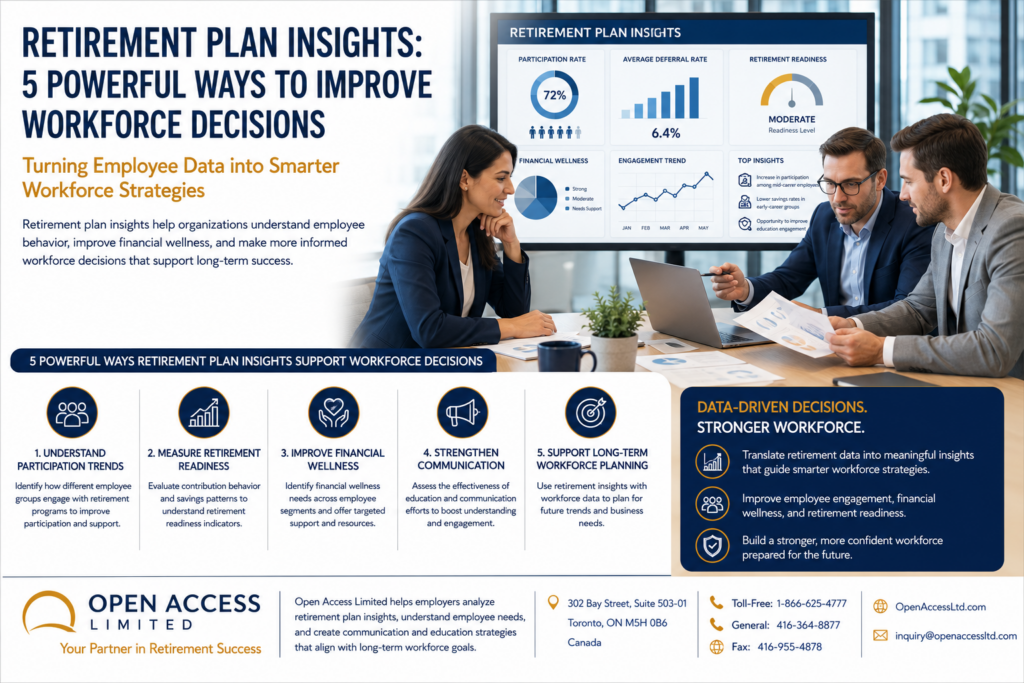
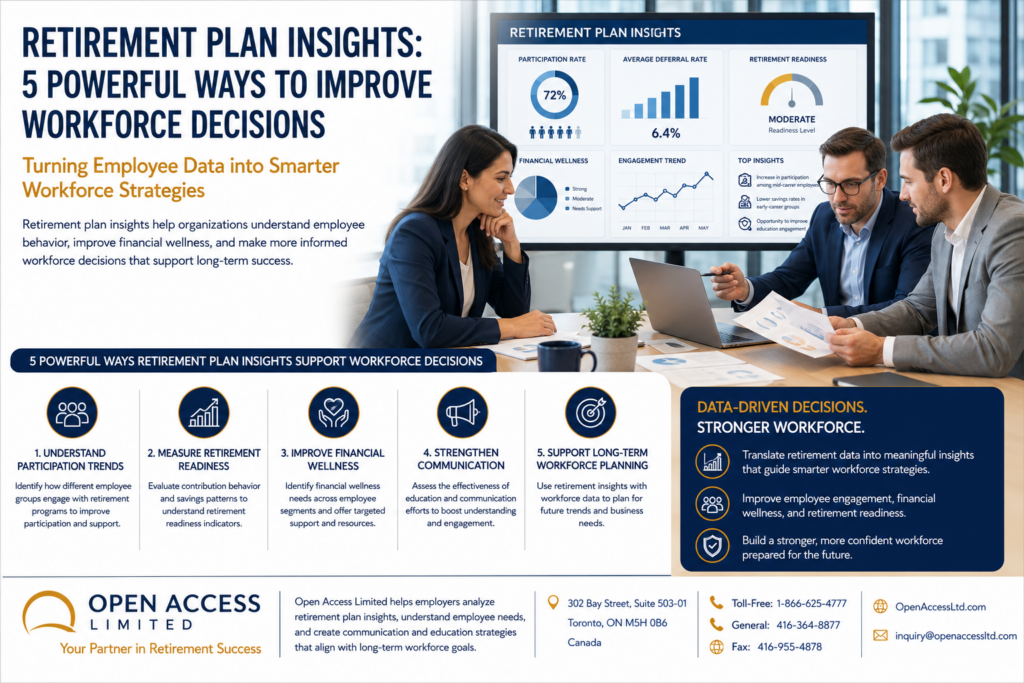
    By evaluating participation rates, contribution levels, and engagement trends, organizations may better understand whether employees are fully utilizing available retirement benefits.

    These insights can help employers identify potential gaps and improve communication strategies to encourage better financial awareness among employees.

    Using Workforce Segmentation to Improve Retirement Strategies

    Every workforce includes employees with different financial needs, career stages, and retirement goals.

    Through workforce segmentation, organizations can analyze factors such as:

    • Employee age groups
    • Income levels
    • Career stages
    • Length of employment
    • Financial profiles

    This information may help employers design retirement strategies that better align with the needs of different employee groups.

    How Predictive Analytics Supports Workforce Planning

    Predictive analytics is becoming an important tool for long-term workforce planning.

    Organizations may use data insights related to retirement timing, financial readiness, and workforce transitions to better prepare for future changes.

    Understanding these trends can help reduce unexpected talent gaps and support smoother workforce planning decisions.

    Connecting Retirement Data With HR Performance Metrics

    Retirement plan analytics becomes even more valuable when combined with broader workforce information.

    Employers may review connections between retirement programs and areas such as:

    • Employee retention
    • Workplace engagement
    • Employee feedback
    • Workforce stability

    This broader view helps organizations understand how retirement benefits contribute to overall workforce outcomes.

    Continuous Improvement Through Data-Driven Retirement Strategies

    Successful retirement strategies often require ongoing review and improvement.

    By monitoring results, collecting feedback, and analyzing workforce changes, organizations can adjust their approach over time.

    Data-driven decision-making helps businesses create retirement programs that remain relevant as employee needs and market conditions evolve.

    Working With Experienced Retirement Plan Advisors

    While data provides valuable insights, interpreting information and turning it into practical strategies requires experience.

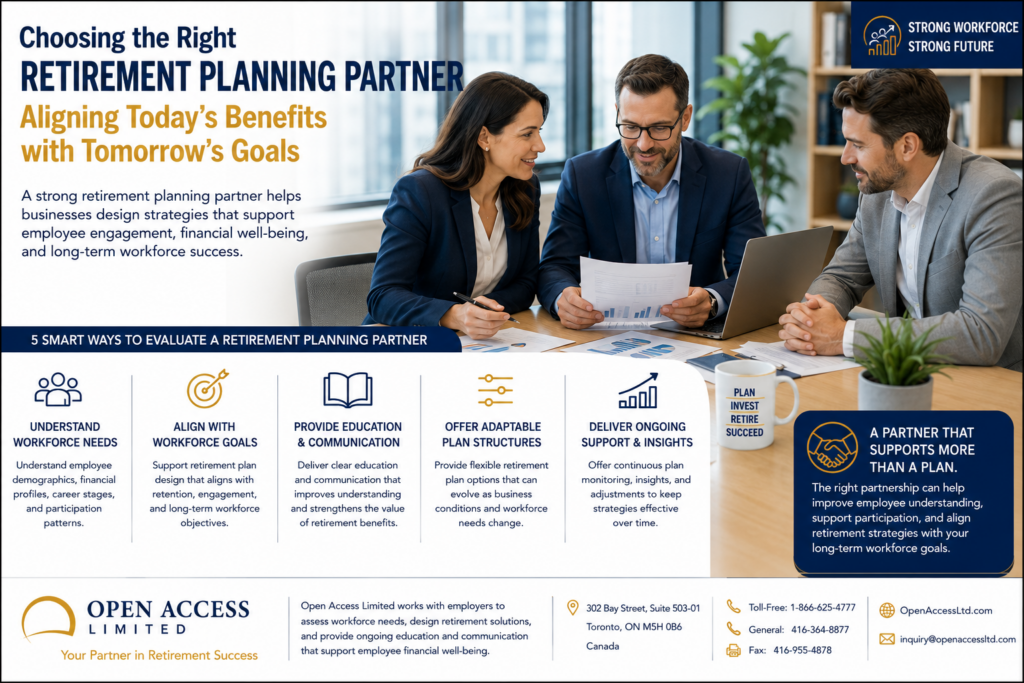
    Organizations may choose to work with advisory firms that understand retirement planning, employee engagement, and workforce strategy.

    Open Access Limited, based in Ontario, works with employers to analyze workforce needs, improve retirement plan communication, and support data-informed retirement strategies.

    Through customized solutions and ongoing education, Open Access Limited helps organizations better align retirement programs with long-term business and employee objectives.

    Learn more:
    Open Access Limited
    302 Bay Street, Suite 503-01
    Toronto, ON M5H 0B6
    www.OpenAccessLtd.com
    Toll-Free: 1-866-625-4777

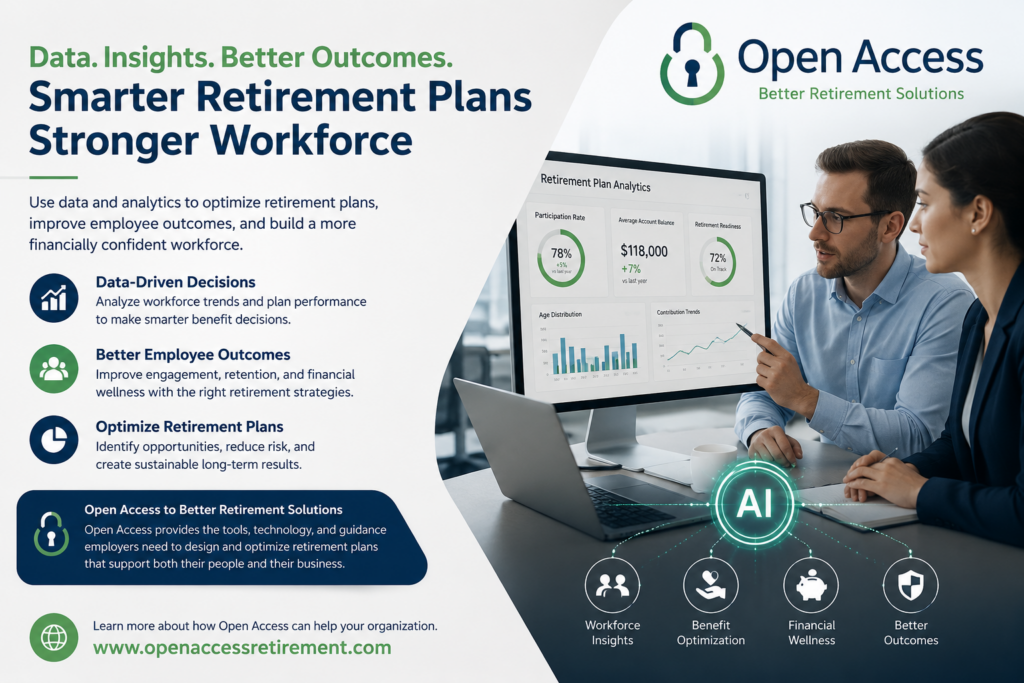
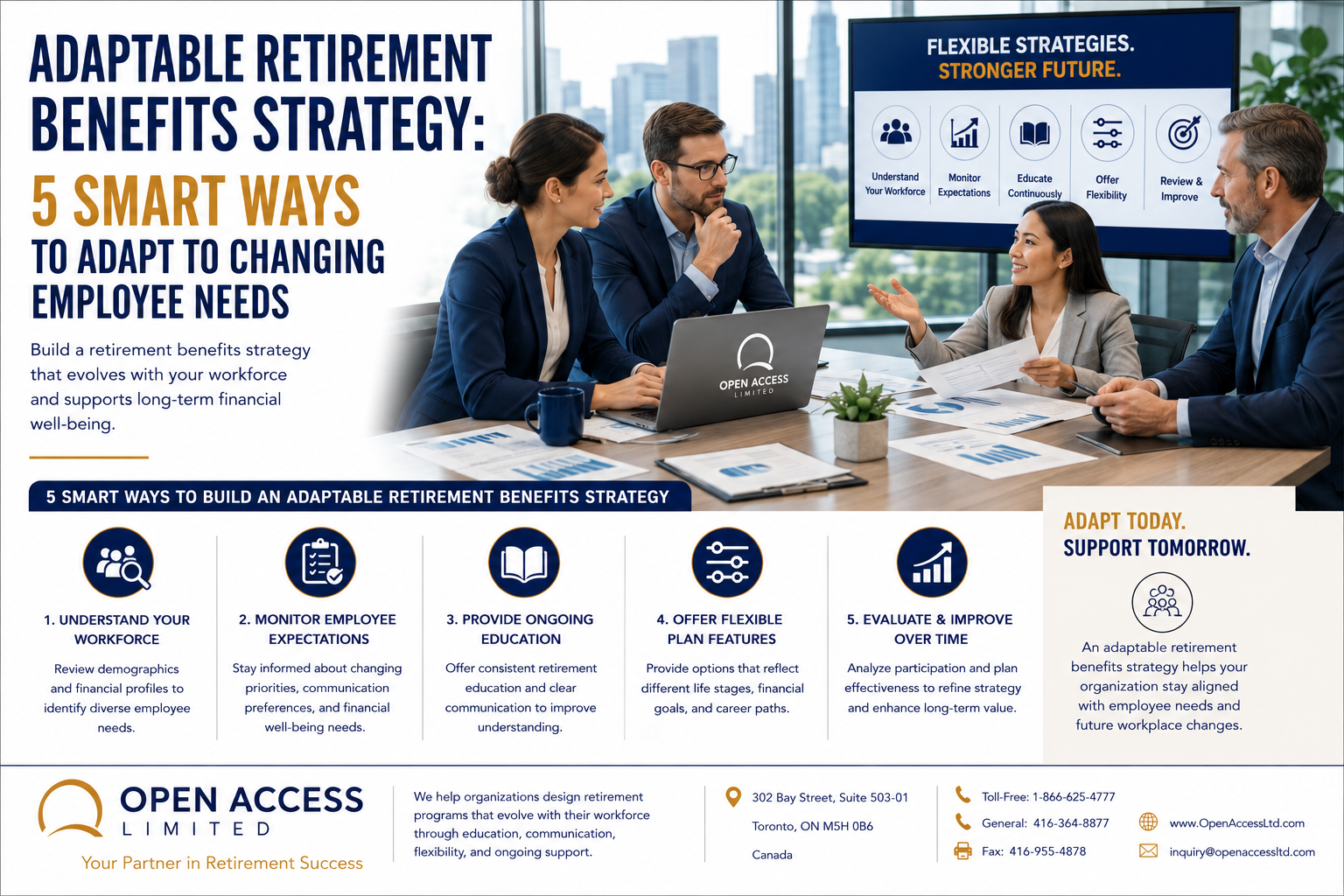
    Business leaders using retirement plan analytics and workforce data strategies with Open Access Limited in Toronto.

    References

    Gartner (2024) – HR and Workforce Analytics Research
    McKinsey & Company (2024) – People Analytics and Workforce Strategy
    MIT Sloan Management Review (2023) – Workforce Analytics and Data-Driven Decision Making
    CIPD (2023) – People Analytics and HR Insights
    IBM (2024) – Workforce Analytics and AI Applications

  • How Can Businesses Use Retirement Benefits to Improve Employee Loyalty Without Overcommitting to Long-Term Fixed Costs?

    Introduction

    Employee loyalty remains one of the most valuable assets a business can develop. Organizations that retain experienced employees often benefit from stronger workforce stability, lower recruitment costs, improved productivity, and greater organizational continuity.

    At the same time, employers must balance workforce investment with financial sustainability.

    This has led many businesses to explore retirement benefits as a strategic tool for improving employee loyalty while maintaining flexibility and cost control.

    When thoughtfully designed, retirement programs may help strengthen employee engagement and retention without requiring employers to take on excessive long-term financial commitments.

    Why Employee Loyalty Matters for Business Success

    • Reduced employee turnover
    • Improved workforce stability
    • Stronger organizational culture
    • Enhanced employee engagement
    • Lower recruitment and training costs
    • Greater long-term productivity

    Building a loyal workforce can support several business objectives, including:

    Retirement benefits may contribute to these outcomes by helping employees feel supported in their long-term financial goals.

    1. Use Scalable Contribution Models

    One approach businesses may consider is implementing scalable contribution structures.

    Rather than relying on rigid long-term commitments, some retirement programs allow contribution levels to align with business performance, workforce needs, or financial capacity.

    Benefits of Scalable Contributions:

    • Greater financial flexibility
    • Improved budget management
    • Ability to adapt to changing business conditions
    • Continued employee support
    • Long-term sustainability

    This approach may help employers offer meaningful retirement benefits while maintaining greater control over costs.

    2. Encourage Retention Through Vesting Structures

    Vesting structures can be another effective strategy for supporting employee loyalty.

    Phased vesting schedules may encourage employees to remain with an organization longer by linking certain retirement benefits to tenure and service milestones.

    Potential Advantages Include:

    • Improved employee retention
    • Stronger workforce continuity
    • Better alignment with long-term workforce goals
    • Reduced turnover among key employees
    • More strategic benefit allocation

    By aligning retirement benefits with retention objectives, organizations may create stronger incentives for long-term workforce participation.

    3. Position Retirement Benefits Within a Broader Employee Value Proposition (EVP)

    Retirement benefits are often most effective when integrated into a broader employee value proposition (EVP).

    Rather than being viewed as a standalone benefit, retirement programs may complement:

    • Compensation packages
    • Financial wellness initiatives
    • Career development opportunities
    • Workplace culture
    • Employee education programs

    This integrated approach may contribute to a more engaging and rewarding employee experience.

    4. Maintain Flexibility Through Adaptive Plan Design

    Business environments, workforce demographics, and economic conditions can change over time.

    Flexible retirement plan structures may allow employers to adjust contribution levels, benefit features, and program components without requiring a complete redesign.

    Flexible Features May Include:

    • Adjustable contribution rates
    • Scalable employer matching structures
    • Flexible participation options
    • Evolving workforce support initiatives
    • Adaptable financial wellness programs

    Flexibility may help organizations remain competitive while maintaining long-term cost discipline.

    5. Strengthen Engagement Through Communication and Education

    Retirement benefits often deliver greater value when employees understand how they work.

    Clear communication and ongoing financial education may help improve:

    • Employee participation
    • Benefit utilization
    • Financial confidence
    • Workforce engagement
    • Employee appreciation of total compensation

    Organizations that invest in retirement education may improve the perceived value of their benefits without necessarily increasing overall costs.

    Supporting Loyalty While Maintaining Financial Sustainability

    For example, Open Access Limited works with employers across Ontario and Canada to implement scalable contribution frameworks, design vesting structures aligned with retention goals, and provide ongoing communication and education programs that support both employee loyalty and long-term financial sustainability.

    Final Thoughts

    Retirement benefits can be a valuable tool for strengthening employee loyalty while maintaining financial flexibility.

    By incorporating scalable contribution models, strategic vesting structures, flexible plan design, and effective employee communication, businesses may improve retention and workforce engagement without overcommitting to long-term fixed costs.

    A balanced retirement strategy can help organizations support employees today while maintaining the flexibility needed for future growth.

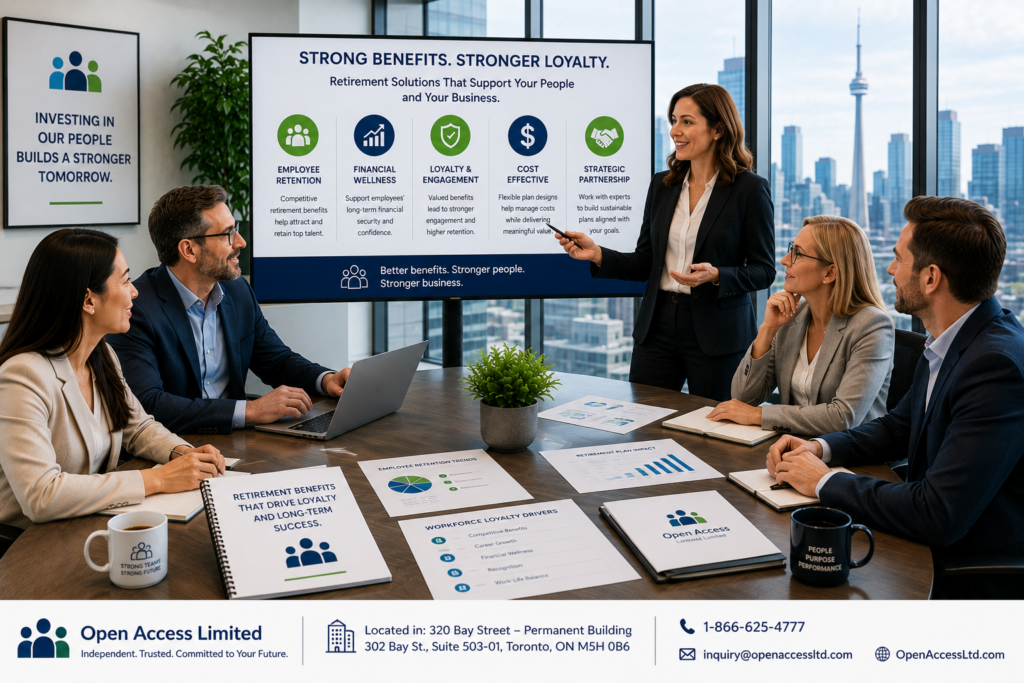
    Professional HR leaders and business executives discussing employee retention strategies, retirement benefits, and workforce loyalty programs in a modern Canadian corporate office.

    References:

    Willis Towers Watson (WTW) (2023).
    Global Benefits Attitudes Survey.
    https://www.wtwco.com

    World Economic Forum (2024).
    Future of Work and Workforce Strategy Insights.
    https://www.weforum.org

    Morningstar (2023).
    Retirement and Investment Behavior Research.
    https://www.morningstar.com

    Brookings Institution.
    Workforce and Economic Policy Research.
    https://www.brookings.edu

    Harvard Business Review.
    Employee Retention and Benefits Strategy Insights.
    https://hbr.org

  • How Can Businesses Redesign Retirement Plans to Remain Relevant When Employees Prioritize Short-Term Financial Needs?

    Redesign Retirement Plans are becoming essential for businesses that want to support employees and improve long-term financial wellness.

    Today’s workforce faces a unique financial reality. Many employees are balancing immediate financial responsibilities such as housing costs, debt repayment, childcare expenses, and day-to-day living costs while also trying to save for retirement.

    As financial priorities evolve, businesses are increasingly rethinking how retirement plans are designed and communicated. Rather than focusing solely on long-term retirement outcomes, many organizations are exploring ways to integrate retirement planning into a broader financial wellness strategy that addresses both present and future financial needs.

    A flexible and employee-centered retirement strategy may help improve participation, engagement, and overall workforce financial well-being.

    Why Retirement Plan Design Is Changing

    Employee financial priorities have shifted significantly in recent years.

    Many employees today are focused on:

    • Managing monthly expenses
    • Paying down debt
    • Building emergency savings
    • Improving financial flexibility
    • Preparing for retirement

    As a result, businesses are increasingly looking for retirement solutions that help employees balance immediate financial concerns with long-term financial security.

    Organizations that adapt to these changing needs may improve retirement plan participation while strengthening employee satisfaction and financial confidence.

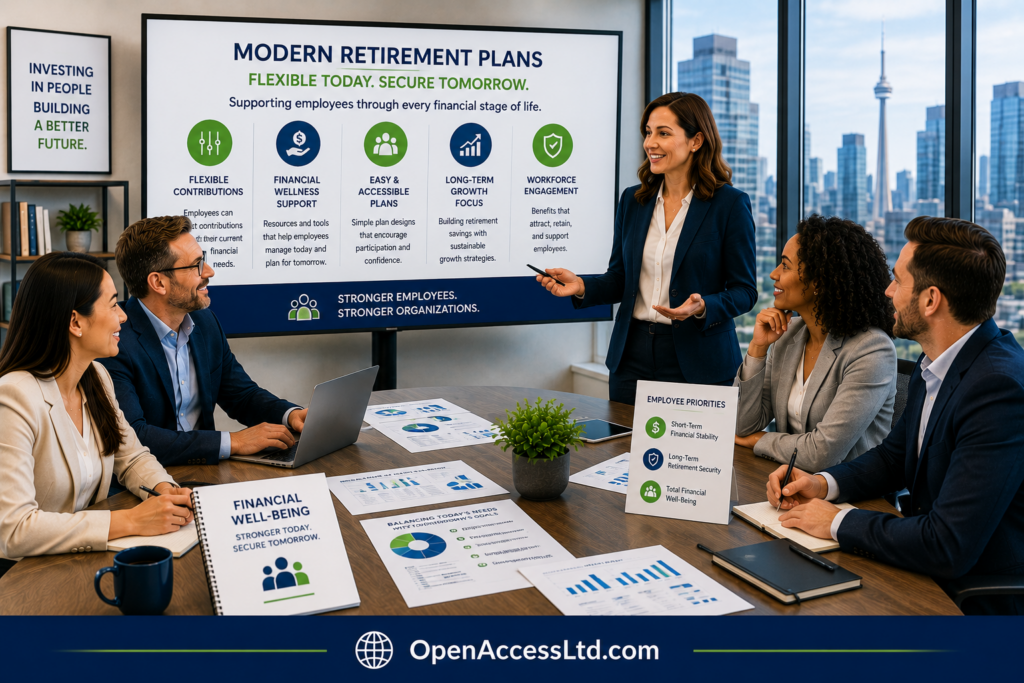
    A successful Redesign Retirement Plans strategy helps organizations adapt to changing employee needs.

    1. Introduce Flexible Contribution Structures

    Flexibility is becoming an important component of modern retirement plan design.

    Employees often experience different financial circumstances throughout their careers. Providing adjustable contribution options may help employees continue participating in retirement programs even during periods of financial pressure.

    Flexible Features May Include:

    • Adjustable contribution levels
    • Voluntary contribution increases
    • Temporary contribution reductions
    • Flexible savings schedules
    • Personalized contribution strategies

    This flexibility may help reduce participation barriers while supporting long-term savings habits.

    2. Connect Short-Term Financial Wellness With Long-Term Retirement Planning

    Many organizations are recognizing that retirement planning works best when it is integrated into a broader financial wellness framework.

    Rather than treating retirement as a standalone objective, businesses may support employees through initiatives that address both immediate and future financial priorities.

    Examples Include:

    • Financial wellness programs
    • Debt management education
    • Budgeting resources
    • Emergency savings guidance
    • Retirement planning workshops

    This integrated approach may help employees feel more confident about managing current financial obligations while continuing to prepare for the future.

    Redesign Retirement Plans

    3. Simplify Plan Design to Improve Participation

    Complex retirement plans can sometimes discourage employee participation.

    To improve engagement, many organizations explore plan features that simplify decision-making and reduce administrative complexity.

    Popular Design Features Include:

    • Automatic enrollment
    • Automatic contribution increases
    • Simplified investment selections
    • Target-date investment options
    • Streamlined onboarding processes

    By reducing complexity, employers may encourage greater participation and long-term engagement with retirement programs.

    Redesign Retirement Plans help organizations create flexible solutions for today’s employees

    4. Improve Communication Around Financial Well-Being

    Communication plays a critical role in retirement plan success.

    Employees may be more likely to engage with retirement benefits when those benefits are positioned as part of an overall financial wellness strategy rather than solely as a distant retirement objective.

    Effective communication may focus on:

    • Financial confidence
    • Long-term financial flexibility
    • Future security
    • Wealth-building habits
    • Employee financial wellness

    Clear and relatable messaging may help employees better understand how retirement planning fits into their broader financial goals.

    5. Build an Integrated Financial Support Strategy

    Many organizations are moving toward a more comprehensive employee financial support model.

    Rather than viewing retirement benefits separately, businesses may integrate retirement planning with:

    • Compensation strategies
    • Employee wellness initiatives
    • Financial education programs
    • Workforce engagement efforts
    • Long-term workforce planning

    This coordinated approach may improve program relevance while supporting broader organizational objectives.

    Supporting Employees Through Evolving Financial Priorities

    As workforce expectations continue to evolve, businesses may benefit from retirement strategies that reflect both current financial realities and future planning needs.

    For example,Open Access Limited works with employers across Ontario and Canada to help design retirement program structures that support employee financial flexibility while promoting long-term financial well-being and workforce stability.Explore more employee retirement solutions and financial planning strategies.

    Final Thoughts

    Employee financial priorities are becoming increasingly complex, requiring businesses to take a more flexible and holistic approach to retirement planning.

    By combining retirement savings strategies with broader financial wellness initiatives, organizations may improve participation, support employee financial confidence, and create retirement programs that remain relevant in a changing workforce environment.

    Redesign Retirement Plans

    References:

    PwC (2024).
    Employee Financial Stress and Benefits Insights.
    https://www.pwc.com

    Deloitte (2024).
    Financial Well-being and Workforce Trends.
    https://www2.deloitte.com

    Gallup (2024).
    Workplace Financial Well-being and Engagement Research.
    https://www.gallup.com

    Benefits Canada (2025).
    Retirement and Workforce Planning Insights.
    https://www.benefitscanada.com

    OECD (2023).
    Pensions, Savings Behavior, and Plan Design.
    https://www.oecd.org

  • How Can Businesses Structure Retirement Plans to Balance Employee Satisfaction With Cost Efficiency?

    Balancing employee satisfaction with financial sustainability is an important consideration for businesses when designing retirement plans.

    Organizations today are increasingly focused on creating retirement programs that support employee financial wellness while also maintaining long-term cost efficiency and operational flexibility.

    Rather than viewing retirement benefits solely as an expense, many businesses consider retirement planning part of a broader workforce and compensation strategy designed to improve employee engagement, retention, and organizational stability.

    A well-structured retirement plan may help businesses strengthen employee value while managing financial commitments responsibly.

    Why Balancing Cost Efficiency and Employee Satisfaction Matters

    Retirement plans often play an important role in:

    • Employee retention
    • Workforce engagement
    • Financial wellness initiatives
    • Employer competitiveness
    • Long-term workforce planning

    At the same time, businesses must also consider:

    • Budget management
    • Cash flow stability
    • Workforce growth
    • Long-term financial sustainability

    Because every organization has different operational needs and workforce demographics, retirement strategies are often most effective when designed with flexibility and scalability in mind.
    Effective Retirement Plans help businesses create stronger employee financial strategies

    1. Incorporate Flexibility Into Plan Design

    One approach to balancing employee satisfaction with cost efficiency is building flexibility into the retirement plan structure.

    Flexible contribution models may allow employees to participate according to their financial goals while helping employers maintain greater control over fixed costs.

    Flexible Features May Include:

    • Optional contribution structures
    • Tiered participation levels
    • Adjustable employer contribution models
    • Scalable retirement options
    • Flexible savings strategies

    This type of structure may help businesses support diverse workforce needs while maintaining financial sustainability.

    2. Align Employer Contributions With Workforce Objectives

    Some organizations structure employer contributions strategically rather than applying uniform contribution levels across the workforce.

    For example, contribution models may be aligned with:

    • Employee tenure
    • Retention objectives
    • Workforce planning goals
    • Organizational growth priorities

    This approach may help businesses direct financial resources more effectively while supporting employee loyalty and long-term workforce stability.

    3. Improve Employee Engagement Through Clear Communication

    Communication and perceived value are important factors in retirement plan participation and employee satisfaction.

    Research suggests that employees may engage more actively with retirement programs when they clearly understand:

    • How the plan works
    • Long-term financial benefits
    • Contribution opportunities
    • Retirement planning strategies

    Clear communication and financial education initiatives may help improve participation and employee confidence without necessarily increasing overall program costs.

    Modern Retirement Plans can improve employee engagement and workforce planning

    Organizations May Provide:

    • Retirement education resources
    • Financial wellness workshops
    • Simplified plan communication
    • Personalized retirement guidance
    • Employee support materials

    4. Build Scalable Retirement Structures

    As businesses grow, workforce needs and financial capacity often evolve.

    Scalable retirement structures may allow organizations to adjust:

    • Contribution levels
    • Plan features
    • Participation options
    • Workforce support strategies

    This flexibility may help businesses maintain alignment between retirement planning and broader organizational priorities over time.Well-designed Retirement Plans support long-term workforce stability and business growth.

    A scalable approach can also support:

    • Business growth
    • Workforce expansion
    • Long-term financial planning
    • Cost predictability

    5. Integrate Retirement Planning Into a Broader Compensation Strategy

    Many organizations integrate retirement planning into a broader compensation and employee value proposition (EVP) strategy.

    Coordinating retirement benefits alongside salary, wellness initiatives, and other workplace benefits may help businesses create a more balanced and sustainable compensation framework.Effective Retirement Plans help businesses support employees and improve long-term financial stability.

    This integrated approach may support:

    • Employee satisfaction
    • Employer competitiveness
    • Workforce engagement
    • Financial sustainability
    • Long-term organizational planning

    Supporting Sustainable Retirement Strategies Through Experienced Guidance

    Because workforce demographics, financial conditions, and organizational goals vary, some businesses choose to work with experienced retirement advisory firms when developing retirement strategies.

    For example, Open Access Limited works with employers across Ontario and Canada to help design retirement program structures that support employee financial well-being while aligning with long-term financial sustainability and workforce planning objectives

    Explore more retirement planning strategies for building stronger employee benefit solutions.

    Final Thoughts

    Balancing employee satisfaction with cost efficiency requires a thoughtful and flexible approach to retirement planning.

    By incorporating scalable structures, strategic contribution models, financial education, and workforce-aligned planning strategies, businesses may create retirement programs that support both employee well-being and long-term organizational sustainability.Strong Retirement Plans and effective retirement planning help businesses support employees,improve financial confidence, and prepare for long-term success.

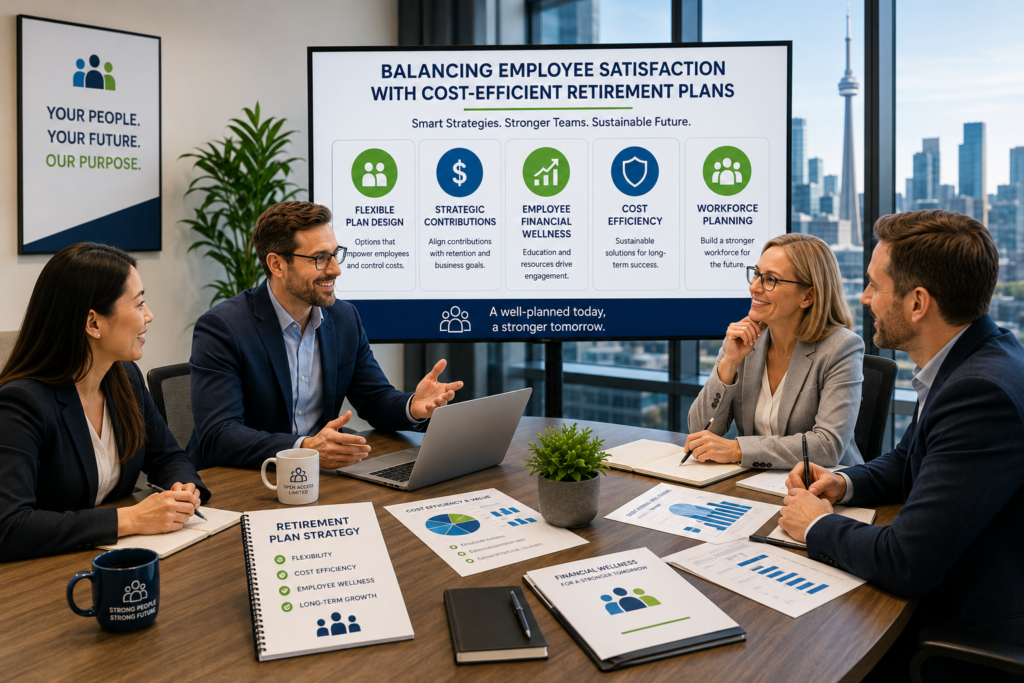
    Professional business leadership team discussing cost-efficient retirement plans, employee financial wellness strategies, and workforce planning in a modern Canadian corporate office

    References:

    Mercer (2024).
    Global Talent Trends Report.
    https://www.mercer.com

    Willis Towers Watson (WTW) (2023).
    Global Benefits Attitudes Survey.
    https://www.wtwco.com

    PwC (2024).
    Workforce Cost Optimization and Strategy Insights.
    https://www.pwc.com

    Benefits Canada (2025).
    Retirement and Workforce Planning Insights.
    https://www.benefitscanada.com

    OECD (2023).
    Pension Systems and Cost Sustainability Analysis.
    https://www.oecd.org

  • How Can a Business Choose the Right Type of Retirement Plan Based on Its Size, Cash Flow, and Growth Stage?

    Introduction

    Choosing the right retirement plan is an important business decision that may influence employee retention, workforce planning, financial wellness initiatives, and long-term organizational growth.

    Because every organization has different financial structures, workforce demographics, and operational priorities, there is no single retirement solution that fits all businesses.

    Instead, selecting an appropriate retirement program often involves evaluating factors such as:

    • Business size
    • Cash flow stability
    • Workforce needs
    • Stage of business growth
    • Long-term organizational objectives

    A flexible and well-aligned retirement strategy may help businesses support employees while maintaining financial sustainability.

    Why Retirement Plan Selection Matters

    Employee retirement programs are increasingly viewed as part of a broader workforce and compensation strategy.

    A thoughtfully designed retirement plan may help businesses:

    • Improve employee retention
    • Strengthen employee financial wellness
    • Enhance employer competitiveness
    • Support long-term workforce planning
    • Build a stronger employee value proposition (EVP)

    Because organizational needs evolve over time, many businesses choose retirement strategies that can adapt as the company grows.

    1. Consider the Size of the Business

    Business size is often one of the first considerations when selecting a retirement plan.

    Smaller or early-stage businesses may prioritize flexibility and manageable contribution structures, while larger organizations may implement more structured retirement programs with broader employee participation.

    Small Businesses May Prioritize:

    • Flexible contribution options
    • Lower fixed commitments
    • Simpler administration
    • Scalable retirement structures

    Larger Organizations May Focus On:

    • Consistent employer contributions
    • Expanded retirement benefits
    • Workforce retention strategies
    • Long-term workforce planning

    Retirement programs often evolve alongside organizational growth and operational capacity.

    2. Evaluate Cash Flow Stability

    Cash flow patterns can significantly influence retirement plan decisions.

    Businesses with stable and predictable revenue streams may be better positioned to implement consistent employer contribution strategies.

    Organizations with more variable or seasonal income may benefit from retirement structures that offer greater flexibility in contribution levels.

    Important Financial Considerations Include:

    • Revenue predictability
    • Seasonal cash flow fluctuations
    • Long-term budgeting goals
    • Benefit cost management
    • Workforce expansion plans

    A retirement strategy that aligns with financial realities may help businesses maintain sustainability while continuing to support employees.

    3. Align Retirement Plans With Business Growth Stage

    The stage of business growth may also influence retirement plan design.

    Early-stage businesses often focus on operational flexibility and controlled expenses, while more established organizations may prioritize employee retention, workforce stability, and long-term planning.

    As companies grow, retirement programs may evolve to include:

    • Higher employer contributions
    • Expanded employee benefits
    • More structured investment options
    • Enhanced financial wellness support

    Many organizations adopt retirement strategies that can scale over time as workforce and business needs change.

    4. Understand Workforce Demographics and Employee Needs

    Employee preferences and financial priorities can vary across organizations.

    Factors such as career stage, income level, and long-term financial goals may influence what employees value most in a retirement program.

    For example:

    • Younger employees may prioritize growth-oriented investment options
    • Mid-career professionals may seek balance and flexibility
    • Later-career employees may focus on long-term stability and retirement readiness

    Understanding workforce demographics may help businesses design retirement programs that better align with employee expectations and financial wellness goals.

    5. Build a Flexible Long-Term Retirement Strategy

    Many organizations benefit from retirement strategies that can adapt over time.

    Rather than implementing rigid structures too early, businesses may choose retirement plans that allow for:

    • Contribution flexibility
    • Program scalability
    • Evolving workforce needs
    • Long-term business growth

    A flexible retirement strategy may help organizations balance workforce support with financial sustainability as the company evolves.

    Working With Experienced Retirement Planning Advisors

    Because retirement planning involves financial, operational, and workforce considerations, some organizations choose to work with experienced advisory firms when evaluating retirement solutions.

    For example, Open Access Limited works with employers across Ontario and Canada to help design retirement program structures aligned with business growth, workforce needs, and long-term organizational planning.Businesses can explore employee retirement solutions to create flexible and sustainable long-term financial strategies

    Final Thoughts

    Selecting the right retirement plan involves more than choosing a standard benefits package.

    By considering factors such as business size, cash flow stability, workforce demographics, and growth stage, organizations may build retirement strategies that support both employee well-being and long-term business objectives.

    A flexible and scalable retirement approach can help businesses remain competitive while supporting workforce sustainability and financial wellness initiatives.

    Professional business leadership team reviewing retirement plan options, workforce planning strategies, and financial growth projections in a modern Canadian corporate office

    References:

    Mercer (2024).
    Global Talent Trends Report.
    https://www.mercer.com

    PwC (2024).
    Workforce Strategy and Future of Work Insights.
    https://www.pwc.com

    OECD (2023).
    Pension Systems and Business Planning Considerations.
    https://www.oecd.org

    Benefits Canada (2025).
    Retirement and Workforce Planning Insights.
    https://www.benefitscanada.com

    Willis Towers Watson (WTW) (2023).
    Global Benefits Attitudes Survey.
    https://www.wtwco.com

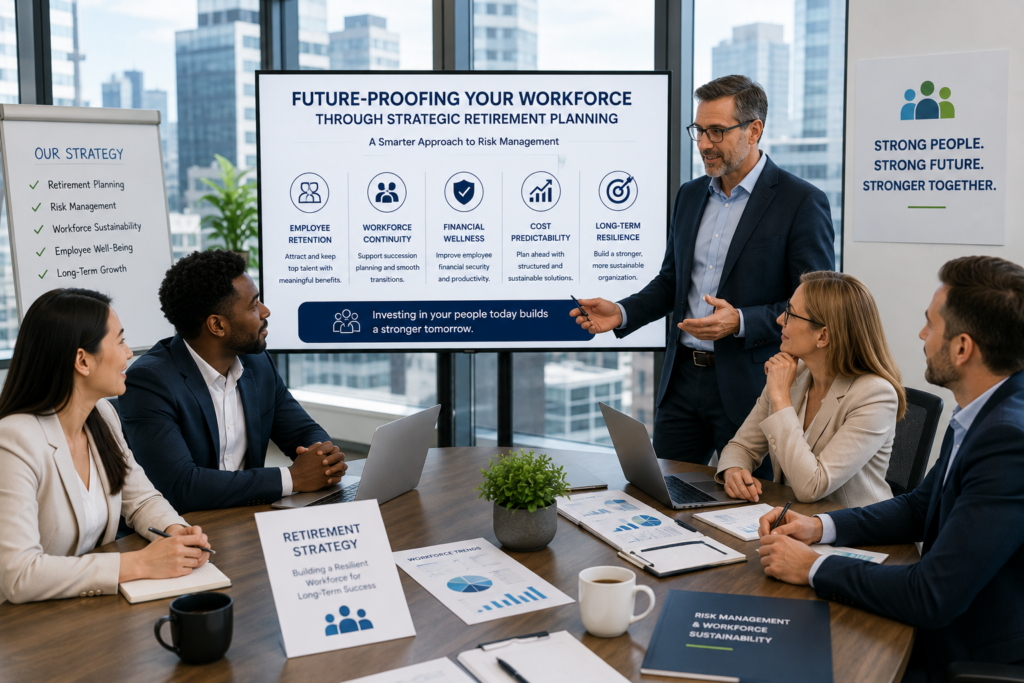
  • How Can Businesses Future-Proof Their Workforce by Using Retirement Planning as a Strategic Risk Management Tool?


    In today’s evolving economic and labour environment, businesses are increasingly focused on long-term workforce sustainability alongside operational efficiency and cost management.

    As organizations prepare for changing workforce demographics, talent shortages, and evolving employee expectations, retirement planning is becoming an increasingly important part of broader workforce and risk management strategies.

    Rather than functioning solely as an employee benefit, retirement planning may help businesses support workforce continuity, employee financial wellness, succession planning, and long-term organizational stability.

    Why Workforce Future-Proofing Matters

    Organizations today face a range of workforce-related challenges, including:

    • Talent retention
    • Recruitment competition
    • Workforce transitions
    • Employee financial stress
    • Succession planning needs
    • Long-term workforce sustainability

    To address these challenges, many businesses are exploring long-term strategies that support both employee well-being and organizational resilience.

    Retirement planning is increasingly being viewed as one component of a broader workforce risk management framework.

    1. Supporting Employee Retention

    One important workforce consideration is employee retention.

    Benefits that support long-term financial well-being may influence employees’ decisions to remain with an organization. Strong retirement programs can help businesses manage costs associated with recruitment, onboarding, and employee turnover.

    Retaining experienced employees may also support:

    • Operational continuity
    • Knowledge retention
    • Team stability
    • Long-term workforce engagement

    Businesses Often Measure:

    • Employee turnover rates
    • Retention trends
    • Average employee tenure
    • Recruitment and training costs

    2. Strengthening Workforce Continuity and Succession Planning

    Retirement planning may also support workforce continuity and succession planning efforts.

    Structured retirement programs can help organizations better prepare for workforce transitions and reduce the risk of unexpected talent gaps.

    By integrating retirement planning into long-term workforce strategies, businesses may improve:

    • Leadership transition planning
    • Organizational continuity
    • Long-term workforce participation
    • Retirement readiness among employees

    Succession planning is becoming increasingly important as many industries navigate shifting workforce demographics and evolving labour markets.

    3. Supporting Employee Financial Wellness and Productivity

    Employee financial wellness is another important consideration for many organizations.

    Research suggests that financial stress may affect workplace engagement, productivity, and employee confidence. Programs that support long-term financial planning may help employees feel more secure and focused in their professional roles.

    Organizations may support financial wellness through:

    • Workplace retirement programs
    • Financial education initiatives
    • Retirement planning resources
    • Employee financial wellness strategies

    Improved financial confidence may also contribute to stronger workplace engagement and morale.

    4. Improving Cost Predictability and Organizational Planning

    From an organizational perspective, retirement plans may also support long-term financial planning and cost predictability.

    Defined contribution retirement structures, for example, may help organizations better anticipate future benefit-related expenses while supporting workforce planning objectives.

    Businesses often evaluate:

    • Long-term benefits forecasting
    • Workforce planning stability
    • Retirement program participation trends
    • Organizational financial planning strategies

    A structured approach to retirement planning may contribute to stronger long-term operational planning and workforce sustainability.

    5. Integrating Retirement Planning Into a Broader Risk Management Strategy

    Retirement planning is often most effective when integrated into a broader workforce and organizational risk management framework rather than treated as a standalone benefit.

    Organizations may align retirement planning with:

    • Workforce sustainability goals
    • Employee engagement initiatives
    • Talent retention strategies
    • Succession planning frameworks
    • Long-term business objectives

    Because workforce demographics and organizational priorities vary, many businesses take a customized and data-informed approach when designing retirement strategies.

    Supporting Long-Term Workforce Sustainability Through Strategic Retirement Planning

    For example,Open Access Limited works with employers across Ontario and Canada to help design retirement program structures focused on employee financial well-being, workforce planning, and long-term organizational sustainability.

    For more insights, explore our guide on employee retirement solutions and workforce planning strategies.

    Final Thoughts

    As businesses continue to navigate evolving workforce challenges, retirement planning is becoming an increasingly valuable component of long-term workforce and risk management strategies.

    By integrating retirement planning into broader organizational objectives, businesses may strengthen workforce continuity, support employee financial wellness, improve retention, and enhance long-term operational resilience.

    Professional business leadership team discussing workforce sustainability, retirement planning, and long-term risk management strategies in a modern corporate office in Canada.

    References:

    Mercer (2024).
    Global Talent Trends Report.
    https://www.mercer.com

    OECD (2023).
    Pensions and Workforce Sustainability Analysis.
    https://www.oecd.org

    Gallup (2024).
    State of the Global Workplace Report.
    https://www.gallup.com

    PwC (2024).
    Workforce Risk and Future of Work Insights.
    https://www.pwc.com

    Benefits Canada (2025).
    Retirement and Workforce Risk Insights.
    https://www.benefitscanada.com

  • How Can Businesses Integrate Retirement Planning Into Their Employee Value Proposition (EVP)?

    Introduction

    In today’s competitive labour market, businesses are increasingly taking a broader approach to compensation by considering not only salary, but also long-term financial wellness programs such as employee retirement plans.

    For many organizations, retirement planning has become an important component of the overall employee value proposition (EVP). When integrated thoughtfully into a compensation strategy, retirement programs may help strengthen employee engagement, support workforce retention, and contribute to long-term organizational planning.

    Rather than functioning as standalone benefits, retirement plans are often viewed as part of a more comprehensive approach to employee well-being and workforce strategy.

    What Is an Employee Value Proposition (EVP)?

    An employee value proposition (EVP) refers to the overall value employees receive in exchange for their contributions to an organization.

    An EVP often includes:

    • Salary and compensation
    • Employee benefits
    • Career development opportunities
    • Workplace culture
    • Financial wellness support
    • Retirement planning programs

    A strong EVP may help organizations attract skilled talent, improve retention, and strengthen employer branding in competitive industries.

    Why Retirement Planning Matters in Compensation Strategies

    As employees place greater emphasis on financial wellness and long-term security, retirement planning is becoming an increasingly important part of workplace compensation strategies.

    Employer-sponsored retirement programs may help employees:

    • Build long-term financial confidence
    • Prepare for retirement readiness
    • Feel supported beyond immediate compensation
    • View workplace benefits more holistically

    For employers, integrating retirement planning into compensation strategies may strengthen the overall perceived value of employment offerings.

    1. Strengthening Employee Financial Wellness

    Retirement programs can contribute to broader financial wellness initiatives within organizations.

    Employer contributions and long-term savings opportunities may support employees’ financial planning goals while helping create a greater sense of long-term financial stability.

    Financial wellness support may also positively influence:

    • Employee confidence
    • Workplace engagement
    • Organizational loyalty
    • Long-term employee satisfaction

    2. Supporting Employee Retention and Engagement

    Retirement planning may also support employee retention strategies.

    Employees who perceive strong long-term financial support from their employer may be more likely to remain engaged and committed to the organization over time.

    In many industries, retaining experienced employees is an important workforce objective, particularly in competitive labour markets where talent acquisition costs continue to rise.

    Businesses Often Evaluate:

    • Employee retention rates
    • Employee satisfaction surveys
    • Participation in retirement programs
    • Workforce engagement trends

    3. Enhancing Employer Branding and Talent Attraction

    Organizations that offer structured retirement programs may strengthen their employer brand by demonstrating a commitment to employee financial well-being.

    In situations where salary offerings are relatively similar between employers, retirement benefits and long-term financial programs can become important differentiators.

    A strong compensation and retirement strategy may help businesses:

    • Attract skilled talent
    • Improve recruitment competitiveness
    • Enhance employee perception of workplace value
    • Strengthen overall employer reputation

    4. Aligning Retirement Planning With Workforce Objectives

    Some organizations integrate retirement planning into broader workforce planning and organizational strategies.

    Retirement programs may support:

    • Long-term workforce participation
    • Succession planning
    • Organizational continuity
    • Workforce stability
    • Employee retirement readiness

    By aligning retirement planning with business objectives, organizations may create a more cohesive and sustainable workforce strategy.

    5. Taking a Customized and Data-Informed Approach

    Because every workforce is different, many businesses take a customized approach when integrating retirement planning into compensation frameworks.

    Factors often considered include:

    • Workforce demographics
    • Employee financial priorities
    • Organizational goals
    • Compensation structures
    • Industry competitiveness

    As a result, organizations may work with experienced retirement advisory firms to help design retirement strategies aligned with both employee needs and long-term business objectives.


    Supporting Long-Term Workforce Planning Through Retirement Strategies

    For example, Open Access Limited works with employers across Ontario and Canada to help integrate retirement planning into compensation strategies in ways that support employee financial well-being and long-term organizational planning.

    To build a stronger workforce strategy, explore how employee retirement solutions can support long-term engagement and financial wellness.

    Supporting Long-Term Workforce Planning Through Retirement Strategies


    Professional HR and business leadership team discussing employee retirement planning and compensation strategies in a modern corporate office in Canada.

    References:

    Mercer (2024).
    Global Talent Trends Report.
    https://www.mercer.com

    PwC (2024).
    Workforce and Employee Value Proposition Insights.
    https://www.pwc.com

    Benefits Canada (2025).
    Compensation and Retirement Strategy Insights.
    https://www.benefitscanada.com

    OECD (2023).
    Pensions and Workforce Strategy Analysis.
    https://www.oecd.org

    Willis Towers Watson (WTW) (2023).
    Global Benefits Attitudes Survey.
    https://www.wtwco.com

  • How Can Businesses Design Retirement Plans That Appeal to a Multi-Generational Workforce?

    Introduction

    Today’s workforce includes multiple generations with different financial priorities, career stages, and retirement expectations. As organizations continue to evolve, many employers are exploring how retirement plans can better support employees across Gen Z, Millennials, and Gen X.

    Because financial goals and risk tolerance often vary between generations, businesses may benefit from designing retirement programs that offer flexibility, accessibility, and personalized support rather than relying on a one-size-fits-all approach.

    A thoughtfully structured retirement plan can help improve employee engagement, support financial wellness, and contribute to long-term workforce planning.

    Why Multi-Generational Retirement Planning Matters

    Modern workplaces often include employees at very different stages of life and financial development.

    For example:

    • Gen Z employees may prioritize flexibility and accessibility
    • Millennials may focus on balancing growth with financial stability
    • Gen X employees may place greater emphasis on retirement readiness and long-term income security
    • retirement plans for different generations

    As a result, organizations are increasingly recognizing the importance of retirement strategies that accommodate diverse workforce needs.

    1. Offer Flexible Investment Options

    One important element of a multi-generational retirement plan is flexibility.

    Employees have different risk tolerances, financial goals, and investment timelines depending on their career stage and personal circumstances.

    Providing a range of investment options may allow employees to align retirement decisions with their individual preferences and long-term objectives.

    Flexible Plan Features May Include:

    • Conservative and growth-oriented investment options
    • Target-date funds
    • Diversified portfolio choices
    • Adjustable contribution strategies
    • Long-term retirement planning tools
    • flexible retirement plans

    2. Create Flexible Contribution Structures

    Financial situations often differ significantly across generations.

    Younger employees may face student debt and rising living costs, while mid-career professionals may balance mortgages, family responsibilities, and long-term savings goals.

    Flexible contribution structures may help improve participation by accommodating different financial realities.

    Examples Include:

    • Optional contribution increases over time
    • Employer matching structures
    • Voluntary contribution flexibility
    • Automatic enrollment features
    • Adjustable savings percentages
    • workplace retirement planning

    3. Provide Targeted Financial Education

    Financial literacy levels and retirement knowledge may vary across employees.

    Targeted education and communication strategies can help employees better understand their retirement benefits and make more informed financial decisions.

    Research suggests that employees who understand how retirement programs function may be more likely to participate and engage with long-term planning opportunities.

    Educational Support May Include:

    • Retirement planning workshops
    • Financial wellness resources
    • Personalized retirement calculators
    • Educational webinars
    • One-on-one advisory support

    4. Improve Employee Engagement Through Clear Communication

    Clear communication is an important component of retirement plan engagement.

    Complex retirement terminology can sometimes discourage participation, especially among younger employees who may be less familiar with long-term investing.

    Organizations may benefit from simplifying communication and providing information that is easy to understand and relevant to different career stages.

    Effective Communication Strategies:

    • Simplified retirement plan explanations
    • Personalized employee messaging
    • Multi-channel communication
    • Educational email campaigns
    • Visual retirement planning resources
    • multi-generational workforce retirement strategies

    5. Align Retirement Plans With Long-Term Workforce Goals

    Many businesses view retirement plans as part of a broader employee benefits and workforce strategy.

    When aligned with organizational objectives, retirement programs may contribute to:

    • Employee retention
    • Talent attraction
    • Workforce engagement
    • Financial wellness initiatives
    • Long-term workforce stability

    A strong retirement strategy can also help strengthen the overall employee value proposition in competitive labour markets.

    Supporting Diverse Workforce Needs Through Customized Retirement Strategies

    Because workforce demographics vary between organizations, some businesses choose to work with experienced retirement advisory firms to help develop retirement strategies tailored to their employees’ needs.

    For example, Open Access Limited works with employers across Ontario and Canada to help design retirement program structures focused on employee financial well-being and long-term organizational planning


    Final Thoughts

    Designing retirement plans for a multi-generational workforce requires flexibility, communication, and an understanding of evolving employee priorities.

    By offering adaptable retirement solutions, targeted financial education, and personalized engagement strategies, businesses may better support employees across all career stages while strengthening long-term workforce planning and organizational stability.

    A successful retirement plan strategy helps businesses create stronger retirement plans that support employees across different generations.

    Retirement plans for multi-generational workforce planning

    References:

    PwC (2024).
    Workforce of the Future Report.
    https://www.pwc.com

    Mercer (2024).
    Global Talent Trends Report.
    https://www.mercer.com

    Willis Towers Watson (WTW) (2023).
    Global Benefits Attitudes Survey.
    https://www.wtwco.com

    Benefits Canada (2025).
    Retirement and Workforce Insights.
    https://www.benefitscanada.com

    OECD (2023).
    Pensions and Multi-Generational Workforce Analysis.
    https://www.oecd.org

  • How Can Businesses Measure the ROI of Employee Retirement Plans?

    Employee retirement plans are often viewed as an important part of a company’s compensation strategy. However, many organizations today also recognize these programs as long-term workforce investments that may influence employee retention, engagement, financial wellness, and overall organizational stability.

    As businesses continue to compete for skilled talent in evolving labour markets, understanding the return on investment (ROI) of employee retirement plans has become increasingly important.

    Rather than relying on a single financial metric, organizations typically evaluate retirement plan ROI through a combination of workforce performance indicators, employee feedback, and long-term business outcomes.Effective employee retirement plans help businesses improve retention, measure long-term value, and create stronger financial wellness strategies.

    Why Measuring Retirement Plan ROI Matters

    Businesses invest significant resources into employee benefits programs. Measuring the effectiveness of retirement plans may help organizations better understand how these programs contribute to:

    • Employee retention
    • Recruitment competitiveness
    • Workforce engagement
    • Financial wellness initiatives
    • Long-term workforce planning
    • Organizational stability

    For many employers, retirement plans are not only employee benefits — they may also support broader business objectives and workforce strategies.

    1. Employee Retention and Reduced Turnover Costs

    One of the most commonly evaluated indicators of retirement plan ROI is employee retention.

    Research suggests that benefits tied to long-term financial well-being may influence employees’ decisions to remain with an organization. Strong retirement offerings can contribute to reduced turnover, helping businesses lower recruitment, onboarding, and training costs.

    Retaining experienced employees may also help preserve institutional knowledge and support operational continuity.

    Businesses Often Measure:

    • Employee turnover rates
    • Average employee tenure
    • Recruitment and training costs
    • Retention trends over time

    2. Employee Engagement and Workplace Productivity

    Organizations may also assess how retirement plans influence employee engagement and productivity.

    Employees who feel supported in their financial future may experience lower financial stress, which can positively impact workplace morale, focus, and participation.

    Financial wellness initiatives are increasingly being integrated into broader employee engagement strategies across many organizations.

    Common Indicators Include:

    Absenteeism rates

    Employee satisfaction surveys

    Workplace engagement scores

    Participation in financial wellness programs

    Productivity trends

    3. Talent Attraction and Employer Competitiveness

    In competitive labour markets, retirement benefits may play a role in attracting skilled employees.

    Candidates often compare workplace benefits when evaluating job opportunities. A structured retirement program can become part of an employer’s overall value proposition and help strengthen employer branding.

    Organizations May Evaluate:

    • Offer acceptance rates
    • Time-to-fill positions
    • Candidate feedback
    • Recruitment performance metrics
    • Employer brand perception

    4. Workforce Stability and Long-Term Planning

    Some organizations also evaluate empoyee retirement plans as part of broader workforce planning and risk management strategies.

    Structured retirement programs may support:

    • Long-term workforce participation
    • Leadership succession planning
    • Organizational continuity
    • Employee retirement preparedness

    Businesses may monitor participation rates and retirement readiness to better understand long-term workforce trends.

    5. Combining Quantitative and Qualitative Metrics

    Measuring the ROI of employee retirement plans often requires a balanced approach using both quantitative and qualitative indicators.

    Quantitative Metrics

    Businesses may review:

    • Retention rates
    • Participation levels
    • Contribution rates
    • Recruitment costs
    • Workforce turnover data

    Qualitative Indicators

    Organizations may also consider:

    • Employee feedback
    • Workplace satisfaction
    • Financial wellness perceptions
    • Employee confidence in retirement readiness

    Because every organization is different, outcomes may vary depending on workforce demographics, plan structure, and overall business strategy.

    Supporting Long-Term Business Goals Through Retirement Planning

    Many businesses work with experienced retirement advisory firms to help design retirement strategies aligned with workforce and organizational objectives.

    For example, Open Access Limited works with employers across Ontario and Canada to help develop retirement program structures focused on employee financial well-being and long-term organizational planning.

    Final Thoughts

    Employee retirement plans are often viewed as more than standard workplace benefits. For many organizations, they represent long-term investments in workforce stability, employee well-being, and business continuity.

    By evaluating factors such as retention, engagement, talent attraction, and workforce planning, businesses can gain a broader understanding of the value retirement programs may provide over time.

    Employee retirement plans ROI and workforce benefits strategy

    References

    Benefits Canada (2025) — Employee Benefits and Retention Insights

    Gallup (2024) — State of the Global Workplace Report

    Mercer (2024) — Global Talent Trends Report

    OECD (2023) — Pensions and Workforce Participation Analysis

    Willis Towers Watson (WTW) (2023) — Global Benefits Attitudes Surve