Retirement Plan Insights: 5 Powerful Ways to Improve Workforce Decisions
Retirement plan insights are becoming valuable tools for organizations that want to make more informed workforce decisions, improve employee engagement, and build stronger long-term benefits strategies.
Modern businesses are recognizing that retirement planning is not only about offering savings programs. It can also provide meaningful employee data that helps organizations understand participation trends, financial wellness needs, and workforce expectations.
When analyzed carefully, retirement plan insights can support better communication, stronger benefits strategies, and more effective workforce planning.
Why Are Retirement Plan Insights Important for Businesses?
Retirement plan insights help employers understand how employees interact with workplace benefits.
Information such as participation patterns, contribution behavior, and engagement levels may show how employees are responding to retirement programs. These insights can help businesses identify opportunities to improve education, communication, and plan design.
Instead of making decisions based only on assumptions, organizations can use structured data to better understand employee needs and create more supportive workplace strategies.
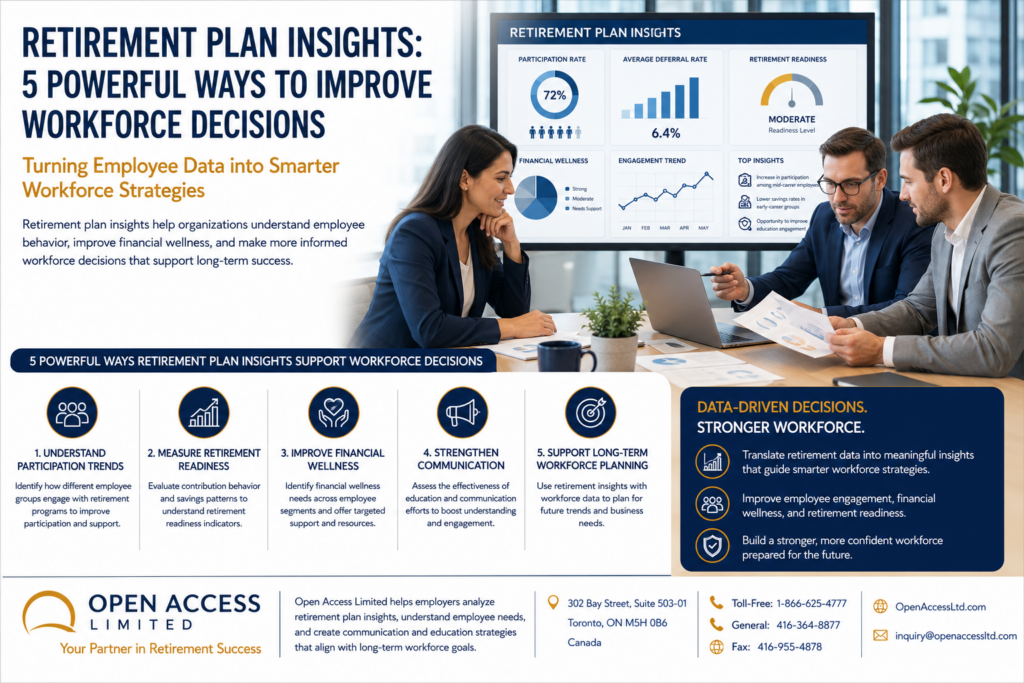
5 Powerful Ways Retirement Plan Insights Support Workforce Decisions
1. Understanding Employee Participation Trends
Employee participation data can show how different groups engage with retirement programs.
Businesses can review participation patterns to understand whether employees are actively using available benefits or if additional communication and education may be helpful.
These insights allow organizations to create strategies that better match workforce needs.
2. Measuring Retirement Readiness Indicators
Retirement plan insights may help businesses evaluate general retirement readiness trends.
Contribution levels and savings behaviors can provide information about whether employees may need additional financial education or planning resources.
Supporting retirement readiness can contribute to improved confidence and long-term workforce stability.
3. Improving Employee Financial Wellness Strategies
Employee financial wellness has become an important part of workplace benefits planning.
By reviewing retirement data, businesses may identify different employee needs and develop more targeted support strategies.
Financial education, personalized communication, and accessible resources can help employees make more informed decisions.
4. Strengthening Communication and Education Programs
A successful retirement program depends on employee understanding.
Retirement plan insights can help organizations evaluate whether communication efforts are effective.
If employees are not participating or engaging, businesses may adjust their education strategies to provide clearer information and stronger support.
5. Supporting Long-Term Workforce Planning
Retirement information can provide additional context for workforce planning.
When combined with broader workforce metrics, employee feedback, and demographic information, retirement insights may help organizations understand future workforce trends.
This information can support better planning while recognizing that every workforce has unique circumstances.
How Can Businesses Use Employee Data Responsibly?
rganizations should approach employee data carefully and thoughtfully.
The value of retirement plan insights depends on accurate information, proper interpretation, and understanding the specific workforce environment.
Data should support better decisions rather than create one-size-fits-all solutions.
Businesses often benefit from reviewing insights regularly and adjusting strategies as employee expectations change.
How Open Access Limited Supports Retirement Plan Insights
Open Access Limited, based in Ontario, works with employers to analyze retirement plan participation, contribution trends, and employee financial profiles.
Through structured analysis, communication strategies, and education support, Open Access Limited helps organizations better understand employee needs and align retirement programs with long-term workforce planning goals.
Open Access Limited
302 Bay Street, Suite 503-01
Toronto, ON M5H 0B6
Phone: 1-866-625-4777
Email: inquiry@openaccessltd.com
Website: OpenAccessLtd.com
Final Thoughts
Retirement plan insights can help businesses transform employee data into meaningful workforce strategies.
By understanding participation, retirement readiness, communication effectiveness, and financial wellness needs, organizations can create benefits programs that better support employees.
A thoughtful data-driven approach can strengthen employee engagement, improve planning decisions, and contribute to long-term organizational success.
References
Harvard Business Review – People Analytics and Workforce Insights
https://hbr.org
MIT Sloan Management Review – Data-Driven Organizations and Workforce Analytics
https://sloanreview.mit.edu
Society for Human Resource Management (SHRM) – HR Analytics and Workforce Planning Research
https://www.shrm.org
ADP Research Institute – Workforce Data and Labor Market Insights
https://www.adpri.org
Deloitte – People Analytics and Workforce Trends
https://www2.deloitte.com
McKinsey & Company – Future of Work and Analytics Research
https://www.mckinsey.com