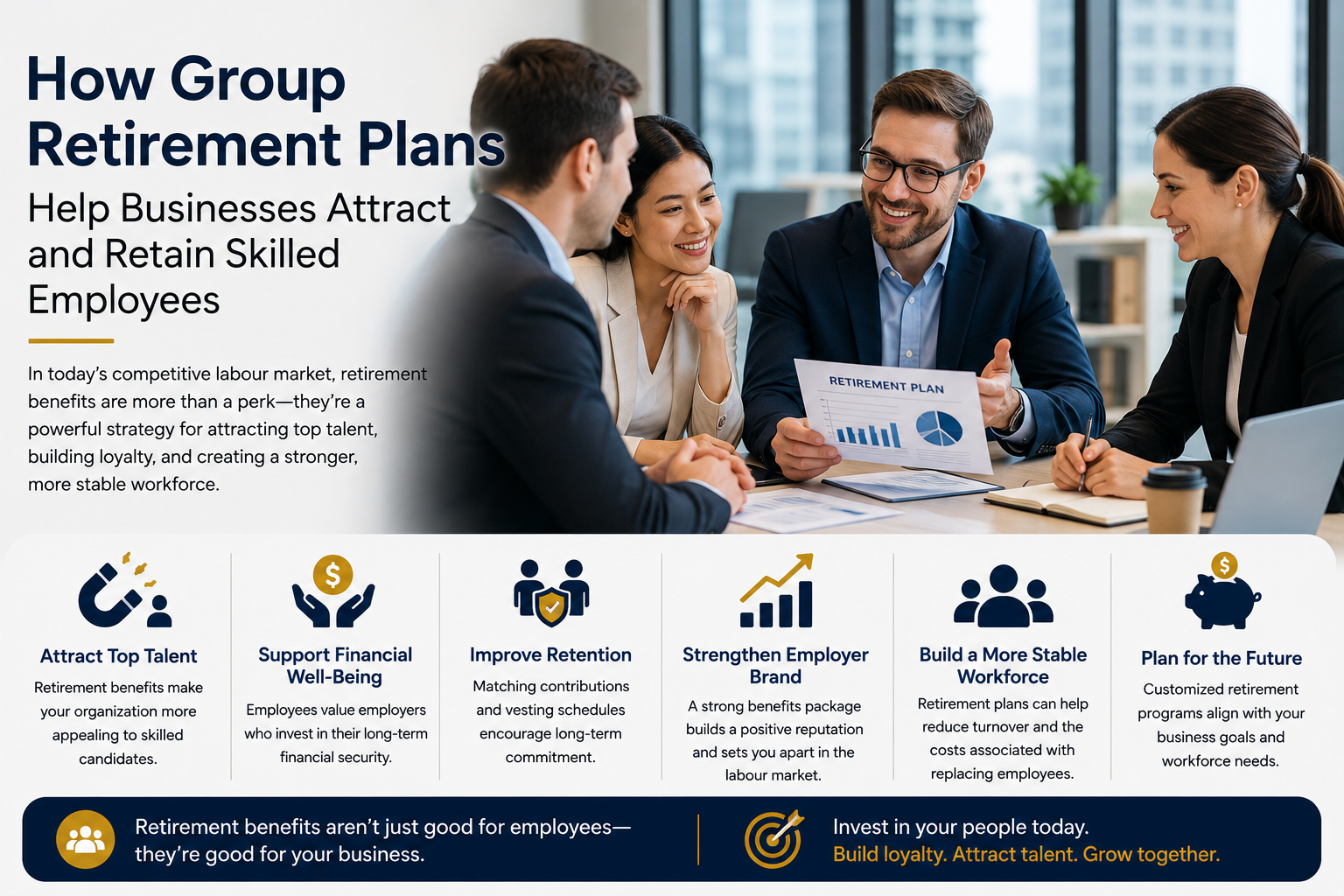
Retirement readiness workforce planning is becoming increasingly important as more employees remain in the workforce because they do not yet feel financially prepared to retire.
When retirement is delayed, the impact can extend beyond the individual employee. Employers may face uncertainty around succession planning, staffing, leadership development, knowledge transfer, career progression, and the timing of important workforce decisions.
Retirement readiness workforce planning is most effective when it becomes part of an organization’s long-term talent strategy rather than a one-time retirement discussion.
The most effective response is not to pressure employees toward a specific retirement date. Instead, businesses can create a respectful and voluntary framework that connects retirement education with succession planning, operational continuity, and flexible workforce transition options.
A thoughtful approach gives employees better tools to make informed decisions while giving the organization enough flexibility to prepare for several possible outcomes.
Why Does Retirement Readiness Affect Workforce Planning?
Employees may delay retirement because they are uncertain about whether their savings, income, pension benefits, and other financial resources will support their future needs.
By integrating retirement readiness workforce planning into employee education, succession planning, knowledge transfer, andworkforce development, businesses can improve operational continuity while helping employeesprepare for retirement with greater confidence.
For employers, an uncertain retirement timeline can make it more difficult to plan hiring, promotions, leadership transitions, and workforce coverage. Critical roles may also contain institutional knowledge, client relationships, technical experience, or operational responsibilities that cannot be transferred quickly.
However, employers should not assume that an employee’s age determines retirement readiness or intent.
Effective retirement readiness workforce planning focuses on preparation rather than prediction. Businesses can create systems that support employees while protecting organizational continuity, even when the exact retirement date is unknown.
5 Ways to Improve Employee Retirement Readiness and Workforce Planning
Businesses can improve employee retirement readiness by providing early retirement education, offering flexible and voluntary retirement options, connecting retirement planning with succession and knowledge transfer, and using workforce planning to prepare for different retirement scenarios. A strong workplace retirement readiness program can help employees make more informed decisions while supporting business continuity.
1. Provide Retirement-Readiness Education Early
Retirement education should be available before a financial concern becomes a workforce-planning crisis.
Employees may postpone retirement decisions because they do not fully understand plan features, contribution levels, retirement income options, or the questions they should discuss with a qualified financial professional.
Employers can provide clear information about workplace retirement plans, available educational resources, contribution structures, and long-term planning considerations.
Education should be offered consistently throughout an employee’s career rather than only when retirement appears close.
The process must remain confidential and voluntary. The employer’s role is to provide reliable information and access to professional guidance—not to make assumptions about an employee’s finances or preferred retirement date.
2. Consider Voluntary Phased-Retirement Options
Phased retirement allows an employee to move gradually from full-time work toward retirement.
Depending on operational needs and applicable rules, options may include reduced hours, project-based responsibilities, mentoring, consulting, temporary assignments, or another flexible arrangement.
For employees, a phased transition may provide additional time to prepare financially while adjusting gradually to retirement.
For employers, it can create more time to train successors, transfer client relationships, document processes, redistribute responsibilities, and preserve institutional knowledge.
A phased approach should always be voluntary, clearly documented, and reviewed by appropriate legal, tax, benefits, and plan-administration professionals before implementation.
3. Connect Retirement Planning With Succession and Knowledge Transfer
Retirement planning and succession planning should not be treated as completely separate conversations.
Organizations can identify positions that carry critical knowledge and develop continuity plans without requiring employees to disclose a specific retirement date.
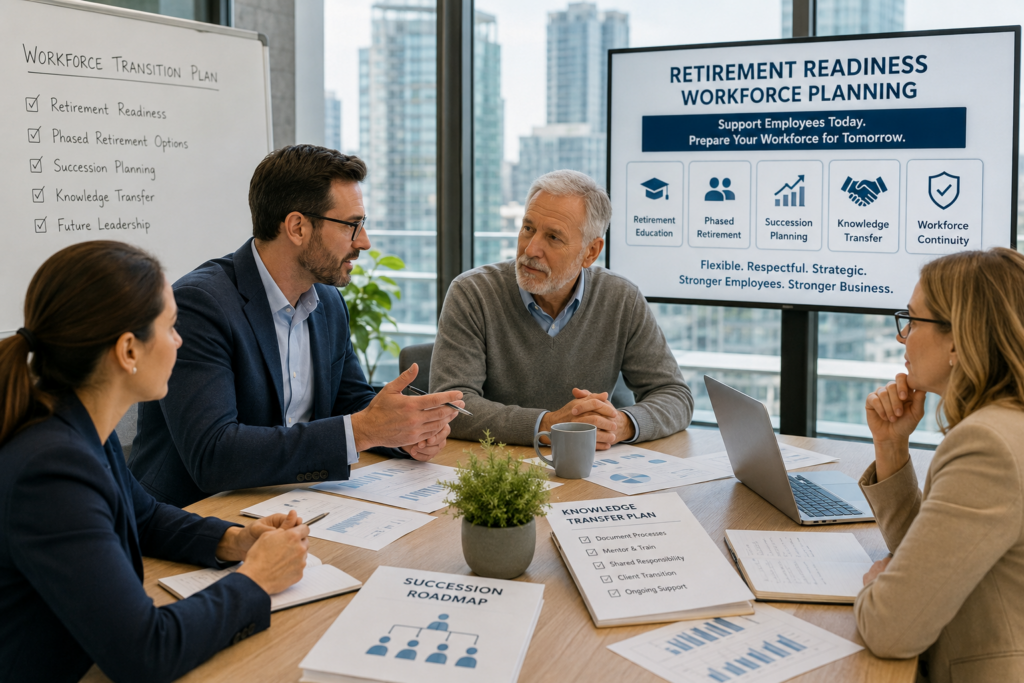
A structured knowledge-transfer plan may include:
Cross-training team members
Documenting essential procedures
Creating mentoring relationships
Developing future leaders
Sharing client or project ownership
Establishing interim coverage plans
These actions protect the organization whether an employee retires earlier than expected, remains longer, or transitions gradually.
Connecting retirement readiness with succession planning helps businesses reduce disruption while creating development opportunities for other employees.
4. Build Workforce Scenarios Instead of Making Assumptions
Employers should avoid assuming that age determines whether an employee is ready or intends to retire.
A stronger approach is to create several workforce scenarios for critical positions.
These may include:
An earlier-than-expected departure
An employee remaining longer than anticipated
A gradual phased-retirement transition
A temporary consulting or mentoring arrangement
An unexpected leave or change in availability
Scenario-based planning helps management prepare hiring timelines, leadership-development plans, interim coverage, and knowledge-transfer priorities without intruding into personal financial decisions.
This approach also gives the organization greater flexibility when workforce circumstances change.
5. Any retirement-transition initiative should protect employee dignity, privacy, and individual choice.
Participation in retirement education, professional financial guidance, reduced-work arrangements, mentoring programs, or phased retirement should remain voluntary.
Clear policies can help businesses explain eligibility, responsibilities, compensation arrangements, benefit implications, and transition expectations.
Employers must also avoid age-based pressure or assumptions.
Pension, employment, tax, human-rights, and benefits rules may affect how a formal retirement-transition program is structured. Businesses should obtain appropriate professional advice before introducing phased-retirement arrangements or changing employment conditions.Keep Every Transition Voluntary, Respectful, and Compliant
A Practical Retirement Readiness Workforce Planning Framework
Businesses can organize their approach around five connected objectives.
Improve Employee Retirement Readiness
Offer ongoing education and access to qualified professional guidance so employees can make more informed and confident decisions.
Protect Business Continuity
Create role-based succession, staffing, and coverage plans to reduce operational disruption.
Retain Critical Expertise
Use voluntary mentoring, phased work, project assignments, or consulting roles to create more time for knowledge transfer.
Avoid Age-Based Assumptions
Prepare for multiple retirement-timing scenarios rather than predicting decisions based on age.
Measure and Improve the Process
Review participation, communication effectiveness, succession progress, and transition outcomes to identify opportunities for improvement.
How Can Businesses Balance Employee Support With Operational Stability?
Delayed retirement does not have to become a workforce-planning crisis.
The goal is not to control when employees retire. It is to create better conditions for informed employee decisions and more flexible organizational planning.
Businesses can balance both priorities by combining retirement education, confidential support, voluntary transition options, succession planning, leadership development, and knowledge transfer.
Retirement readiness workforce planning should also be integrated with broader workforce initiatives such as skills development, employee financial wellness, flexible work, and long-term talent planning.
An integrated strategy can help employees feel respected while allowing the organization to prepare responsibly for different outcomes.
How Open Access Limited Supports Retirement Readiness and Workforce Planning
Open Access Limited is a Canadian independent provider of group retirement plans.
The company supports employers with retirement plan design, member education, fiduciary oversight, employee-focused retirement solutions, and long-term plan strategy.
Open Access Limited can help organizations strengthen retirement-plan education and member support while connecting employee retirement readiness with broader workforce priorities.
These services may help businesses improve employee understanding, support participation, prepare for workforce transitions, and build a more resilient organization.
Open Access Limited
1 Richmond Street West, Suite 701
Toronto, ON M5H 3W4
Canada
Toll-Free: 1-866-625-4777
Email: inquiry@openaccessltd.com
Website: https://openaccessltd.com
Retirement readiness workforce planning is most effective when it becomes part of an organization’s long-term talent strategy rather than a one-time retirement discussion. By integrating retirement readiness workforce planning into employee education, succession planning, knowledge transfer, and workforce development, businesses can improve operational continuity while helping employees prepare for retirement with greater confidence. A proactive retirement readiness workforce planning strategy benefits both employees and employers by supporting informed decisions and long-term organizational resilience.
Final Thoughts
Retirement readiness workforce planning helps businesses support employees without forcing personal retirement decisions or weakening organizational continuity.
By offering early education, considering voluntary phased-retirement options, connecting retirement planning with succession, preparing multiple workforce scenarios, and protecting employee privacy, organizations can manage change more effectively.
The strongest approach respects individual choice while preparing the business for earlier departures, extended employment, and gradual transitions.
When employee retirement readiness and workforce continuity are considered together, businesses can protect critical knowledge, develop future leaders, and create a more prepared and resilient workforce.
References
Statistics Canada — Retirement and Post-Retirement Employment Among Older Canadians
https://www150.statcan.gc.ca/n1/pub/75-006-x/2026002/article/00004-eng.htmStatistics Canada — A Record Number of Canadian Seniors Worked in 2025
https://www.statcan.gc.ca/o1/en/plus/9132-record-number-canadian-seniors-worked-2025-here-are-some-reasons-whyAARP — Phased Retirement at Work: 5 Things to Think About
https://www.aarp.org/work/careers/phased-retirement/Center for Retirement Research at Boston College — Phased Retirement: Problems and Prospects
https://crr.bc.edu/wp-content/uploads/2007/02/wob_8.pdfOpen Access Limited — Group Retirement Plan in Canada
https://openaccessltd.com/group-retirement-plan/Open Access Limited — Contact Us
https://openaccessltd.com/contact-us/
Leave a Reply