Tag: Open Access Limited

  • How can businesses use retirement benefits to support talent attraction and retention efforts?

    Retirement Benefits Retention: 5 Powerful Ways to Attract Talent

    Retirement Benefits Retention: 5 Powerful Ways to Attract Talent

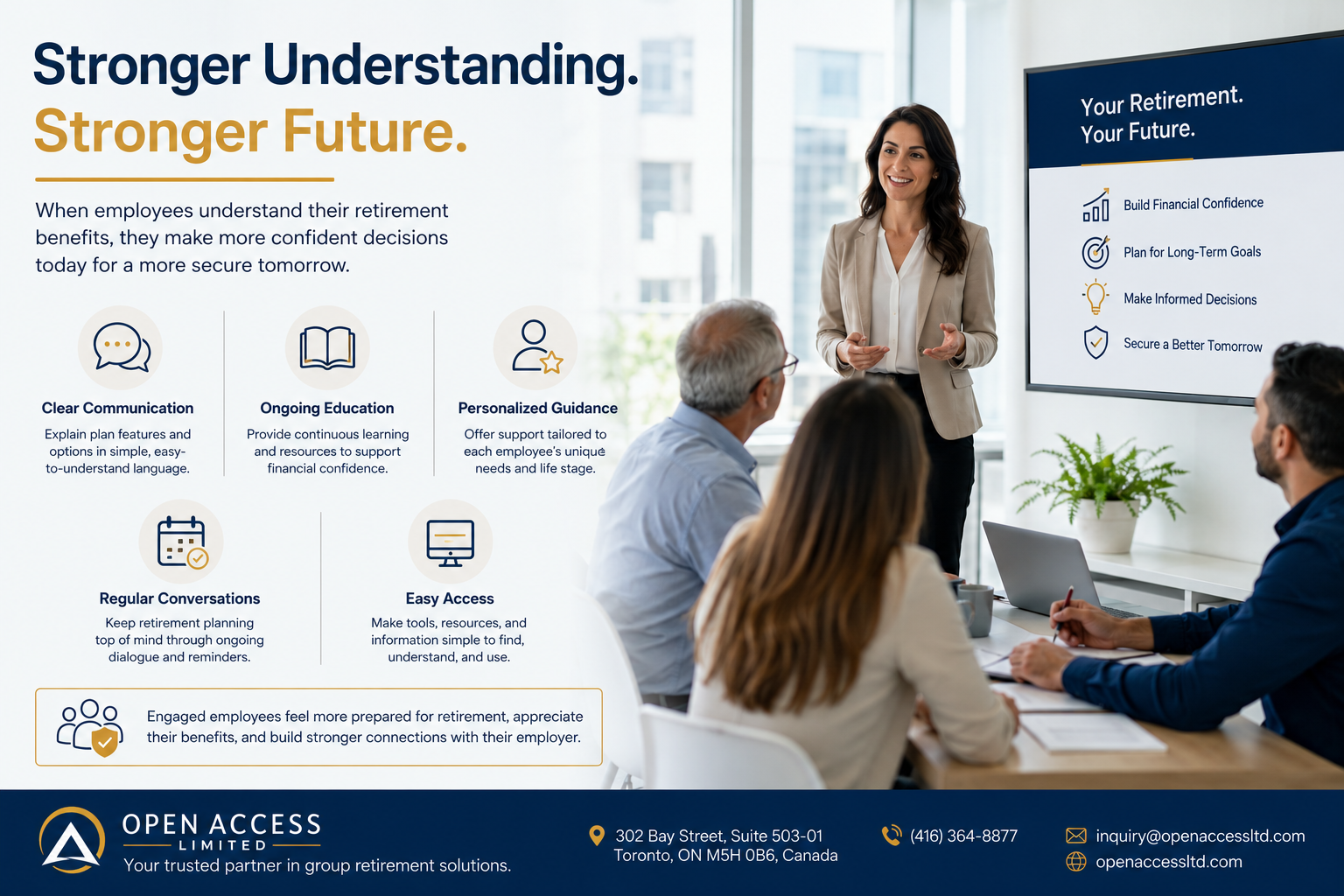
    Retirement benefits retention strategies are becoming increasingly important as businesses compete to attract skilled employees and maintain a strong workforce.

    In today’s competitive labour market, employees often evaluate more than salary when considering career opportunities. Workplace culture, professional growth, flexibility, and financial benefits can all influence how employees view an organization.

    A thoughtful retirement benefits strategy may support long-term employee confidence and strengthen the overall employee value proposition.

    Why Do Retirement Benefits Matter for Talent Attraction?

    Retirement benefits retention strategies help organizations demonstrate a commitment to employees’ long-term financial well-being.

    For many employees, workplace benefits represent an important part of the total compensation experience.

    When retirement programs are clearly designed and communicated, employees may better understand the value their employer provides beyond regular income.

    Strong retirement benefits can help businesses create a more complete and competitive employment offering.

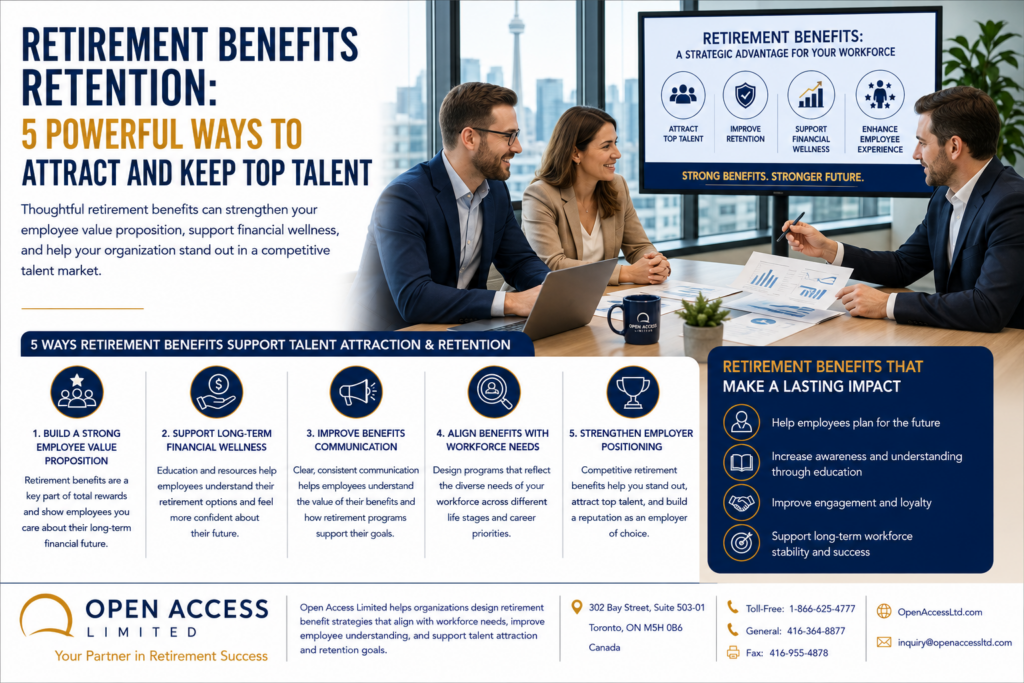
    5 Powerful Ways Retirement Benefits Support Employee Retention

    1. Building a Strong Employee Value Proposition

    A successful employee value proposition includes more than compensation.

    Retirement benefits, financial wellness resources, workplace support, and career opportunities work together to shape the employee experience.

    Organizations that align retirement programs with employee expectations may create stronger connections with their workforce.

    2. Supporting Long-Term Financial Wellness

    Employees at different career stages often have different financial priorities.

    Retirement benefits retention strategies can include education, accessible resources, and communication that help employees understand long-term planning options.

    Improving financial awareness may help employees feel more informed when making decisions about their future.

    3. Improving Benefits Communication

    A retirement program only creates value when employees understand it.

    Clear communication helps employees recognize available resources and how retirement programs fit within their broader financial goals.

    Businesses can improve engagement by providing ongoing education instead of only introducing benefits during onboarding.

    4. Aligning Benefits With Workforce Needs

    Different generations and employee groups may have different expectations.

    Organizations can review workforce demographics, employee feedback, and participation trends to better align retirement benefits with changing needs.

    Flexible approaches may help businesses create programs that remain relevant over time.

    5. Strengthening Employer Positioning

    There is no single retirement approach that guarantees improved attraction or retention results.

    Organizations should consider workforce characteristics, employee needs, communication methods, and business objectives.

    A balanced and data-informed approach helps employers design benefits that support both employees and organizational goals.

    Creating Stronger Employee Confidence

    Retirement programs strategies can also support employee confidence by helping workers better understand available financial resources. When organizations provide ongoing education and clear retirement communication, employees may feel more connected to workplace benefits and long-term planning opportunities.

    How Open Access Limited Supports Retirement Benefits Strategies

    Open Access Limited, based in Ontario, works with employers to design retirement programs aligned with workforce expectations and organizational objectives.

    Through tailored communication strategies, employee education initiatives, and flexible plan structures, Open Access Limited helps organizations improve employee understanding of retirement benefits and strengthen the overall employee value proposition.

    Open Access Limited
    302 Bay Street, Suite 503-01
    Toronto, ON M5H 0B6
    Phone: 1-866-625-4777
    Email: inquiry@openaccessltd.com

    Website: OpenAccessLtd.com

    Final Thoughts

    Retirement benefits retention strategies can play an important role in supporting talent attraction and long-term workforce engagement.

    By focusing on financial wellness, communication, education, and employee experience, businesses can create retirement programs that provide meaningful workplace value.

    A thoughtful retirement benefits approach can help organizations strengthen their workforce strategy and prepare for future talent expectations.

    
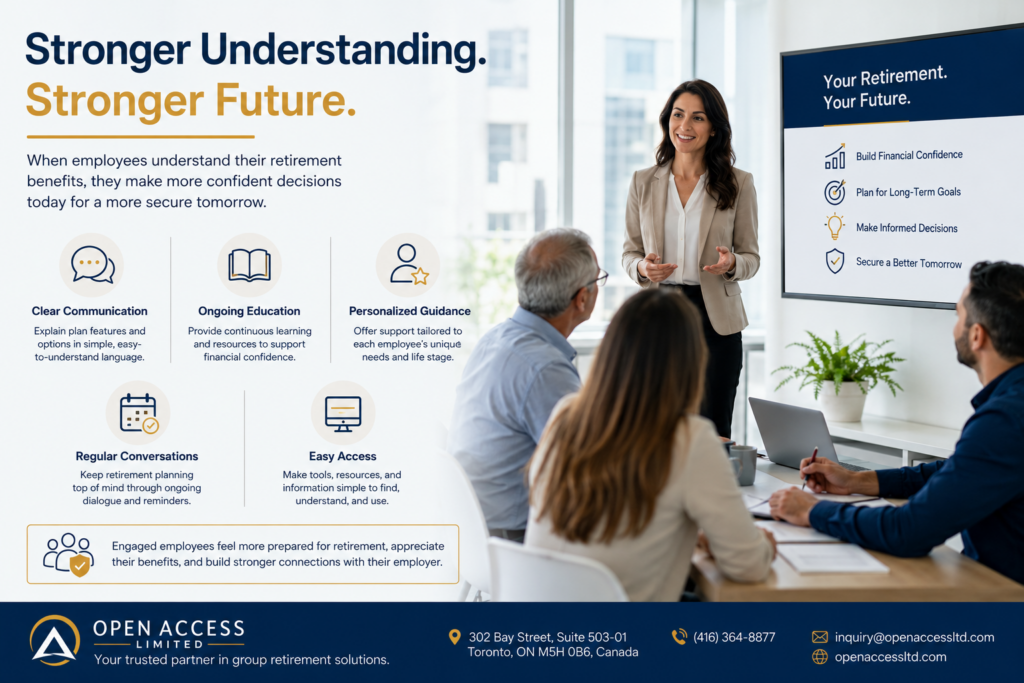
Canadian HR professionals discussing retirement benefits retention, talent attraction strategies, employee financial wellness, workplace benefits, and long-term workforce engagement.


    References

    LinkedIn (2024) – Workplace Learning and Talent Trends
    https://www.linkedin.com

    Randstad (2024) – Employer Brand and Talent Insights Research
    https://www.randstad.com

    ManpowerGroup – Global Talent Shortage Report
    https://www.manpowergroup.com

    Korn Ferry – Future of Work and Talent Strategy Research
    https://www.kornferry.com

    Great Place to Work Institute – Workplace Culture and Employee Experience Research
    https://www.greatplacetowork.com

    Workhuman – Employee Experience and Engagement Research
    https://www.workhuman.com

  • How can businesses evaluate retirement planning as part of a long-term workforce investment strategy?

    Retirement Planning Investment: 5 Powerful Ways to Build Workforce Success

    Retirement planning investment is becoming an important part of how organizations evaluate long-term workforce success, employee engagement, and sustainable business growth.

    For many businesses, retirement programs have traditionally been viewed as employee benefit expenses. However, modern organizations are increasingly considering how these programs can support broader workforce objectives.

    A strategic approach to retirement planning may help companies strengthen employee confidence, improve benefits understanding, and create a stronger connection between workplace programs and organizational goals.

    Why Should Businesses View Retirement Planning as an Investment?

    A retirement planning investment goes beyond providing a standard workplace benefit.

    When designed effectively, retirement programs can support workforce stability, employee value proposition, and long-term planning needs.

    Employees often evaluate workplace benefits as part of their overall employment experience. A well-structured retirement strategy may contribute to stronger engagement by helping employees understand the value of their total rewards package.

    Organizations that evaluate retirement planning strategically can better understand how benefits influence workforce expectations and future planning.

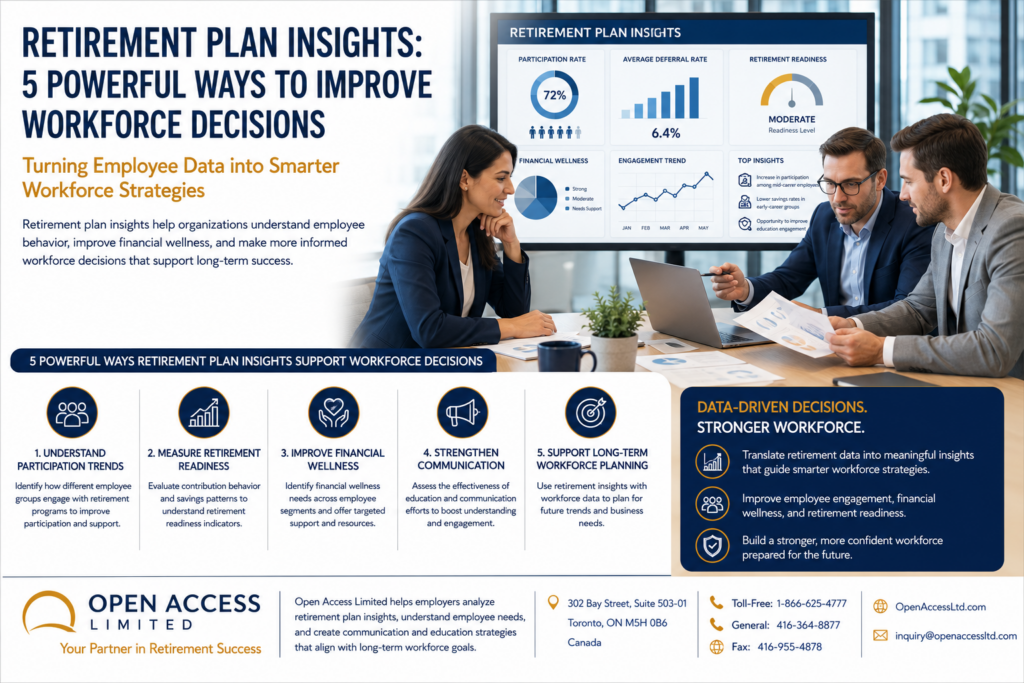
    5 Powerful Ways Retirement Planning Investment Supports Workforce Strategy

    1. Strengthening Long-Term Workforce Stability

    Retirement programs can support workforce stability by creating benefits structures that encourage long-term participation.

    When employees understand available retirement resources, they may feel more prepared when making financial decisions.

    Clear retirement planning strategies can help organizations build a more informed and engaged workforce.

    2.Improving Employee Financial Education

    Employee financial education is a key part of successful retirement planning investment.

    Providing resources, guidance, and communication can help employees better understand retirement options and available workplace benefits.

    Education helps transform retirement programs from simple benefits into meaningful workforce support tools.

    3. Supporting Employee Value Proposition

    A strong employee value proposition includes more than salary.

    Benefits, workplace culture, professional development, and financial wellness programs all influence how employees view their organization.

    Retirement planning can become part of a complete benefits strategy that supports attraction, engagement, and long-term workforce goals.

    4. Connecting Benefits With Business Objectives

    Organizations can evaluate retirement plans by considering how they align with company priorities.

    This may include workforce planning goals, employee participation, communication effectiveness, and long-term organizational needs.

    A thoughtful retirement planning investment helps connect employee support with broader business strategies.

    5. Creating Sustainable Workforce Planning

    Workforce needs continue to change as employee expectations, demographics, and economic conditions evolve.

    Retirement strategies that include regular review and improvement can help businesses maintain benefits that remain relevant over time.

    A sustainable approach allows organizations to adapt while supporting employees through different career stages.

    How Can Organizations Measure Retirement Planning Value?

    Businesses may review retirement programs alongside workforce indicators such as employee feedback, participation levels, engagement trends, and retention considerations.

    The impact of retirement planning can vary depending on plan design, workforce characteristics, and business objectives.

    For this reason, organizations often benefit from a structured approach that combines analysis, communication, and ongoing improvement.

    How Open Access Limited Supports Workforce Investment Strategies

    Open Access Limited, based in Ontario, works with employers to align retirement plan structures with organizational goals, employee education strategies, and long-term workforce planning needs.

    Through customized communication, contribution framework design, and benefits strategy support, Open Access Limited helps organizations evaluate retirement programs as part of a broader workforce investment approach.

    Open Access Limited
    302 Bay Street, Suite 503-01
    Toronto, ON M5H 0B6
    Phone: 1-866-625-4777
    Email: inquiry@openaccessltd.com
    Website: OpenAccessLtd.com

    Final Thoughts

    Retirement planning investment can help businesses create stronger connections between employee benefits and organizational success.

    By focusing on education, workforce stability, employee engagement, and sustainable planning, companies can build retirement strategies that support both employees and future business goals.

    Viewing retirement planning as a long-term workforce strategy allows organizations to create benefits programs with greater purpose and value.

    
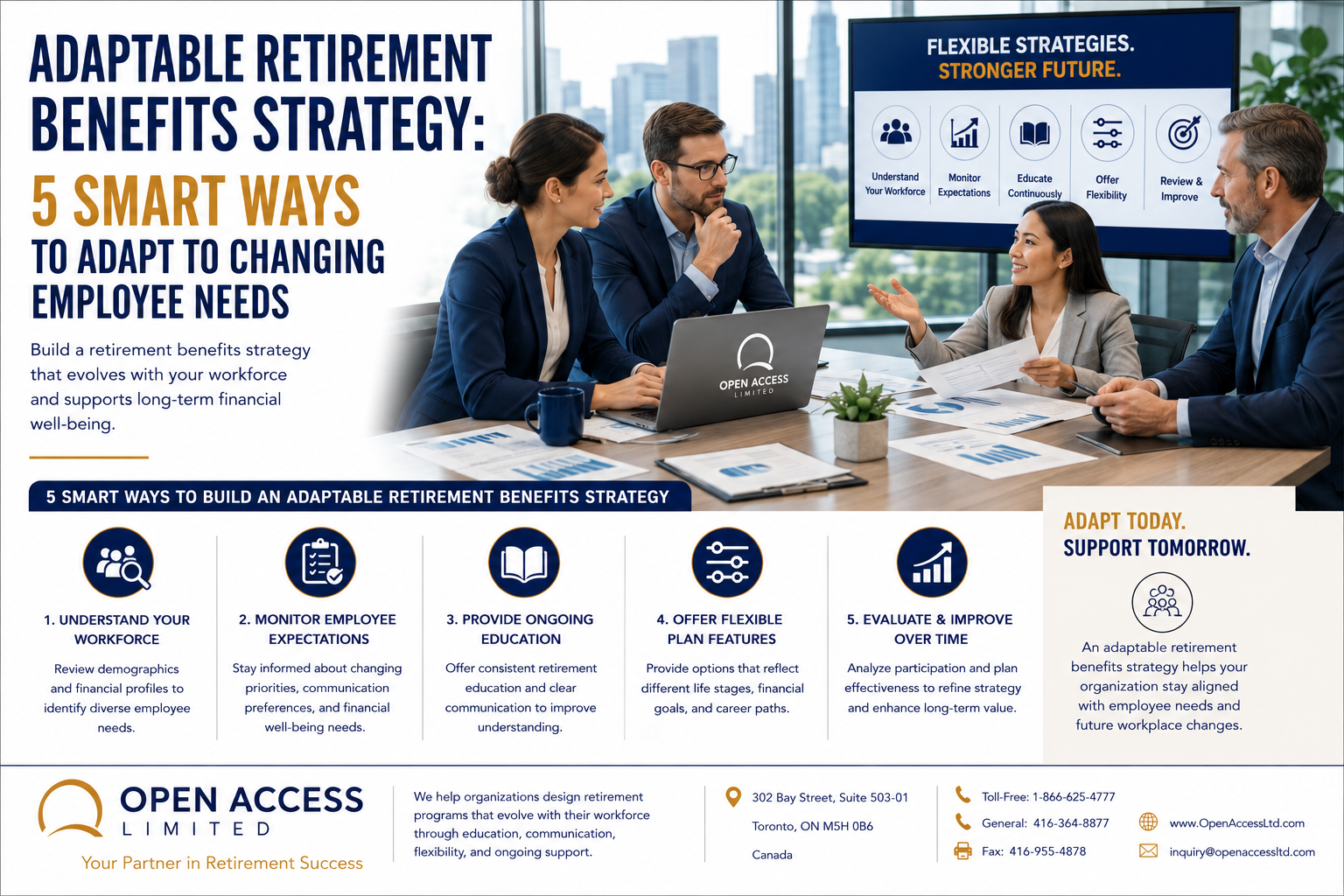
Canadian business executives discussing retirement planning investment, workforce strategy, employee financial education, benefits value, and long-term organizational success in a modern corporate office.

    References

    Boston Consulting Group (BCG) – Future of Work and Workforce Strategy Research
    https://www.bcg.com

    Willis Towers Watson (WTW) – Global Benefits Attitudes Survey
    https://www.wtwco.com

    Aon – Employee Benefits and Workforce Strategy Insights
    https://www.aon.com

    The Conference Board – Human Capital and Workforce Strategy Research
    https://www.conference-board.org

    International Foundation of Employee Benefit Plans (IFEBP) – Benefits and Workforce Planning Research
    https://www.ifebp.org

    WorldatWork – Total Rewards and Workforce Strategy Insights
    https://worldatwork.org

  • How can businesses choose a retirement planning partner that aligns with their long-term workforce goals?

    Retirement Planning Partner: 5 Smart Ways to Build Workforce Success

    Retirement planning partner selection is becoming an important decision for businesses that want employee benefits to support long-term workforce goals, employee engagement, and organizational stability.

    Choosing the right partner is not only about comparing retirement products. It is also about finding a provider that understands workforce demographics, employee needs, communication challenges, and broader business objectives.

    For many organizations, retirement planning is now part of a larger workforce strategy. A strong partner can help connect retirement plan design with retention, education, participation, and long-term employee financial confidence.

    Why Does Choosing the Right Retirement Planning Partner Matter?

    A retirement planning partner can influence how employees understand, value, and participate in workplace retirement programs.

    If the partner focuses only on products, the plan may not fully reflect company size, workforce composition, or employee expectations. However, when a partner understands business goals and workforce needs, retirement planning can become a more strategic employee benefits solution.

    Businesses may benefit from evaluating partners based on transparency, communication, governance practices, and the ability to provide ongoing guidance.

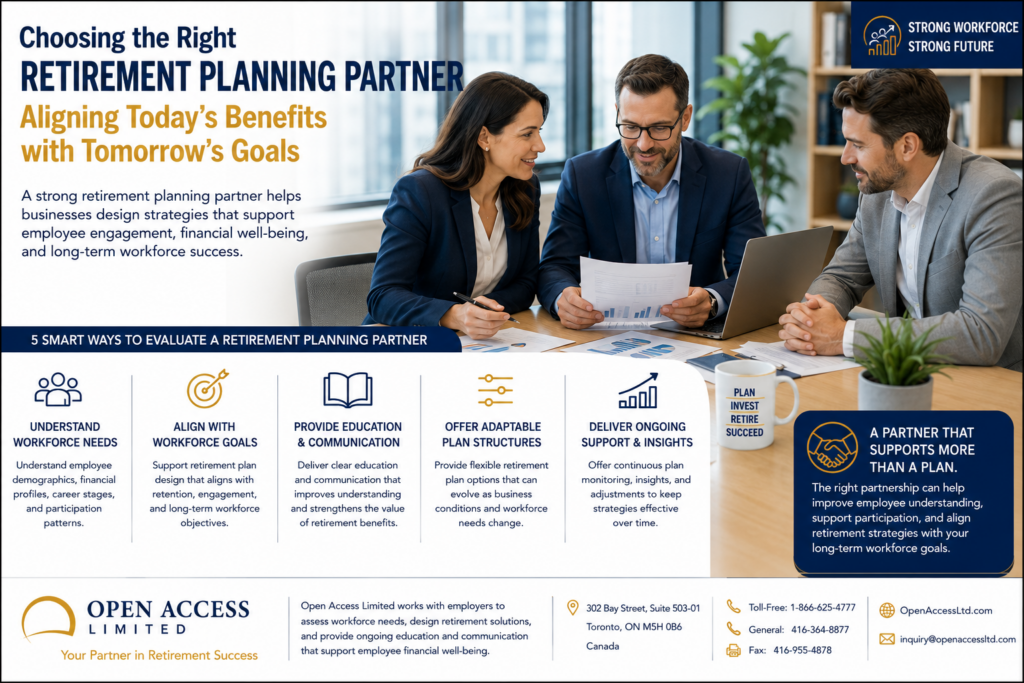
    5 Smart Ways to Evaluate a Retirement Planning Partner

    1. Understand Workforce Demographics and Employee Needs

    A strong retirement planning partner should understand that employees may have different financial profiles, career stages, and participation patterns.

    Some employees may need basic education about retirement savings, while others may require more advanced planning guidance. Understanding these differences can help businesses design benefits that are more relevant and easier to use.

    2. Align Retirement Plan Design With Workforce Goals

    Retirement strategies should support broader business objectives such as retention, engagement, and long-term workforce planning.

    A qualified partner should help businesses connect retirement plan design with organizational priorities. This may include reviewing contribution structures, communication methods, and employee participation goals.

    3. Provide Clear Employee Education and Communication

    Even a well-designed retirement plan may not succeed if employees do not understand it.

    A retirement planning partner should provide clear education, simple communication, and practical guidance. This can help employees understand the value of retirement benefits and how those benefits support their long-term financial future.

    4. Offer Adaptable Retirement Plan Structures

    Workforce needs can change over time. Business conditions, employee demographics, and financial expectations may also shift.

    An effective partner should offer adaptable plan structures that allow businesses to review and adjust retirement strategies as needed. Flexibility can help organizations maintain benefits that remain aligned with long-term goals.

    5. Deliver Ongoing Support and Plan Insights

    Selecting a retirement planning partner should not be a one-time decision.

    Ongoing monitoring, reporting, communication, and plan evaluation can help businesses understand whether their retirement strategy continues to meet employee and organizational needs.

    A strong partner should provide insights that support continuous improvement.

    How Can Businesses Compare Retirement Planning Partners?

    Important questions may include:

    Businesses can take a structured approach by asking whether a potential partner can support workforce analysis, employee education, plan design, governance, and long-term review.

    Can the partner understand workforce demographics?

    Can they support employee engagement?

    Can they explain retirement benefits clearly?

    Can they adjust strategies as business needs change?

    Can they provide ongoing guidance and evaluation?

    These questions help businesses compare partners beyond product features.

    How Open Access Limited Supports Long-Term Workforce Goals

    Open Access Limited, based in Ontario, works with employers to assess workforce demographics, design retirement plan structures aligned with organizational objectives, and provide ongoing employee education and communication support.

    These services are supported by adaptable plan frameworks and continuous plan evaluation. This approach may help improve employee understanding, support participation, and align retirement strategies with long-term workforce goals.

    Open Access Limited
    302 Bay Street, Suite 503-01
    Toronto, ON M5H 0B6
    Phone: 1-866-625-4777
    Email: inquiry@openaccessltd.com
    Website: OpenAccessLtd.com

    Final Thoughts:

    Choosing the right retirement planning partner can help businesses connect employee benefits with long-term workforce success.

    A strong partner should understand employee needs, support clear communication, provide adaptable planning structures, and offer ongoing guidance.

    For organizations focused on retention, engagement, and sustainable workforce planning, retirement partner selection can become an important part of a broader benefits strategy.

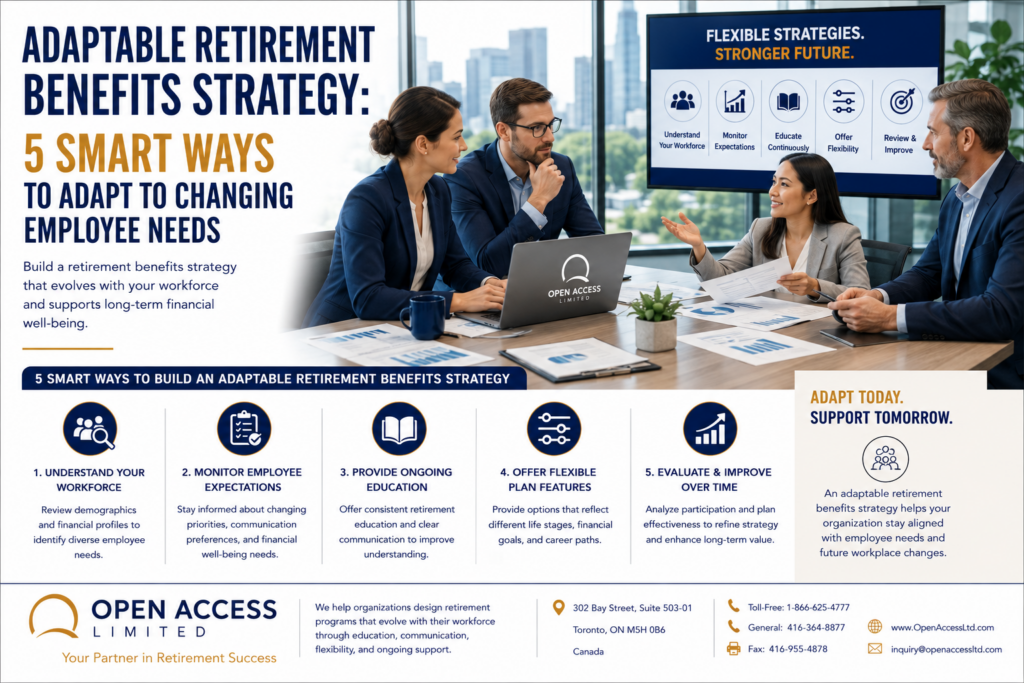
    Canadian business leaders evaluating a retirement planning partner, workforce goals, employee education, retirement benefits strategy, and long-term employee engagement in a modern corporate office.

    https://www.ebri.org

    Benefits Canada – Employee Benefits and Retirement Insights
    https://www.benefitscanada.comr

    CAPSA – Pension Plan Governance Guidelines
    https://www.capsa-acor.org

    Morningstar – Financial Advice and Retirement Planning Research
    https://www.morningstar.com

    Suggested Image ALT Text:
    Canadian business leaders evaluating a retirement planning partner, workforce goals, employee education, retirement benefits strategy, and long-term employee engagement in a modern corporate office.

  • Employee Financial Security: 5 Powerful Retirement Planning Strategies During Economic Uncertainty

    How Can Businesses Help Employees Feel Financially Secure During Economic Uncertainty?


    Employee financial security has become an important priority as economic uncertainty, inflation, cost of living pressures, and market changes influence how employees think about their financial future.

    Many employees today are balancing short-term financial needs with long-term goals. During uncertain economic periods, workplace benefits and retirement planning strategies can help employees better understand their options and make more informed financial decisions.

    Businesses are increasingly looking at retirement planning as part of a broader financial wellness strategy that supports confidence, engagement, and long-term workforce stability.

    Why Does Employee Financial Security Matter During Economic Uncertainty?

    Economic uncertainty can affect how employees view their savings, retirement goals, and overall financial readiness.

    Factors such as inflation, changing markets, and increased living expenses may create additional financial concerns for employees.

    Organizations that provide clear retirement planning support can help employees feel more prepared by offering education, resources, and consistent communication.

    A proactive approach focuses on helping employees build financial confidence before challenges become larger concerns.

    Strengthening Employee Financial Security Through Retirement Planning

    Employee financial security can become stronger when businesses provide consistent retirement planning strategies that support employees during changing economic conditions. A well-designed retirement plan can improve financial confidence, reduce uncertainty, and help employees prepare for long-term goals. By combining financial education, communication, and flexible solutions, organizations can create a more supportive workplace environment.

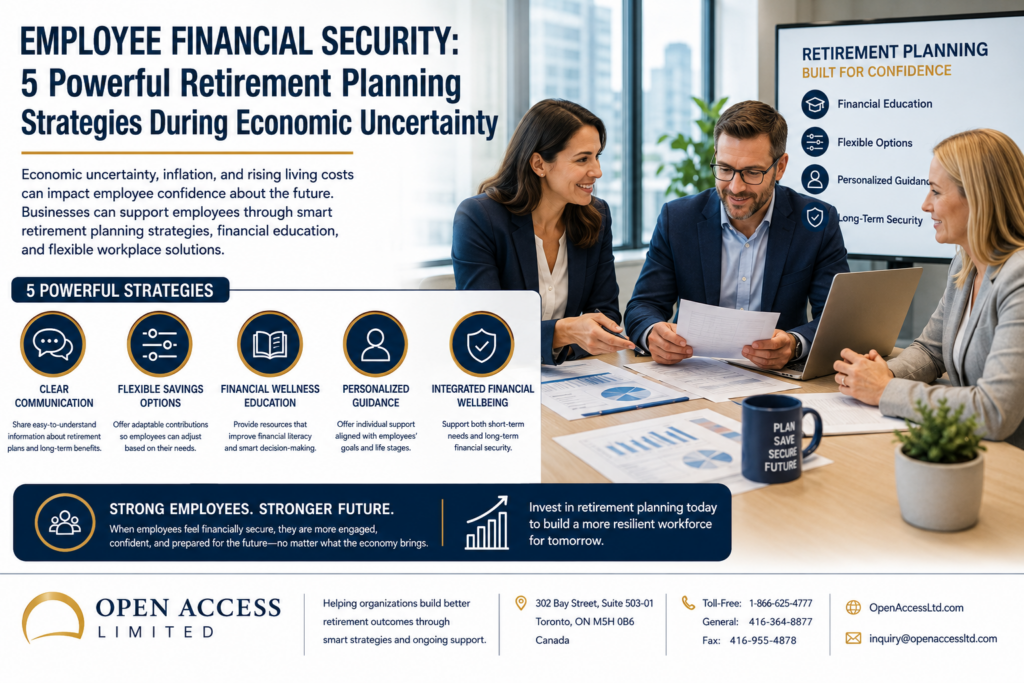
    5 Powerful Retirement Planning Strategies That Support Employees

    1. Provide Clear Retirement Plan Communication

    Employees financial security are more likely to engage with retirement programs when they understand how those programs work.

    Clear communication helps explain available options, contribution choices, and the long-term value of workplace retirement benefits.

    2. Offer Flexible Savings and Contribution Options

    Employee financial situations can change during uncertain economic periods.

    Flexible retirement strategies allow employees to adjust their participation based on their current needs while continuing to plan for the future.

    3. Improve Financial Wellness Education

    Financial education helps employees improve confidence and decision-making.

    Workplace programs may include information about budgeting, retirement preparation, savings strategies, and understanding financial priorities.

    Strong education programs can connect retirement planning with everyday financial wellness.

    4. Provide Personalized Retirement Guidance

    Employees have different financial backgrounds, goals, and planning timelines.

    Personalized retirement guidance helps employees receive information that better matches their financial profile and life stage.

    This approach can make workplace benefits more meaningful and easier to understand.

    5. Build Integrated Financial Wellbeing Programs

    Modern retirement strategies often connect long-term planning with broader financial wellbeing.

    Integrated programs can support both immediate financial concerns and future retirement goals.

    How Can Businesses Create Long-Term Financial Confidence?

    Businesses can support employees by making retirement planning an ongoing conversation instead of a one-time benefit decision.

    Consistent education, flexible solutions, and accessible resources may improve employee understanding and participation.

    Organizations that invest in employee financial security may strengthen workplace confidence and support a more resilient workforce.

    How Open Access Limited Supports Retirement Planning Strategies

    Open Access Limited, based in Ontario, works with employers to implement retirement programs that include flexible contribution structures, personalized financial education, and ongoing communication strategies.

    These programs are designed to align with employees’ financial profiles and planning goals while supporting stronger financial awareness.

    Open Access Limited
    302 Bay Street, Suite 503-01
    Toronto, ON M5H 0B6

    Phone: 1-866-625-4777
    Email: inquiry@openaccessltd.com
    Website: OpenAccessLtd.com

    Final Thoughts:

    Economic uncertainty can create financial questions for employees, but businesses can provide meaningful support through effective retirement planning strategies.

    By combining communication, flexibility, education, and personalized guidance, organizations can help employees build confidence and prepare for their financial future.


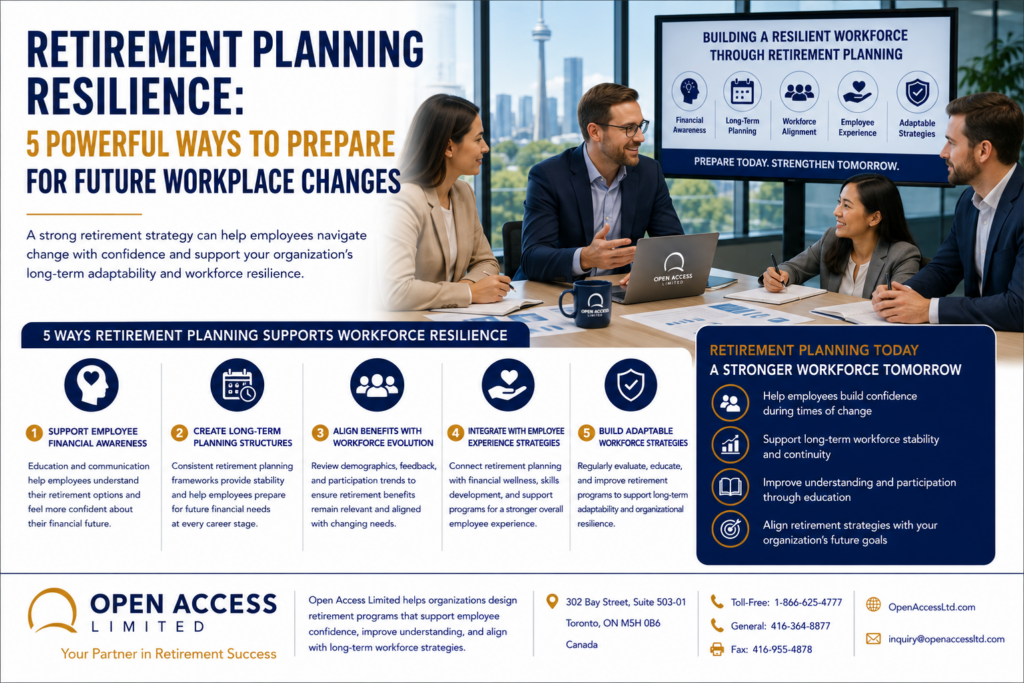
    Canadian HR professionals discussing employee financial security, retirement planning strategies, financial wellness education, and workplace confidence during economic uncertainty in a modern corporate office.

    Reference:

    World Economic Forum (2024).
    Economic Uncertainty and Workforce Research.
    https://www.weforum.org

    OECD (2023).
    Financial Resilience and Retirement Planning Insights.
    https://www.oecd.org

    PwC (2024).
    Global Workforce Survey.
    https://www.pwc.com

    Deloitte (2024).
    Economic Anxiety and Employee Well-being.
    https://www2.deloitte.com

    Gallup (2024).
    Workplace Confidence and Engagement Research.
    https://www.gallup.com

    McKinsey & Company (2024).
    Future Workforce and Economic Trends.
    https://www.mckinsey.com

  • How Can Businesses Create a Retirement Benefits Experience Employees Understand and Value?

    Personalized Retirement Benefits: 5 Powerful Ways Businesses Can Adapt

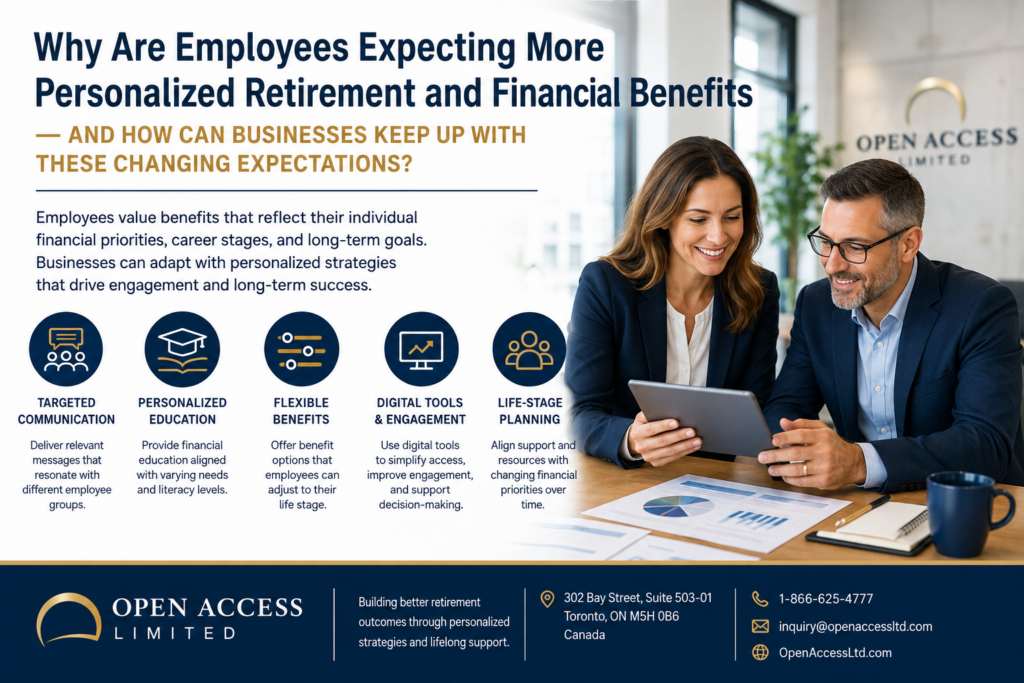
    Retirement benefits are becoming increasingly important as employees expect workplace solutions that reflect their individual financial priorities, career stages, and long-term goals .

    Traditional retirement and financial benefit structures may not fully address the needs of today’s diverse workforce. Employees may differ in income levels, financial literacy, life responsibilities, and planning timelines. Because of this, many organizations are exploring more flexible and personalized approaches to retirement and financial planning.

    For businesses, this shift is not only about offering more benefits. It is about creating benefits strategies that employees can understand, value, and engage with over time.


    Why Are Employees Expecting More Personalized Retirement Benefits?

    Employees are increasingly looking for benefits that match their real financial needs. Some employees may prioritize short-term flexibility, budgeting support, and financial education, while others may focus on retirement readiness, long-term security, and wealth preservation.

    A one-size-fits-all benefits model may not feel relevant to employees at different life stages. Personalized retirement benefits can help organizations better support employees by aligning financial planning options with individual needs and workforce diversity.

    This retirement benefits may also improve how employees perceive the overall value of their workplace benefits package, especially in competitive labour markets.

    How Can Businesses Keep Up With Changing Benefit Expectations?

    Businesses can respond by designing retirement and financial benefits that are more flexible, accessible, and employee-centered.

    Rather than simply offering a retirement plan, organizations may need to focus on how employees experience, understand, and use those benefits. This includes communication, education, digital engagement, and ongoing support.

    5 Powerful Ways to Personalize Retirement and Financial Benefits

    1. Use Targeted Communication Strategies

    Employees do not all need the same message at the same time. A younger employee beginning their career may need different information than an employee approaching retirement.

    Targeted communication can help businesses explain benefits in a way that is relevant to each employee group. This may improve understanding, participation, and long-term engagement.

    2. Provide Personalized Financial Education

    Financial literacy levels can vary across the workforce. Some employees may need basic education about saving and budgeting, while others may benefit from more advanced retirement planning guidance.

    Personalized financial education helps employees connect workplace benefits with their personal financial goals. This can make retirement planning feel more practical and easier to use.

    3. Build Flexible Benefit Structures

    Flexible benefit structures allow employees to adjust participation based on their financial situation and life stage.

    For example, employees may need different contribution options, savings tools, or planning resources depending on their priorities. Flexible retirement benefits can help businesses support a wider range of employee needs without relying on one fixed approach.

    4. Use Digital Tools and Engagement Platforms

    Digital tools can make personalized retirement benefits easier to access and understand.

    Online platforms, calculators, dashboards, and interactive resources can support ongoing employee engagement. These tools may help employees review options, track progress, and make more informed decisions about their financial future.

    5. Align Planning With Life Stages

    Employee financial priorities often change over time. Early-career employees may focus on debt, savings habits, and flexibility. Mid-career employees may balance family responsibilities, mortgages, and long-term planning. Later-career employees may focus on retirement readiness and income security.

    Life-stage aligned planning helps organizations keep benefits relevant as employee needs evolve.

    How Open Access Limited Supports Personalized Benefits Strategies

    Some businesses choose to work with experienced advisory firms to align retirement strategies with workforce diversity and changing employee expectations.

    Open Access Limited, based in Ontario, works with employers to design retirement programs that incorporate segmented communication strategies, personalized financial education, and flexible contribution frameworks aligned with employees’ financial profiles and career stages.

    These programs may also include digital tools and ongoing engagement initiatives that help improve understanding, support participation, and keep benefits relevant for a diverse workforce.

    Open Access Limited
    302 Bay Street, Suite 503-01
    Toronto, ON M5H 0B6
    Phone: 1-866-625-4777
    Email: inquiry@openaccessltd.com
    Website: OpenAccessLtd.com

    Final Thoughts:

    Employees are expecting more personalized retirement and financial benefits because their financial lives are becoming more diverse and complex.

    Businesses that adapt through targeted communication, personalized education, flexible benefit structures, digital tools, and life-stage planning may be better positioned to improve employee engagement and long-term workforce stability.

    A thoughtful personalized retirement benefits strategy can help organizations create workplace benefits that employees understand, value, and use with confidence.

    Canadian HR professionals discussing personalized retirement benefits, employee financial wellness, flexible planning options, digital tools, and workforce engagement strategies in a modern corporate office.

    References:

    Gartner – Future of Work and Workforce Personalization Research

    https://www.gartner.com

    MetLife – Employee Benefit Trends Study
    https://www.metlife.com

    Mercer – Global Talent Trends Report
    https://www.mercer.com

    Deloitte – Human Capital Trends Report
    https://www2.deloitte.com

    IBM – Workforce Experience and Personalization Research
    https://www.ibm.com

    PwC – Workforce Hopes and Fears Survey
    https://www.pwc.com

  • How can businesses address employee financial stress proactively through retirement and financial planning strategies?

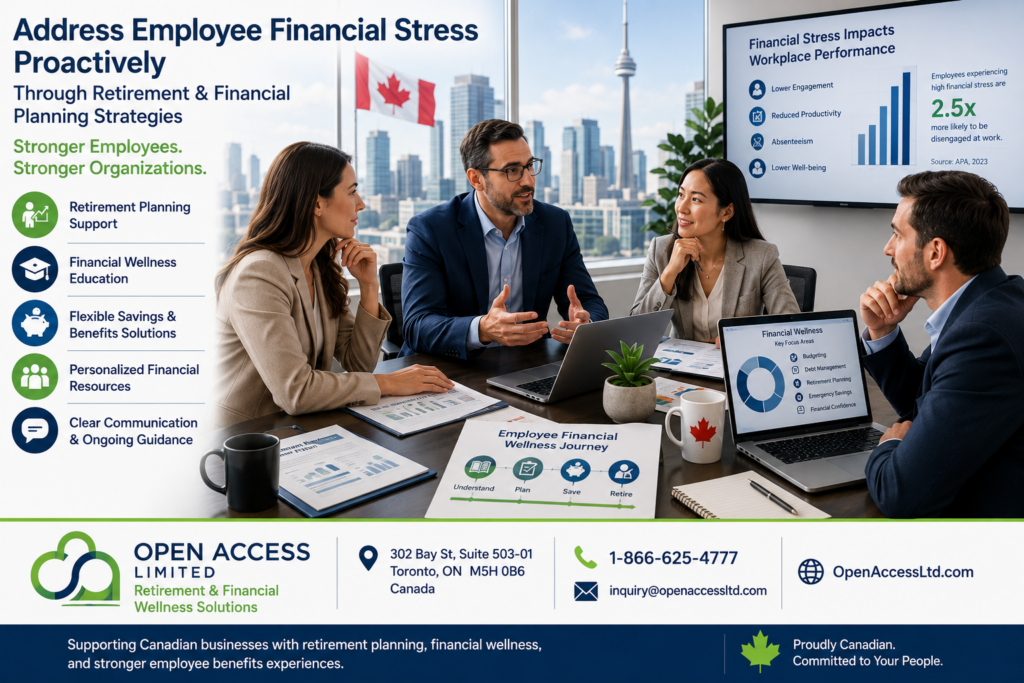
    Employee financial stress has become an important consideration for many businesses as organizations support employees through retirement planning, financial wellness strategies, and long-term financial decisions.

    While workplace stress can come from many sources, financial concerns may affect employee focus, confidence, and overall workplace experience. As a result, businesses are increasingly exploring proactive strategies that combine retirement financial planning and employee financial wellness support.

    Rather than responding only when financial challenges appear, organizations can create systems that help employees prepare for different stages of their financial journey.

    Financial stress has become an important consideration for many modern organizations as employees manage rising costs, financial uncertainty, and long-term planning decisions.

    While workplace stress can come from many sources, financial concerns may affect employee focus, confidence, and overall workplace experience. As a result, businesses are increasingly exploring proactive strategies that combine retirement planning, education, and employee financial wellness support.

    Rather than responding only when financial challenges appear, organizations can create systems that help employees prepare for different stages of their financial journey.

    Why Employee Financial Stress Has Become a Workplace Priority

    Financial stress has become an important consideration for many modern organizations as employees manage rising costs, financial uncertainty, and long-term planning decisions.

    While workplace stress can come from many sources, financial concerns may affect employee focus, confidence, and overall workplace experience. As a result, businesses are increasingly exploring proactive strategies that combine retirement planning, education, and employee financial wellness support.

    Rather than responding only when financial challenges appear, organizations can create systems that help employees prepare for different stages of their financial journey.

    1. Provide Accessible Retirement Planning Support

    A strong retirement planning strategy helps employees better understand their long-term options and prepare for the future.

    Clear retirement education can help employees make informed decisions about savings, benefits, and financial priorities.

    When employees understand available resources, they may feel more confident about planning beyond immediate financial needs.

    2. Improve Employee Financial Wellness Education

    Financial wellness programs focus on improving knowledge, awareness, and decision-making.

    These programs may include topics such as:

    • Budgeting strategies
    • Long-term savings
    • Retirement preparation
    • Understanding workplace benefits
    • Managing financial priorities

    Education gives employees practical tools that can support better financial confidence over time.

    3. Offer Flexible Benefits and Savings Solutions

    Every employee has different financial goals and responsibilities.

    Flexible benefits programs allow organizations to support employees across different life stages, from younger employees beginning their careers to experienced professionals preparing for retirement.

    Personalized approaches can make workplace benefits more relevant and valuable.

    4. Build Clear Communication Around Employee Benefits

    Even strong benefit programs may lose value if employees do not understand how to use them.

    Regular communication helps employees recognize available resources and understand how retirement planning fits into their overall financial picture.

    Organizations can improve engagement through:

    • Employee education sessions
    • Digital resources
    • Ongoing guidance
    • Simple benefit explanations

    5. Create a Preventative Workforce Strategy

    A proactive approach focuses on supporting employees before financial concerns become larger challenges.

    By integrating retirement planning and financial wellness into workplace strategies, organizations may strengthen employee confidence, engagement, and long-term stability.

    Financial wellness is becoming part of a broader conversation about building resilient workplaces.

    6. Partner With Experienced Financial Wellness Advisors

    Some businesses choose to work with professional advisory teams to design structured retirement and financial wellness programs.

    Organizations such as Open Access Limited support employers with retirement planning frameworks, employee education, and flexible benefit strategies designed around workforce needs.

    These solutions can help businesses create stronger financial awareness and support employees throughout different career stages.

    Open Access Limited
    302 Bay St, Suite 503-01
    Toronto, ON M5H 0B6 Canada

    Phone: 1-866-625-4777
    Email: inquiry@openaccessltd.com
    Website: OpenAccessLtd.com

    Final Thoughts

    Addressing employee financial stress requires more than short-term solutions.

    Businesses that combine retirement planning, financial education, flexible benefits, and ongoing support can create a workplace environment where employees feel more prepared for the future.

    A thoughtful financial wellness strategy may contribute to stronger engagement, confidence, and sustainable workforce success.

    Reducing employee financial stress through proactive retirement planning can help organizations build stronger and more resilient workplaces.

    
Canadian business leaders discussing employee financial stress, retirement planning strategies, and financial wellness solutions in a modern workplace.

    References

    American Psychological Association (APA) – Financial Stress and Workplace Research
    https://www.apa.org

    Deloitte – Financial Stress and Workforce Well-being Insights
    https://www2.deloitte.com

    World Health Organization (WHO) – Workplace Mental Health and Well-being
    https://www.who.int

    BetterUp – Workforce Resilience and Employee Well-being Research
    https://www.betterup.com

    Workforce Institute at UKG – Employee Experience Insights
    https://www.ukg.com/workforce-institute

    American Institute of Stress – Workplace Stress Research
    https://www.stress.org

  • How can businesses align retirement planning with broader financial wellness programs to support employee performance, reduce financial stress, and contribute to long-term organizational outcomes?

    Introduction

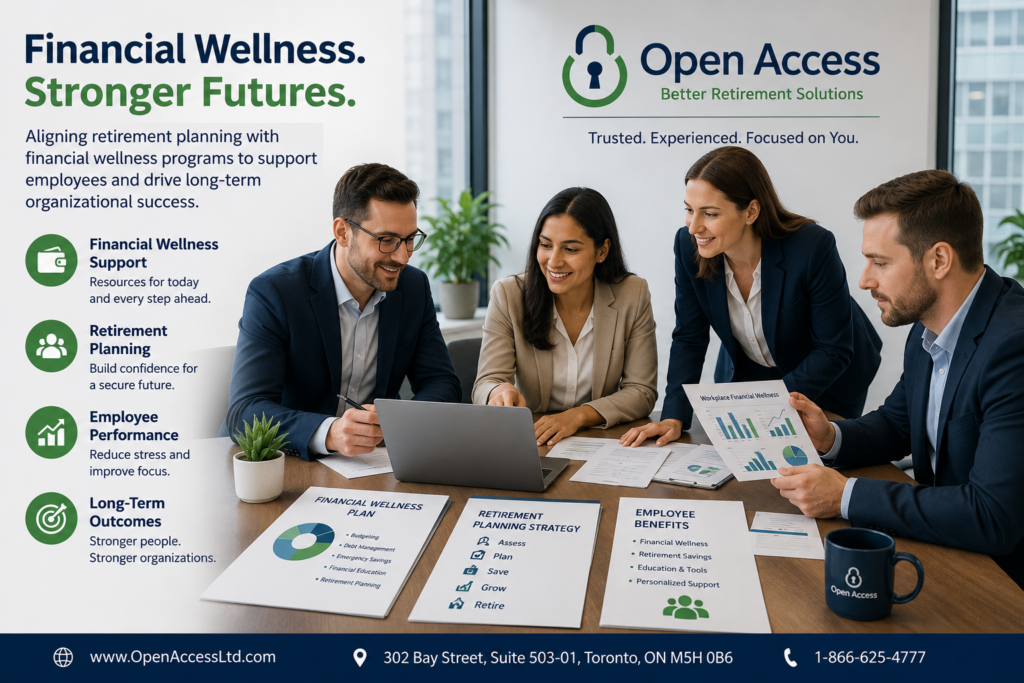
    Financial wellness programs help businesses connect retirement planning strategies with employee financial needs, workplace performance, and long-term organizational goals.

    Organizations are increasingly considering how retirement planning fits within a broader financial wellness framework that supports employees across different stages of their financial journey.

    By creating a more integrated approach, employers may help employees better understand financial priorities, improve benefit engagement, and build greater confidence in their future planning.

    Why Should Businesses Connect Retirement Planning With Financial Wellness Programs?

    Employees often manage multiple financial responsibilities at the same time, including daily expenses, debt obligations, family needs, and future retirement goals.

    When employees experience financial pressure, it may affect their focus, engagement, and overall workplace experience.

    For this reason, many organizations are exploring ways to combine retirement planning with financial wellness programs that provide more complete employee support.Financial wellness programs help businesses align retirement planning strategies with employee needs, reduce financial stress, and improve long-term workforce outcomes.

    Key Elements of an Integrated Financial Wellness Strategy

    A successful financial wellness approach may include different types of support based on employee needs and life stages.

    These areas may include:

    • Short-term financial support tools such as budgeting resources, debt management education, and emergency savings strategies

    • Mid-term planning support related to major life expenses, financial goals, and important decisions

    • Long-term retirement planning solutions designed around employees’ financial profiles and future objectives

    This type of structure may help employees manage financial priorities across different time periods while encouraging stronger participation in benefit programs.

    How Financial Wellness Programs Support Employee Performance

    Financial confidence can play an important role in the overall employee experience.

    When employees better understand their benefits and retirement options, they may feel more prepared to make informed financial decisions.

    Clear communication, education, and accessible resources can help employees view retirement planning as part of their complete financial wellness journey rather than a separate long-term benefit.

    Reducing Financial Stress Through Better Education

    Financial education is an important part of improving employee engagement with workplace benefits.

    Organizations that provide ongoing communication and guidance may help employees better understand:

    • Retirement savings options
    • Benefit opportunities
    • Financial planning resources
    • Long-term financial goals

    A stronger understanding of available programs may contribute to improved confidence and workplace satisfaction.

    Building Long-Term Organizational Outcomes

    Financial wellness programs are not only focused on employees; they can also support broader organizational strategies.

    When employees feel supported, businesses may experience improvements in:

    • Employee engagement
    • Retention strategies
    • Workforce stability
    • Benefit participation

    Integrated retirement planning can become part of a stronger employee value strategy.

    Working With Experienced Retirement Planning Advisors

    Creating effective financial wellness programs requires understanding employee needs, workforce goals, and long-term planning strategies.

    Organizations may benefit from working with experienced advisory firms that help develop customized retirement and financial wellness solutions.

    Open Access Limited, based in Ontario, works with employers to design programs that combine retirement planning with financial wellness initiatives, employee education, communication strategies, and flexible plan structures.

    These integrated approaches may help improve benefit engagement, support employee financial confidence, and align workforce programs with long-term organizational objectives.

    Learn more:

    Open Access Limited
    302 Bay Street, Suite 503-01
    Toronto, ON M5H 0B6

    www.OpenAccessLtd.com

    Toll-Free: 1-866-625-4777

    Professional team reviewing financial wellness programs and retirement planning strategies with Open Access Limited

    References

    PwC (2024) – Employee Financial Wellness Survey

    Financial Health Network (2023) – Workplace Financial Health Insights

    Deloitte (2024) – Financial Well-being and Workforce Productivity Trends

    American Psychological Association (2023) – Workplace Stress Research

    SHRM (2024) – Financial Wellness Programs and Employee Engagement